
Chasing the Rp235 Trillion Excise Revenue Target: Purbaya's Plan
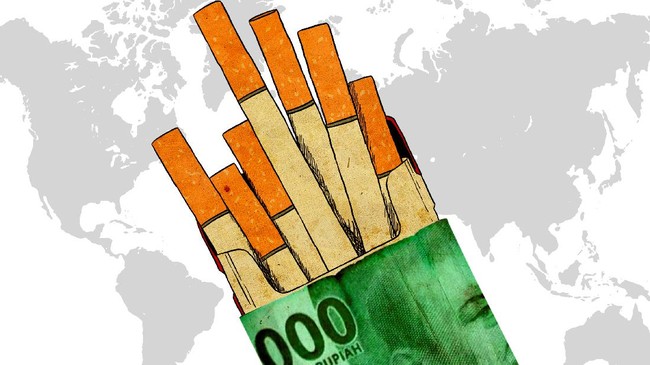
Jakarta - The government has set an excise revenue target of Rp235.26 trillion in the 2027 Draft State Budget (RAPBN). This target represents an increase of only around Rp844.2 billion, or 0.4%, compared with the estimated excise revenue outlook for 2026 of Rp234.42 trillion.
The limited increase comes amid a number of challenges still faced by the government, ranging from a shift in public consumption towards cheaper cigarettes to the circulation of illegal cigarettes.
Although growth is nearly flat, excise remains the main source of customs and excise revenue. Its value reaches approximately 74.31% of the overall customs and excise revenue target for 2027 of Rp316.60 trillion. The remainder comes from import duties of Rp54.51 trillion and export duties of Rp26.83 trillion.
Four Considerations Behind the Government’s Excise Policy
Excise is a state levy on certain goods whose consumption needs to be controlled. This revenue is mainly related to tobacco products, such as cigarettes, as well as other products such as beverages containing ethyl alcohol and ethyl alcohol itself.
In the 2027 RAPBN Financial Note, the government explains that excise policy is formulated based on four main considerations.
- Consumption Control
Excise is used to control consumption of goods that can have an impact on health. The imposition of excise also influences the selling price of a product. When prices increase, consumption of such goods is expected to be more controlled. However, this policy also needs to consider purchasing power as well as the possibility of consumers switching to cheaper products or illegal goods.
- Optimising State Revenue
Excise is one of the sources of state revenue used to finance various government needs. In 2027, excise revenue is targeted to reach Rp235.26 trillion, or around 74.31% of total customs and excise revenue. The size of this contribution means the government needs to maintain excise revenue through strengthened supervision, improved compliance, and policies suited to industry conditions.
- Industry and Labour Sustainability
The formulation of excise policy also considers the sustainability of the industry and workers who depend on income from the sector. The tobacco products industry is linked to various business activities, from cigarette production to trade and distribution. For this reason, the government considers production developments, the condition of business operators, and labour when formulating Tobacco Products Excise policy.
- Eradicating Illegal Cigarettes
The circulation of illegal cigarettes is a challenge because such products do not generate excise revenue in accordance with regulations. Illegal cigarettes can also be sold at cheaper prices, potentially attracting consumers who previously bought official products. To curb their circulation, the government is strengthening supervision and law enforcement, including through cooperation with regional governments and law enforcement agencies. The government is also optimising the use of cigarette tax and Tobacco Products Excise Revenue Sharing Funds (DBH-CHT) to support the eradication of illegal cigarettes in the regions.
Excise Revenue Has Fluctuated
Excise revenue in recent years has moved up and down. In 2022, realisation reached Rp226.88 trillion, before falling 2.2% to Rp221.85 trillion in 2023 due to a decline in cigarette production. Revenue improved to Rp226.37 trillion in 2024, but fell again by 2.1% to Rp221.67 trillion in 2025. This decline was influenced by consumers shifting to cheaper cigarettes and the still high circulation of illegal cigarettes.
In 2026, revenue is estimated to increase by 5.7% to Rp234.42 trillion. However, growth slows again to 0.4% in 2027, with a target of Rp235.26 trillion. Compared with 2022, the 2027 excise revenue target has only increased by Rp8.38 trillion, or 3.7%, in five years.
Cheap Cigarettes and Illegal Products Suppress Revenue
Excise revenue faces pressure due to the phenomenon of down-trading, when consumers switch to cheaper cigarettes and producers adjust production to cigarette types with lower excise rates. The circulation of illegal cigarettes further worsens the situation because the products sold do not generate excise revenue for the state.
To address this, the government is strengthening supervision and law enforcement, as well as utilising cigarette tax and Tobacco Products Excise Revenue Sharing Funds (DBH-CHT) to support the eradication of illegal cigarettes.
Excise policy in 2027 will consider industry conditions, purchasing power, and consumption control. Supervision is strengthened through the use of technology, a risk-based approach, and cooperation with regional governments and law enforcement agencies. The government is also preparing revenue intensification from existing excisable goods and extensification through expanding the range of goods that can be subject to excise.