
Chasing Corruptors or Returning the People's Money?
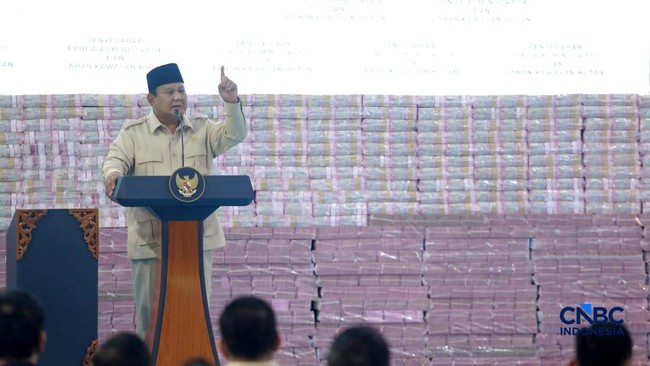
“Brothers and sisters, once I am inaugurated as President of the Republic of Indonesia, if I indeed receive the mandate from the people, at that moment I will search for evidence of corruption. At that moment, from that moment on, I will chase those corruptors. If necessary, to Antarctica, to the farthest desert, I will chase them.”
The statement by President Prabowo Subianto illustrates a strong political will to eradicate corruption in Indonesia. However, behind the statement about chasing corruptors, there is an equally important question: should the eradication of corruption solely focus on chasing and punishing the perpetrators, or should it be directed towards the return of state assets and money that have been plundered through corrupt practices?
This question is relevant because in many cases, the state succeeds in imprisoning corruptors but does not necessarily succeed in recovering all the losses incurred. As a result, corruption still leaves economic benefits for the perpetrator even though their freedom has been seized by the state.
Thus far, the success of corruption eradication in Indonesia is often measured by the number of perpetrators successfully caught and convicted. Every sting operation, court verdict, or prison sentence against public officials always serves as the main indicator that law enforcement is underway. However, there is one fundamental question that often escapes attention: has the state truly succeeded in reclaiming the proceeds of corruption enjoyed by the perpetrators?
This question is important because corruption is essentially an economically motivated crime. The primary objective of a corruptor is not merely to violate the law, but to obtain financial gain from the abuse of power. Therefore, eradicating corruption should not only be oriented towards punishing the perpetrator but also towards the return of unlawfully obtained assets.
In practice, many corruption cases end with the conviction of the perpetrator, but the state losses successfully recovered are far smaller than the total value of the losses caused. Some assets have been transferred to family members, disguised through companies, moved abroad, or can no longer be traced. As a result, the state succeeds in imprisoning the perpetrator but fails to return the majority of the proceeds of crime to the public.
This situation indicates the limitations of the conventional approach, which has so far emphasised the principle of ‘follow the offender’—that is, chasing and punishing the perpetrator. In recent decades, various countries have begun developing a new approach known as the ‘follow the money’ principle, which focuses attention on tracing and seizing assets derived from criminal acts. One instrument developed from this paradigm is civil asset forfeiture, or non-conviction based asset forfeiture.
Understanding non-conviction based asset forfeiture
The concept of non-conviction based asset forfeiture essentially allows the state to conduct legal proceedings against assets suspected of originating from a criminal act without first having to obtain a final and binding criminal verdict against the perpetrator.
In the Anglo-Saxon legal tradition, this mechanism is known as an in rem proceeding, meaning a legal process directed at the object or asset, not the person. In other words, what is being ‘tried’ is the legal status of the asset, not solely the guilt of the individual owner.
For some quarters, this idea sounds controversial. How can the state confiscate a person’s property without first proving that person’s guilt through a criminal process? Such concerns certainly cannot be ignored. As a state based on the rule of law that upholds human rights, Indonesia must ensure that every state action still respects the principle of presumption of innocence, the protection of property rights, and due process of law.
However, rejecting the concept merely because it is considered different from conventional criminal mechanisms is not a wise option either. Reality shows that many assets resulting from corruption are difficult to confiscate because the perpetrator dies before a verdict is handed down, flees abroad, or successfully exploits legal loopholes to avoid criminal liability. In such situations, the state often loses the opportunity to recover losses that are, in fact, the right of the public.
Herein lies the relevance of civil asset forfeiture. This mechanism allows the state to continue taking legal steps to prove the connection of an asset to a criminal act, even if the criminal process against the perpetrator faces obstacles. The goal is not to ignore individual rights, but to ensure that the proceeds of crime are not continuously enjoyed by the perpetrator or other parties who gain profit from them.
Indonesia is actually not completely foreign to this idea. The ratification of the United Nations Convention Against Corruption (UNCAC) through Law Number 7 of 2006 demonstrates Indonesia’s commitment to strengthening asset recovery mechanisms.
Furthermore, the development of money laundering law has also introduced a number of instruments oriented towards tracing and securing the assets derived from crime. Thus, the discourse on civil asset forfeiture is not a discussion emerging from a vacuum, but rather part of a global development in efforts to combat economic crime.
Cautious Implementation
Although it offers various advantages, the implementation of civil asset forfeiture cannot be viewed as a problem-free solution. Precisely because this mechanism grants greater authority to the state to confiscate assets suspected of originating from criminal acts, the regulation