
Charting Sumatra’s Next Phase of Post-Disaster Recovery
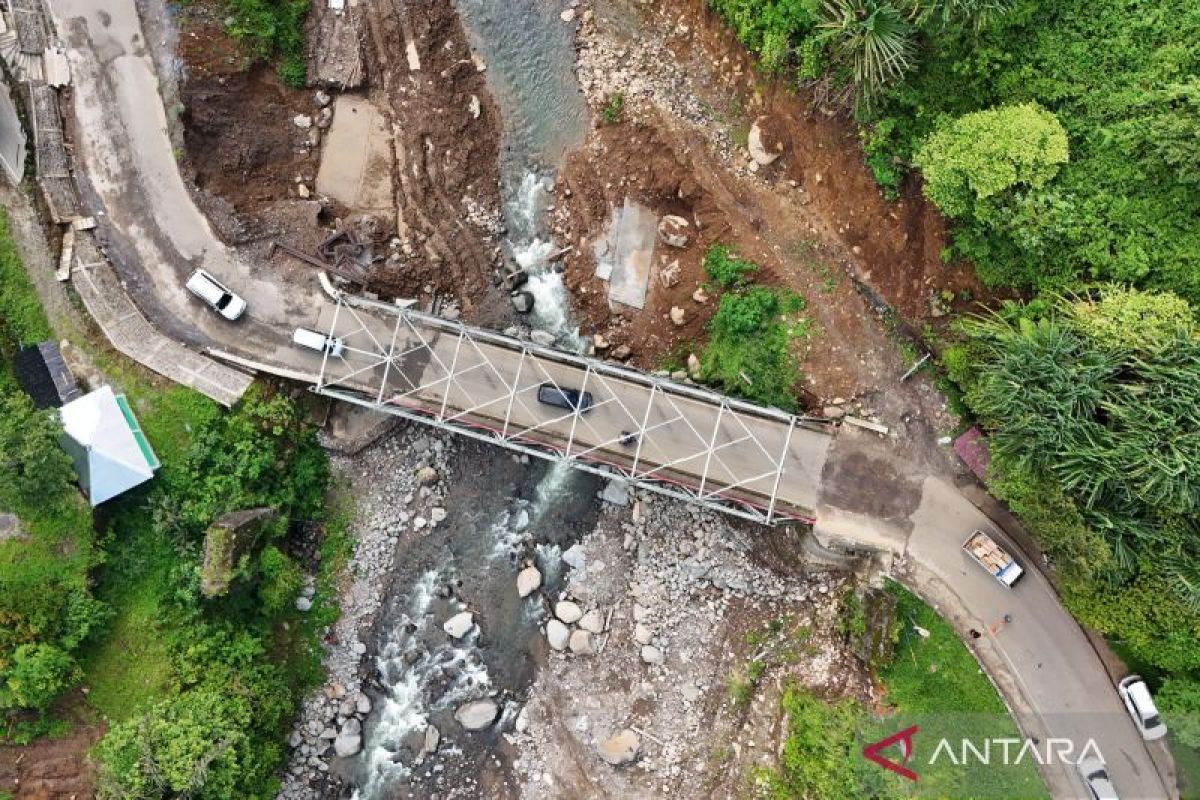
Next year, the Ministry of Public Works plans to construct a new bridge there - the Weihni Enang-Enang Bridge - envisioned as a future landmark for Aceh.
The bridge captures two phases of recovery at once. The first is restoring function to ensure access for people and goods. The second is building a stronger bridge than what was swept away.
The progress report presented by Home Affairs Minister Tito Karnavian, who chairs the Sumatra Post-Disaster Rehabilitation and Reconstruction Acceleration Task Force, to President Prabowo Subianto during a limited cabinet meeting at the Merdeka Palace on Monday (November 9), essentially chronicles that shift from the first phase to the second.
The word that appears most frequently in the report is “functional.” It states that infrastructure can be used again, while acknowledging that the job is far from finished.
All affected national roads across the three provinces are now passable, with several already permanently rebuilt to higher standards. All 43 damaged national bridges are also back in operation.
Reconnecting these main roads across the 53 affected districts and cities is the prerequisite for every other recovery effort, as heavy machinery, construction materials, fertilizers, and harvests all rely on the same corridors.
Construction work for temporary housing is almost complete, reaching 20,803 units, or 99.84 percent of the plan.
All 3,902 hectares of damaged paddy fields in West Sumatra are back in operation, while more than 98 percent of the 7,336 affected hectares in North Sumatra have recovered. In Aceh, 115 of the 127 damaged markets have reopened.
These figures signal the recovery of local communities’ daily lives. Yet the same report outlines the work that remains: regional road recovery stands at 94 percent in Aceh, 98 percent in North Sumatra, and 83 percent in West Sumatra, while only 604 regional bridges are functional out of thousands damaged.
In Aceh, roughly a quarter of the 31,464 affected hectares of paddy fields remain severely damaged, buried under mud and landslide debris reaching two meters deep in some areas. Similar conditions are also found across 30,417 hectares of aquaculture ponds and fish cages, leaving 10 districts still on the task force’s priority watch list.
That list serves as a working roadmap. Nearly all the remaining tasks lie at the district and village levels, where roads are narrower, bridges play a critical role, and terrain is harder to reach. The second year of recovery will unfold right there.
Putting rivers first
Between April and October 2026, the task force recorded 41 subsequent flooding incidents, 18 in Aceh, 15 in West Sumatra, and eight in North Sumatra.
Several newly repaired bridges were swept away once more, and mud poured back into areas that had already been cleared. According to Karnavian, lingering river sediment caused even light rainfall to push water over the embankments.
The president’s primary directive during the meeting was to accelerate river channel restoration. Of the 137 rivers across the affected regions, 55 have been restored. Among the 38 estuaries, work is complete on seven and underway on 11, while 20 remain untouched.
Technically, this sequencing makes sense. Permanent housing, restored paddy fields, and new bridges will all sit along these very waterways. Building them before the rivers can hold water means gambling the recovery’s progress against the next rainy season. By prioritizing the rivers, rehabilitation and mitigation merge into a single effort.
Karnavian proposed three acceleration tracks: deploying the Ministry of Public Works as the spearhead, assigning regional public works offices, and partnering regional governments with third parties.
The third track is notable because it treats river sediment as a resource. Dredged sand and stone carry economic value; some can be used to build embankments, while the rest may be sold, provided the river is thoroughly cleared and not left abandoned once the materials are extracted.
Personnel from the Indonesian National Armed Forces (TNI) and the National Police (Polri) will also be deployed to help clear sediment and construct embankments.
The permanent reconstruction phase requires timely funding. The National Development Planning Agency (Bappenas) has mapped out 11,520 rehabilitation and reconstruction projects through 2028, requiring Rp100.67 trillion (around US$5.5 billion).
For 2027, funding needs are estimated at Rp42 trillion, comprising roughly Rp33 trillion for new programs and Rp9 trillion in unspent 2026 funds.
According to Karnavian, the president confirmed that the budget has been prepared. However, proactive moves by stakeholders play a critical role here.
Ministries and government agencies have been urged to submit their budget proposals to the Ministry of Finance immediately so tenders can be accelerated and fieldwork can begin in January, or February at the latest. Otherwise, projects risk stalling until May or June, when nearly half the fiscal year has already passed.
For residents waiting on permanent housing or plantable paddy fields, a four-month gap is a long time.
The same timeline applies to regional governments. The central government has disbursed Rp12.34 trillion to regional authorities across the three provinces, largely in the form of additional regional transfers.
Karnavian noted that budget absorption remains low in several areas, with Aceh’s Pidie District posting the highest rate. He also urged regional leaders to deploy the funds without waiting for instructions from Jakarta.
Behind this warning, there is a practical solution: unspent funds can be redirected straight into river channel restoration, while regions hit again by widespread disasters are authorized to declare emergency response status.
The first year of recovery efforts after the late 2025 disasters proved that what was severed can be reconnected. In the second year, the goals must be clear: rivers restored to their pre-disaster conditions, families moved from temporary shelters into permanent homes, and Aceh’s paddy fields cleared of mud so they can produce again. The new Weihni Enang-Enang Bridge will stand as the marker of that shift.
Related news: Recovery complete in many of Aceh disaster-hit areas: President
Related news: RI uses data driven approach mapping disaster recovery needs in Aceh
Source: jawawa.id (https://jawawa.id/newsitem/charting-sumatras-next-phase-of-post-disaster-recovery-1795024227)
Originally published by Antara (English) (https://en.antaranews.com/news/443611/charting-sumatras-next-phase-of-post-disaster-recovery)