
Charting clean energy partnership opportunities for Indonesia and South Korea
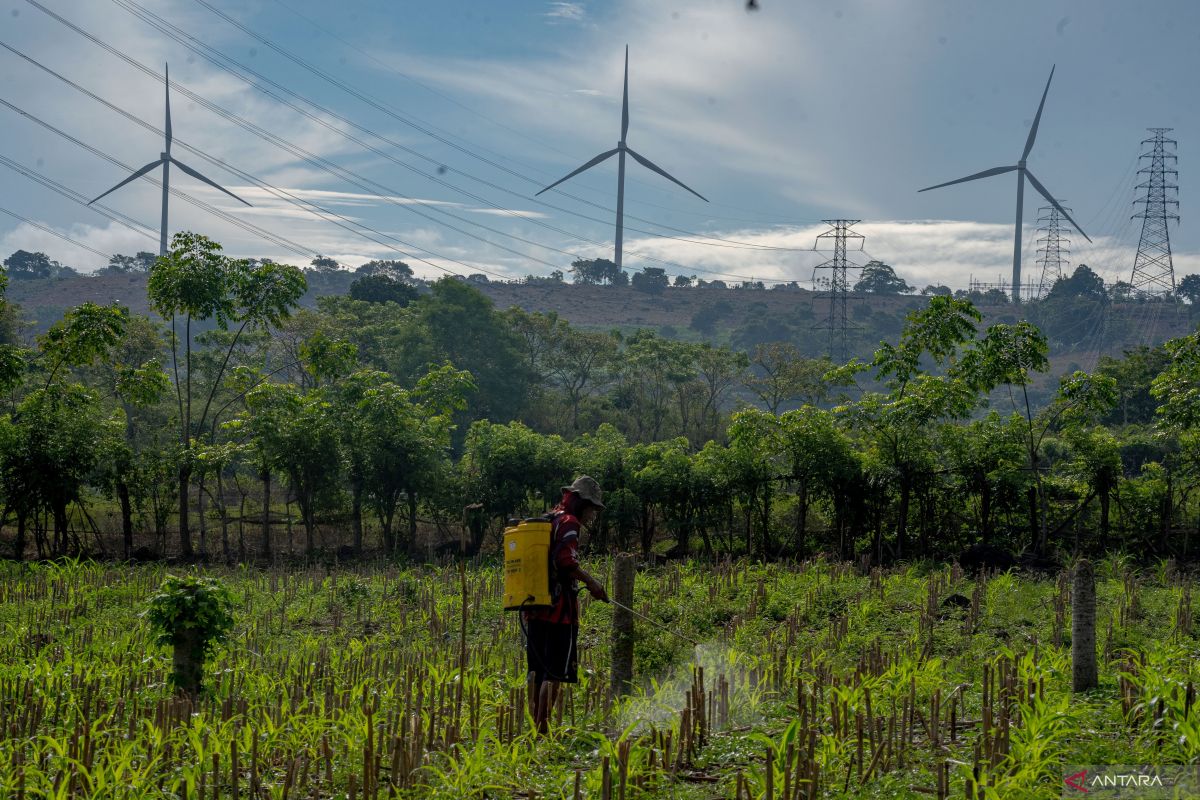
President Prabowo Subianto launched the 100 GWp solar power plant program on August 25, 2026, starting with 14 projects across six provinces with a combined capacity of 5.3 GWp.
“Our target is to achieve 100 gigawatts within three years,” Prabowo said during the inauguration ceremony.
Minister of Energy and Mineral Resources Bahlil Lahadalia stated that the strategic program will have a significant positive impact across multiple sectors.
Through this initiative, the government expects to save state budget funds, create jobs, and reduce carbon emissions.
Bahlil noted that total investment for the 100 GW solar power plants reaches around US$73 billion, with the program projected to help save Rp73.9 trillion (around US$4.04 billion) per year in subsidies.
To achieve the target, Indonesia requires investment, energy storage technology, stronger electricity grids, and supporting industries capable of ensuring that clean energy can be produced and utilized sustainably.
These requirements offer opportunities for Indonesia to expand energy partnerships with countries possessing technological and industrial capacity, including South Korea.
Potential cooperation between the two countries is not limited to solar power plant development, but also encompasses batteries, nuclear energy, hydrogen, and carbon capture and storage (CCS) technology.
Related news: Bali’s WTE plant construction reaches 26 percent complete
Cooperation opportunities
Institute for Essential Services Reform (IESR) Energy System Transformation Program Director Deon Arinaldo has proposed five areas of cooperation between Indonesia and South Korea to support clean energy development, including the 100 GW solar power plant program.
Arinaldo presented the recommendations during the Indonesian Next Generation Journalist Network on Korea workshop, organized by the Foreign Policy Community of Indonesia (FPCI) and the Korea Foundation.
According to him, bilateral cooperation should focus on developing bankable projects, strengthening domestic industrial capacity, and accelerating electrification.
The first proposed agenda is the development of solar power plants integrated with battery energy storage systems (BESS), particularly to replace diesel power plants and maintain grid stability.
Solar power generation depends on weather conditions and the time of day, making storage systems and grids capable of managing supply flexibly.
In developing these systems, Arinaldo noted that battery specifications must be tailored to the needs of the power grid.
“For energy storage, cost is prioritized. We need very low-cost batteries that can still meet grid service requirements,” Arinaldo said.
The second agenda is strengthening the domestic BESS supply chain by expanding manufacturing capacity, setting standards, and bolstering the readiness of local suppliers.
Building domestic capacity can serve as a key benchmark for the partnership’s success. Incoming investment should not merely result in power generation facilities, but also spur the growth of supporting industries and a skilled workforce in energy technology.
Meanwhile, the third agenda is mobilizing green financing by blending public and private funding for utility-scale solar power projects and industrial electricity demand.
Arinaldo estimated that the 100 GW solar power push requires a US$80 billion investment just for building the plants alone. The value can increase past US$100 billion if it includes energy storage and transmission needs.
The involvement of private investors and financing institutions is vital to ensure projects have adequate funding and remain commercially viable.
Regulatory certainty, power procurement schemes, grid readiness, and project economic feasibility remain decisive factors in attracting investment.
The fourth agenda is accelerating the adoption of green steel technology through cooperation between Indonesian steelmaker PT Krakatau Steel (Persero) Tbk and South Korean steelmaker POSCO.
The collaboration is expected to foster the development of low-carbon industries, given that the steel sector requires massive amounts of energy and faces challenges in curbing emissions from its production processes.
The fifth agenda is expanding the use of smart home appliances and electric stoves to drive electrification while reducing Indonesia’s dependence on liquefied petroleum gas (LPG).
Clean energy development requires a comprehensive approach, spanning power generation, storage, financing, industry, and consumer energy utilization.
In 2025, Indonesia’s installed renewable energy capacity stood at 15.6 GW out of a total power generation capacity of 107.5 GW. Meanwhile, solar power capacity only reached 1.49 GW, far below its estimated technical potential of 3,294 GW.
South Korea is also accelerating the transformation of its industrial and energy systems through the Korea Green Transformation (K-GX) strategy.
Gahee Han, Head of Energy Market and Policy Solutions at Solutions for Our Climate, a South Korean non-profit organization, said the South Korean government plans to mobilize 1,000 trillion won in investment by 2035 under the K-GX strategy.
The strategy encompasses fiscal spending, climate financing, and private-sector investment.
Priority industries include batteries, solar energy, small modular reactors (SMRs), hydrogen, and carbon capture, utilization, and storage (CCUS) technology.
South Korea is also targeting 100 GW of renewable energy capacity by 2030. To achieve this goal, the country needs to add roughly 14 GW of capacity per year, more than triple its previous annual average addition of 3 to 4 GW.
However, the goal faces challenges. Han noted that power grid readiness remains a key issue the country must resolve to accommodate the surge in renewable energy capacity.
This demonstrates that energy transition challenges are not unique to Indonesia. Even South Korea, with its more advanced technological and industrial capacity, needs to overhaul its grid infrastructure to boost renewable energy adoption.
The situation creates opportunities for knowledge exchange and technology development between Indonesia and South Korea. The two nations can explore joint solutions to address challenges in renewable energy integration, storage, and grid management.
Related news: Ministry highlights marine planning to support energy independence
Nuclear energy and CCS
Beyond solar energy and batteries, South Korea also sees cooperation opportunities with Indonesia in developing nuclear energy.
Minister-Counselor for Economic Affairs at the Embassy of the Republic of Korea in Jakarta, Kim Chanwoo, said Korea had experience exporting nuclear technology and building nuclear power plants overseas.
The opportunity is considered relevant to Indonesia’s electricity demand, which is projected to rise alongside the growth of artificial intelligence (AI) and data center construction.
Kim said nuclear power could be utilized as an option to strengthen national energy security, even though it is not a renewable energy source.
According to the World Nuclear Association (WNA), South Korea has 26 nuclear reactors with a capacity of around 25,609 megawatts electric (MWe), supplying roughly a third of the country’s electricity needs.
The country also has four reactors under construction with a total capacity of 5,360 MWe.
Indonesia itself has incorporated nuclear energy into its 2025 power system planning.
Through the 2025–2034 Electricity Supply Business Plan (RUPTL), the government targets an additional 69.5 GW in generation capacity, including 42.6 GW from new and renewable energy and 10.3 GW from energy storage.
Of that additional capacity, the government has allocated 0.5 GW for nuclear power plants and aims to finalize the construction site by 2026, or 2027 at the latest.
Despite these plans, Indonesia still needs to prepare various aspects for nuclear energy development, including site selection, regulatory and institutional readiness, financing, safety, and public acceptance.
CCS also offers strategic cooperation potential for both Indonesia and South Korea.
Kim said Indonesia has considerable geological potential for carbon dioxide (CO2) storage, attracting interest from several South Korean companies.
However, he noted that developing this cooperation still requires technical studies and investigations before it can be translated into concrete projects.
Discussions on CCS have also taken place at the 14th Indonesia-Korea Energy Forum in Bali, involving government institutions and business stakeholders.
Kim said no specific projects can be announced so far. The South Korean Embassy will continue to facilitate communication with relevant ministries and companies to realize mutually beneficial cooperation opportunities.
These opportunities have gained momentum after Indonesia and South Korea signed memorandums of understanding (MoUs) on clean energy and CCS during President Prabowo’s visit to Seoul on April 1, 2026.
The clean energy MoU covers cooperation in developing renewable energy, nuclear power, hydrogen, energy storage and efficiency, batteries, bioenergy, waste-to-energy processing, smart grids, and off-grid island energy systems.
Meanwhile, the CCS MoU covers the development of cross-border carbon capture and storage technology, technology promotion and commercialization, and the facilitation of research and industrial projects.
Indonesia and South Korea have agreed to expand both countries’ clean energy partnership. Now, the challenge lies in turning it into concrete actions.
Indonesia must also ensure the partnership is not viewed solely by the size of investment or installed generation capacity.
The strengthening of technology transfer, workforce upskilling, job creation, local industry participation, and the domestic supply chain must also be integral parts of the cooperation.
Related news: Indonesia reviews energy subsidies following OECD recommendation
Translator: Shofi Ayudiana, Raka Adji
Source: jawawa.id (https://jawawa.id/newsitem/charting-clean-energy-partnership-opportunities-for-indonesia-and-south-korea-1795888211)
Originally published by Antara (English) (https://en.antaranews.com/news/446131/charting-clean-energy-partnership-opportunities-for-indonesia-s-korea)