
Charting a new direction for food self-sufficiency and the fisheries sector
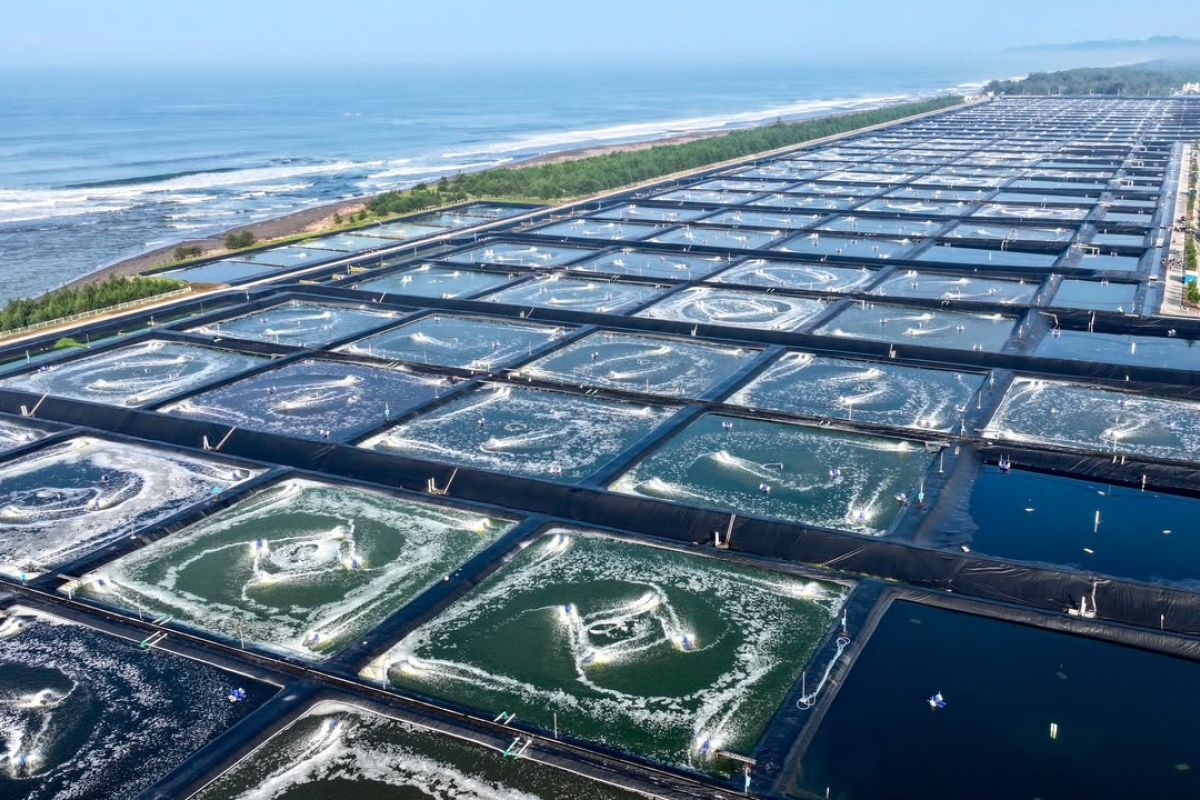
A standardised modern fishing industry such as that in Kebumen is positioned as a crucial pillar for ensuring the nation’s protein supply remains secure whilst preventing the loss of state wealth beyond the domestic system.
Jakarta (ANTARA) — On a 100-hectare coastal site in Tegalretno Village, Petanahan District, Kebumen Regency, Central Java, stands a model of national fisheries industrialisation through the Kebumen Area-Based Shrimp Farming Project (BUBK).
This is not an ordinary fish farming pond complex, but rather a blueprint of the government’s grand ambition to fundamentally transform the face of national aquaculture from its traditionally-oriented approach towards a modern industrial ecosystem that is measured, precise, and based on high technology.
When inaugurated by the government in March 2023, the zone was specifically designed to break the chain of harvest failures that have long haunted traditional fish farmers due to declining environmental quality and water pollution.
Of the total available land along the Kebumen coast, an area of 65 hectares has been transformed into a complex but highly systematic hydrological infrastructure network. Water circulation management is strictly regulated through a single seawater intake unit that channels water to a main reservoir spanning 3 hectares, which is then periodically distributed to 50 cluster reservoirs before finally entering 139 main production ponds.
All remaining water from the farming process must pass through 17 cluster wastewater treatment installations (IPAL), as well as one main IPAL spanning 2 hectares before being released back into the open sea. The existence of this integrated liquid waste management system ensures that water returned to the sea is clean and free from feed ammonia residue, thereby preventing pollution of the southern Java coastal ecosystem.
Support infrastructure standardisation such as disease monitoring laboratories, hygienic feed halls, logistics warehouses, and specialised post-harvest facilities are built in close proximity to one another to reduce operational time in the field.
The results of this strict infrastructure investment and disciplined biological management are becoming apparent as the zone enters its fourth year of operation.
Through net-catching methods, the eighth-cycle vannamei shrimp harvest recorded high productivity levels, reaching an average of 40 tonnes of shrimp per hectare. This moment became a symbol for Indonesian President Prabowo Subianto to attend the harvest celebration, even participating in pulling nets containing hundreds of shrimp in a single haul.