
Chaos-Stricken Nation Gripped by Crisis as President Reshuffles His Cabinet
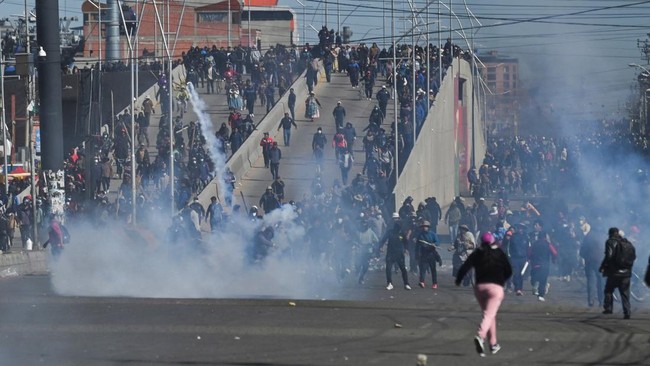
Jakarta, CNBC Indonesia - Bolivian President Rodrigo Paz has announced plans to reshuffle the cabinet amid a wave of large-scale protests that continue to shake the South American country. The move comes as pressure on the government mounts and calls for him to resign have continued to surface after weeks of demonstrations spreading across the country.
In a press conference on Wednesday (20 May 2026) local time, Paz acknowledged that his government needed to make changes so it could better respond to public discontent. “We need to reorganise a cabinet that must be able to listen,” Paz said, as reported by Al Jazeera.
Since taking office in November, Paz has faced strong opposition to the free-market economic restructuring policies he has pushed, including fuel subsidy cuts that sparked widespread controversy. Bolivia is currently said to be facing one of the worst economic crises in decades.
Paz’s free-market policies have provoked anger among broad sections of society. Thousands of farmers, workers, miners, and teachers have taken to the streets to protest government reforms.
The wave of demonstrations also marked a major shift in Bolivia’s political direction after Paz’s inauguration ended nearly two decades of governance by the Movement for Socialism (MAS), a socialist bloc that had previously dominated the country’s politics.
Riots again erupted in the capital La Paz earlier this week as riot police clashed with demonstrators. Security in several points was reported to be heating up amid road blockades and ongoing mass protests.
Although acknowledging public discontent, Paz’s government said the actions were dangerous and threatened democracy.
Bolivia’s Foreign Minister Fernando Aramayo said on the same day that the mass demonstrations and road blockades aimed to shake the country’s stability. He said the actions were intended to disrupt the national situation and “undermine the democratic order”.
Amid rising tensions, former Bolivian President Evo Morales also voiced support for the protest movement. Morales, a left-wing figure who still wields considerable influence in Bolivian politics, is said to be behind some of the opposition forces against the current government.
Paz’s government accused Morales of fuelling the unrest and further distorting the national political situation. Morales himself is currently facing rape allegations involving a minor, and an arrest warrant has been issued against him. However Morales’ supporters say the case is politically motivated and part of a systematic effort to remove him from Bolivian politics.
The situation in Bolivia has also begun to attract international attention. The administration of United States President Donald Trump has openly voiced its support for Rodrigo Paz. Paz’s earlier victory had been seen as part of a wave of rightward political shifts in Latin America.
US Secretary of State Marco Rubio said Washington stands behind the current Bolivian government. “Make no mistake. The United States fully stands behind Bolivia’s legitimate constitutional government,” Rubio said in a social media post on Wednesday. “We will not allow criminals and drug traffickers to topple democratically elected leaders in this hemisphere,” he added.
Diplomatic tensions also spread to Colombia. Rodrigo Paz launched a sharp critique of Colombian President Gustavo Petro, who has long been known for his disagreements with right-wing administrations in the region. The trigger was Petro’s description of the Bolivian protests as a ‘people’s uprising’. In response, Bolivia’s Foreign Ministry expelled the Colombian ambassador, which was reciprocated by Bogota.