
Changing Lifestyles Prompt Modest Fashion Industry to Prioritise Practicality
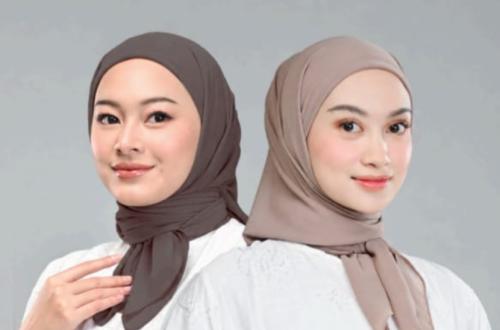
BANDUNG — Changes in people’s lifestyles are influencing how consumers choose fashion products. With daily routines becoming more dynamic, consumers are considering not only appearance but also practicality, comfort and whether products suit a range of activities.
This shift in behaviour presents both a challenge and an opportunity for Indonesia’s modest-fashion industry. Businesses are expected not merely to follow changing colours and styles, but also to understand an increasingly diverse market’s needs.
In October 2026, the Ministry of Industry emphasised that changing consumer preferences, technological developments and market competition mean that small and medium-sized fashion industries (IKM) need to become more adaptable. Product development is also being encouraged to focus more closely on market needs and create added value.
This is particularly important for modest fashion, which has significant economic potential. Bank Indonesia said Indonesia ranked first in the modest-fashion sector in the State of the Global Islamic Economy Report 2025/2026. The achievement highlights Indonesia’s strategic position in the global modest-fashion ecosystem and opens up opportunities to develop the domestic industry.
The Ministry of Industry has also reported that global modest-fashion consumption reached US$327 billion in 2023 and is projected to rise to US$433 billion by 2028. In Indonesia, the ready-made clothing industry comprised around 594,000 small businesses in 2024 and employed approximately 1.2 million people.
This considerable potential means competition is no longer just about the ability to create new products. Understanding changes in consumer behaviour has become a key factor in maintaining competitiveness.
One emerging concern for businesses is demand for fashion products that can keep pace with consumers’ mobility. Women do not always have time to spend a long time arranging their clothing during everyday activities. This is driving demand for options that are simpler to wear without compromising appearance.
Hijaberies, a modest-fashion business based in Bandung, has also observed this trend. Its owner, Geneva Hereka, said women’s increasingly dynamic routines were changing what they wanted from hijabs.
“Women today have very dynamic routines. They need hijabs that are not only beautiful to look at, but can also keep up with them from morning until night. At Hijaberies, we want the hijab to make things easier, not to restrict them,” Geneva said.
According to Hijaberies, this shift does not mean consumers have to give up a diverse range of fashion choices. Instead, they can choose styles, fabrics, sizes and colours according to their activities and personal comfort.
The need is evident in the choice of hijab for activities involving a high level of mobility. Instant hijabs are simpler to put on, while pashminas give wearers greater freedom to adjust the fabric’s shape and drape.
The demand for flexibility is also reflected in colour choices. Shades such as ivory, oatmeal, beige, taupe, brown and grey are considered relatively easy to pair with clothing for both work and leisure.
For activities involving a lot of movement, consumer requirements are even more specific. Lightweight hijabs that do not put pressure on the head are one consideration, including for use during exercise.
The shift shows that modest-fashion trends are increasingly linked to lifestyle changes, not just changes in style. Consumers want products that can adapt to work, travel, social activities and exercise.
For the industry, this creates both room for innovation and a challenge. Products that rely solely on short-lived trends may face increasingly tough competition. By contrast, products that address consumers’ genuine needs may remain in use for longer.
This is consistent with the government’s direction for developing fashion IKM. The Ministry of Industry says these businesses need sound business strategies, an understanding of consumer profiles and distinctive products to survive in a competitive market.
For Indonesia, the shift has broader significance because modest fashion is one of the strengths of the national sharia economy ecosystem. The government continues to encourage industry players to improve competitiveness, expand markets and take Indonesian modest-fashion products to the global market.
The rise of practical hijabs, therefore, is not simply about new styles or colour choices. It reflects a change in consumption patterns and shows how the fashion industry must become more attuned to consumers’ everyday needs.
For businesses such as Hijaberies, the ability to read these changes is part of the strategy for staying relevant in an increasingly competitive modest-fashion industry.
Ultimately, the industry’s future will be shaped not only by who can create the newest trend, but also by who understands why consumers buy, how they use products and which needs the market has yet to meet.
Source: jawawa.id (https://jawawa.id/newsitem/changing-lifestyles-prompt-modest-fashion-industry-to-prioritise-practicality-1793533859)
Originally published by Republika (https://rejabar.republika.co.id/berita/tntken416/gaya-hidup-berubah-industri-modest-fashion-mulai-utamakan-kepraktisan), translated from Indonesian