
Changes in Community Deciles, BPS DIY: Not Solely Based on Income
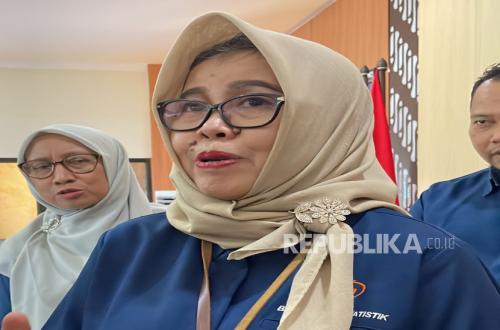
Changes in deciles within community socio-economic data have drawn attention, particularly when discrepancies arise between previous data and the latest conditions. Acting Head of the Central Statistics Agency (BPS) of the Special Region of Yogyakarta (DIY), Endang Tri Wahyuningsih, explained that decile determination is not based solely on community income.
Determination is carried out by considering various social and economic indicators, so changes in community conditions can affect decile positions in the data.
“The important thing is that the community, all of us, ladies and gentlemen, there is no such term, perhaps in its determination, it is not only income,” said Endang in Yogyakarta on Monday (24/8/2026).
She explained that in data collection, there is a possibility of inclusion errors and exclusion errors. This is a part that needs attention in the process of determining targets for government programmes.
Endang said that residents who feel their data does not match their actual conditions can carry out independent updates through Cek Bansos or other channels provided by the government.
“If, for example, there are residents whose data was perhaps not suitable yesterday, what their decile is like, they can carry out independent updates through Cek Bansos or channels already provided by the government,” she said.
According to her, independent updating remains open. However, data changes are not immediately established because they must go through mechanisms and verification in accordance with applicable procedures.
“Because it must indeed comply with the SOP, everything must be entered into the designated channels, and then we carry out verification,” said Endang.
The updating and verification process is also related to determining recipients of the Indonesia Smart Programme (PIP) and the Indonesia Smart Card (KIP). Endang mentioned that the revision process for both programmes can take up to three months.
She added that changes in deciles cannot simply be called a system error. Data is continuously evaluated to adjust to the socio-economic conditions of the community, which are undergoing change.
Meanwhile, Head of the DIY Social Service, Suyarno, said that changes in the number of people receiving and no longer receiving assistance are currently more visible compared to normal conditions.
“When it is normal, there are not too many, but currently it is less normal because so many have changed,” said Suyarno.
According to Suyarno, this condition indicates changes in community data that serve as the basis for determining aid targets. Therefore, data updating and evaluation are needed so that government programmes can be delivered according to community conditions.