
Challenging GDP Fetishism
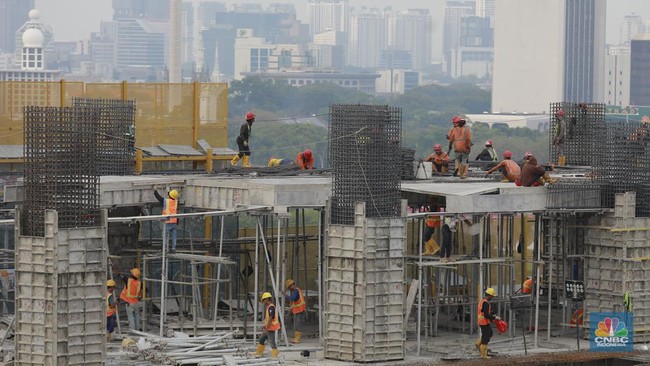
The 5.61% economic growth recorded by Indonesia in the first quarter of 2026 has triggered polarisation. The government presents optimistic details: household consumption, investment, and government spending are all growing in tandem. On social media, scepticism dominates—the growth figure is called a mirage, propped up by a 21.81% surge in government consumption rather than the pulse of the real sector.
Ironically, both sides are debating within the same frame: Gross Domestic Product (GDP). It is precisely this fetishism—the excessive worship of a single indicator—that must be challenged.
Simon Kuznets, the architect of the national income accounting system that gave birth to GDP, warned the US Senate in 1934 that a nation’s welfare cannot be inferred from this measure alone. The problem is not the tool itself, but the habit of making it the sole scorecard of national success.
Three Illusions in the Aggregate Figure
In the context of a modern economy, there are at least three fundamental limitations of GDP that must be understood. First, GDP fails to record the depletion of long-term wealth. It registers the flow of value added in a period but provides no balance sheet showing whether the nation’s assets are growing or being liquidated. For a resource-rich country like Indonesia, the consequence is fatal: deforestation, mineral extraction, and marine exploitation all print positive numbers in the GDP ledger. Environmental economists call this the ‘illusion of growth’—a nation appearing richer on paper while actually impoverishing itself.
Second, GDP completely ignores the dimension of distribution. A 5% growth that is evenly spread across all strata of society produces an identical figure to a 5% growth captured entirely by a handful of conglomerates. The indicator cannot distinguish between the two, even though the implications for people’s lives are worlds apart.
Empirical data from Indonesia proves this gap is not a theoretical abstraction. The middle class has shrunk dramatically, from 57.33 million people in 2019 to just 46.7 million in 2025 (BPS & Mandiri Institute, 2026). More than ten million people have ‘fallen down the class ladder’ in six years. The phenomenon of ‘eating into savings’ is concretely recorded: the average savings per account fell from Rp6.58 million to Rp6.04 million in just one year (Bank Indonesia, 2025). This reality confirms that a portion of the consumption underpinning GDP figures is driven not by rising real incomes, but by eroded savings—a danger signal that aggregate GDP numbers will never reveal.
Third, GDP does not reach the non-market economy. Its calculations ignore household work, volunteerism, and the care economy. By missing this dimension, the economic picture presented by GDP remains partial and misleading.
The Stiglitz-Sen-Fitoussi Commission (2009) affirmed that GDP systematically mismeasures real economic progress. A study by Kubiszewski et al. (2013), analysing 17 countries over 50 years, found that the world’s Genuine Progress Indicator (GPI) has stagnated since peaking in 1978, even as the GDP curve has continued to climb sharply. This finding aligns with the Easterlin Paradox (1974): increases in GDP per capita do not automatically translate into greater societal happiness.
Contradictory Signals from Economic Complexity
To understand these limitations more deeply, the Economic Complexity Index (ECI) developed by Cesar Hidalgo and Ricardo Hausmann (2009) is needed. The ECI measures the diversity and sophistication of a country’s productive capabilities, reflected in its ability to produce complex, high-value products.
The ECI findings are consistent across decades: countries whose economic complexity exceeds their income level tend to grow faster, be more resilient, and be far more inclusive—Japan, Germany, and South Korea are the archetypes.
Where does Indonesia stand? Two contradictory signals must be read simultaneously. The first is worrying: Harvard’s Atlas of Economic Complexity ranks Indonesia 69th in the world for ECI, a drop of six places compared to a decade ago. Vietnam, which was ranked 51st in 2020, is now projected by the latest Growth Lab report (2024) to be the world’s fastest-growing economy in terms of per capita income, driven by the expansion of its high-tech electronics industry—a stark contrast to Indonesia’s dominance in raw commodity exports. This is a serious warning about the risk of the middle-income trap.
The second signal offers a glimmer of hope. The Harvard Growth Lab projects that Indonesia will be among the fastest-growing economies in Asia over the next decade, alongside Vietnam, China, Thailand, and India. The foundation of this projection is not historical GDP figures, but Indonesia’s production structure, which is assessed to be relatively close to complex, high-value products. The window of opportunity to move up the value chain remains open—but it will not stay open forever.
Towards a Multidimensional Development Dashboard
Challenging GDP fetishism is not a naive call to discard this indicator. GDP remains vital for formulating short-term macroeconomic policy, controlling inflation, and managing the balance of payments. What is dangerous is the collective habit of making it the sole scorecard of national success.
Why is this fetishism so persistent? The answer lies in political economy. GDP is a single number that simplifies reality, making it a political commodity that is easy to sell during campaigns and easy for credit rating agencies to digest. However, for the sake of the nation’s sustainability, we must move towards a multidimensional development dashboard that also tracks indicators of welfare distribution, environmental sustainability, and genuine economic complexity.