
Challenging Falcon 9: China Secretly Launches Long March 12B Rocket
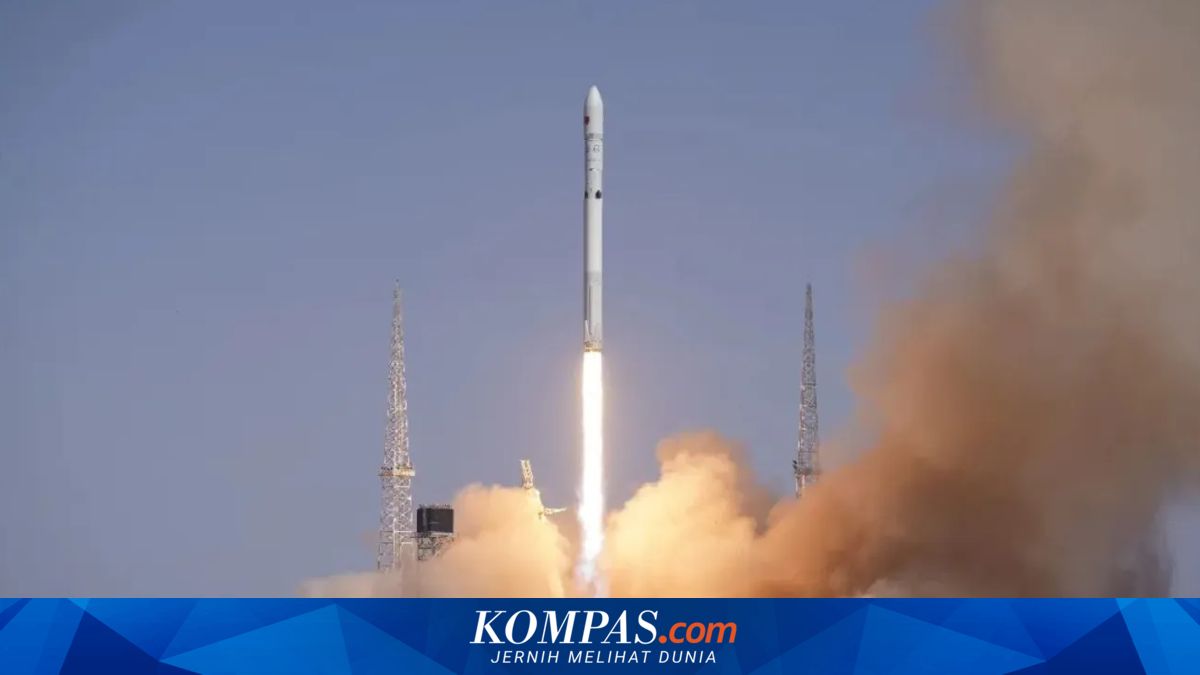
China successfully conducted the maiden launch of its latest rocket, the Long March 12B, on Monday (1/6/2026). However, the launch immediately sparked intense discussion within the global aviation and aerospace communities. This is because the nation launched this massive rocket suddenly, without issuing standard international airspace or maritime notices beforehand. Typically, such warnings serve as the primary indicator for the international community to be aware of launch schedules to avoid the risk of falling rocket debris. In this instance, news of the launch first leaked via amateur videos and social media posts from users in China.
This was not merely an empty test; the Long March 12B carried an important operational mission. The rocket transported satellite payloads to strengthen the Qianfan (Thousand Sails) project, a Chinese broadband internet mega-constellation specifically designed to challenge the dominance of Elon Musk’s Starlink. While the China Aerospace Science and Technology Corporation (CASC) has not announced the exact number of satellites carried, launches of this type typically transport a batch of 18 satellites. If this estimate is correct, there are now approximately 180 Qianfan satellites orbiting in space.
In terms of capacity and future design, China has prepared the Long March 12B as a worthy competitor to the legendary Falcon 9 rocket from SpaceX. The massive rocket, measuring 72 metres in length with a diameter of 4.37 metres, has the capability to carry loads of up to 20,000 kilograms to Low Earth Orbit (LEO). This immense capacity nearly matches China’s most powerful active rocket, the Long March 5. Similar to the Falcon 9, the Long March 12B is designed to be a reusable rocket to drastically reduce launch costs. Its primary booster stage is powered by nine advanced kerosene-liquid oxygen (kerosene-LOX) YF-102R engines. However, during yesterday’s maiden flight, CASC intentionally allowed the rocket to burn up upon re-entry and did not attempt a recovery scenario. CASC has confirmed that recovery and rocket capture tests will be conducted during future launches.