
Chair of DPR Commission III Reveals Domestic Workers Protection Bill to be Passed in Plenary Session Tomorrow
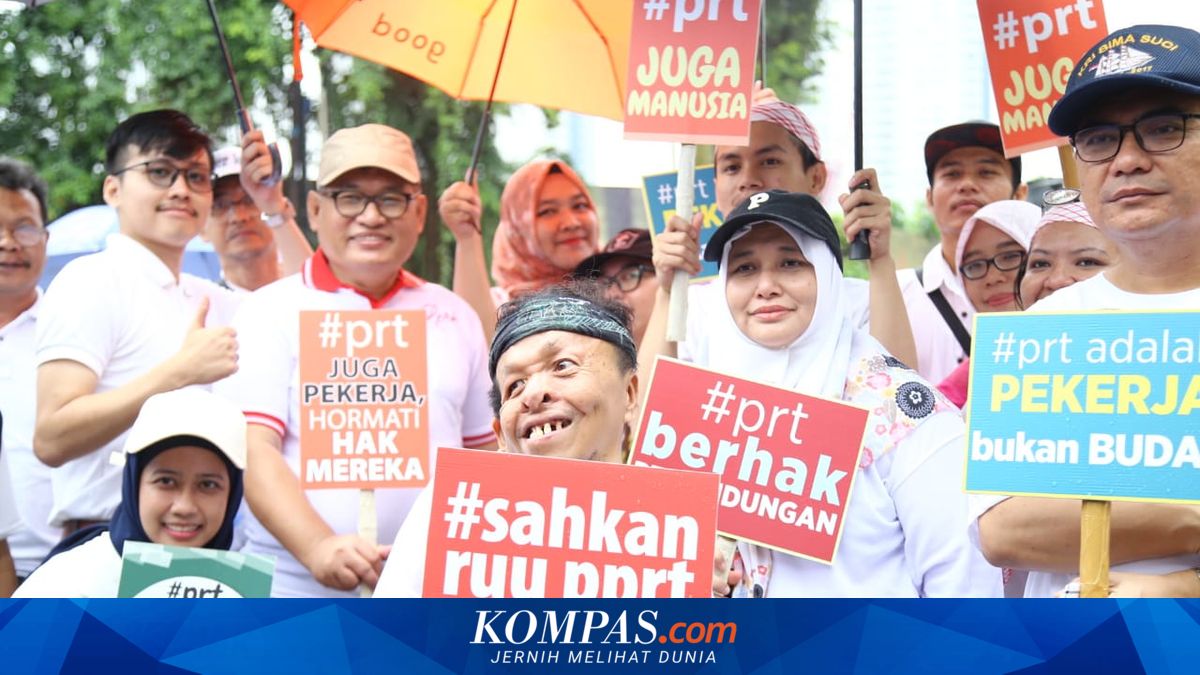
JAKARTA - The Chair of the House of Representatives’ Commission III, Habiburokhman, revealed that the Domestic Workers Protection Bill (RUU PPRT) will be brought to the plenary session on Tuesday (21/4/2026).
He made this statement while opening a public hearing (RDPU) with experts discussing the Bill on the Seizure of Assets Related to Criminal Acts, on Monday (20/4/2026).
“Today in the Legislative Body meeting, tomorrow in the plenary session, alhamdulillah, insyaallah, the PPRT Law that we have long awaited will be passed,” said Habiburokhman, quoted from the YouTube broadcast of TVR Parlemen, on Monday.
Previously, the DPR’s Legislation Body (Baleg) had given special attention to discussions on the Domestic Workers Protection Bill (RUU PPRT), which will regulate 11 key points.
Deputy Chair of Baleg DPR, Martin Manurung, stated that the RUU PPRT has been in the National Legislation Programme (Prolegnas) for 22 years.
“And I think both the DPR and the government must give attention and commitment so that this RUU PPRT can be completed soon,” said Martin, opening a working meeting (RDP) related to the RUU PPRT, on Wednesday (11/3/2026).
Currently, regulations regarding domestic workers are limited to Ministry of Manpower Regulation Number 2 of 2015 on the Protection of Domestic Workers.
“This means the level of regulation is still at the ministerial regulation. Therefore, we need input before the working committee discusses and drafts the RUU PPRT, especially regarding patterns for resolving conflicts or labour disputes in the domestic workers sector,” said Martin.
At least, there are 11 key points that will be regulated in the RUU PPRT. Some of them include regulating rights for domestic workers.
Regulation on the protection of domestic workers based on familial principles, protection, respect for human rights, justice, welfare, and legal certainty.
Recruitment of domestic workers (PRT) can be done directly or indirectly. Written employment agreements only apply to PRT recruited indirectly through Domestic Workers Placement Companies (P3RT).
Every person assisting with household work based on customs, kinship, family, education, or religion is not considered as PRT as meant in this law.
Indirect recruitment of PRT by P3RT can be done offline or online. This adjusts to technological developments.
One of the rights of PRT regulated in this bill is the right to health social security and employment social security.
Prospective PRT receive vocational education and training from central and regional governments or from PRT placement companies.
Vocational education and training for prospective PRT includes education on social and cultural norms prevailing in society according to the work context, so that PRT implementation can maintain socio-cultural relations between employers and PRT.
P3RT is a legal entity business that must have a business licence from the central government in accordance with statutory provisions.
P3RT is prohibited from deducting wages, collecting fees in any form or for any reason from prospective PRT and PRT, and prohibited from placing PRT with business entities or other institutions that are not individual employers.
Mediators can issue final and binding decisions regarding wage disputes between employers and PRT.
Guidance and supervision of PRT implementation is carried out by central and regional governments by empowering neighbourhood associations (RT/RW) to prevent violence against PRT.