
Chain Threat of Global Extreme Weather
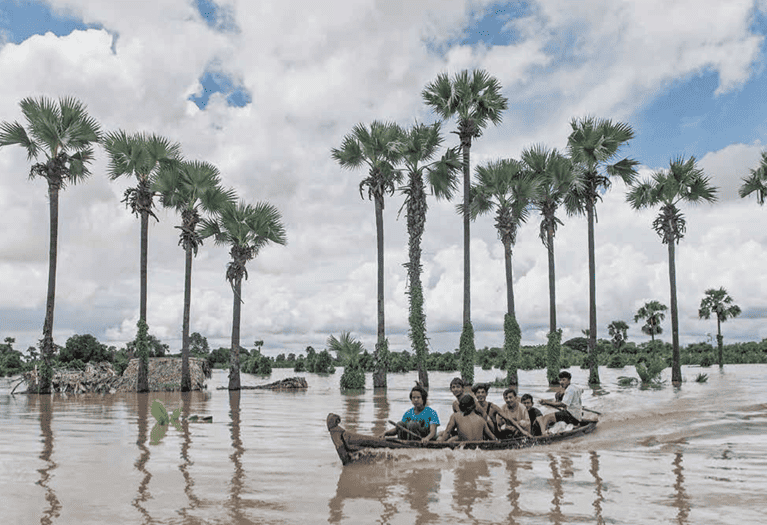
Extreme weather is no longer synonymous only with rising global temperatures. In recent weeks, various countries have faced an escalation of hydrometeorological disasters, including high-intensity rainfall, flash floods, and tropical storms that have damaged infrastructure and claimed lives. The World Meteorological Organization (WMO) has stressed that this pattern is a tangible impact of increasingly complex climate change.
In its State of the Climate in Asia 2025 report, the WMO highlighted that extreme rainfall, ocean warming, and major flooding have significantly impacted economies across Asia. The extreme rise in sea surface temperatures is a primary trigger, as it accelerates evaporation and provides the water vapour ‘raw material’ for the formation of extreme rainfall.
China has been one of the worst-affected regions. In early August, Gansu Province was hit by flash floods and landslides that killed at least 25 people. The situation was exacerbated by the threat of Typhoon Dolphin looming over the Beijing area, triggering warnings of urban flooding and mudflows in mountainous regions. China’s National Climate Centre recorded rainfall in the northern region at 20% to 50% above normal. Professor Xuebin Zhang from the University of Victoria emphasised that climate change is no longer a future threat for China, but a current reality requiring immediate infrastructure adaptation.
Similar conditions struck India, where floods and landslides in the northern and northeastern regions killed at least 25 people. The water-saturated soil characteristics in mountainous areas make these regions highly susceptible to subsequent landslides.
Indonesia faces high risks due to its geographical position and monsoon patterns. The WMO report noted the destructive impact of Cyclone Senyar in 2025, which caused over 1,200 fatalities in Indonesia and Malaysia. This demonstrates that early warning systems are a crucial key for developing nations with limited emergency infrastructure.
The WMO also issued an early warning regarding the El Niño phenomenon, which is forecast to strengthen in the second half of 2026. This condition has the potential to increase the likelihood of more intense extreme weather. ‘Monsoon extremes rarely come alone. Floods, droughts, and heatwaves can occur sequentially, creating a chain impact,’ the WMO report stated.