
Ceuta Migration Crisis Exposes Fragile EU Solidarity
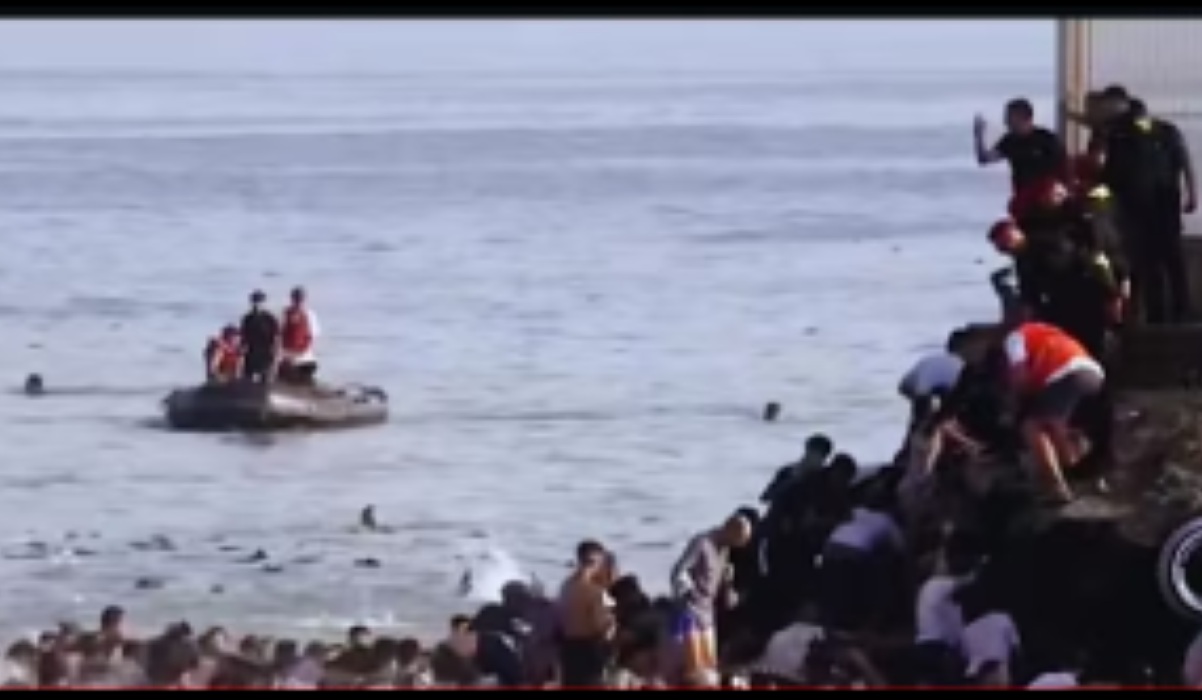
An undeniable human tragedy unfolded at the Spanish border last week. Some 72,000 desperate people stormed the breakwater barriers from Morocco towards the Spanish exclave of Ceuta. The incident left at least 72 people dead, some drowned and others trampled in the chaos.
Although the wave of migrants subsided quickly — most crossing back over the border in despair — the incident has left behind a major political crisis revealing deep rifts within the European Union (EU). Whilst data from the bloc’s border agency shows a 37% fall in illegal crossings in the first half of 2026 compared with last year, the prevailing political narrative suggests the opposite.
The highly contentious politics of migration prompted several European governments to swiftly criticise Madrid and the migration policy of the Spanish Prime Minister, Pedro Sánchez. Italy’s Prime Minister, Giorgia Meloni, called for Spain’s membership of the Schengen area to be suspended and for tighter travel controls from Spain.
France took similar steps. Interior Minister Laurent Nunez ordered additional checks along the two countries’ shared border. Even Denmark’s Prime Minister, Mette Frederiksen, urged the EU to consider all options, including suspending Schengen cooperation.
As many as 22 of the 27 EU heads of state and government signed an open letter on Saturday (1 August) characterising Sánchez’s immigration policy as a pull factor for illegal migrants. Outside Europe, Donald Trump labelled the incident an invasion and turned it into political currency ahead of the mid-term elections in the United States.
Pedro Sánchez condemned the European reaction as selfish, divisive and unlawful. In a letter, he asserted that Ceuta is not part of the Schengen area and accused other European countries of offering Spain minimal support.
The sharpest diplomatic row occurred with Italy. Spain’s Foreign Minister, José Manuel Albares, summoned the Italian ambassador after Antonio Tajani claimed, without evidence, that Madrid’s policy was encouraging people trafficking.
Experts point to several factors behind the surge, including a recent Spanish Supreme Court ruling barring the summary deportation of migrants arriving by sea without legal process. There is also speculation that Morocco deliberately allowed the flow of migrants to pressure Spain after Sánchez’s visit to Algeria, Morocco’s principal rival.
Carla Hobbs of the European Council on Foreign Relations noted that the crisis shows how fragile EU solidarity is. “With just one day of pressure on one part of the EU’s external border, the Schengen system nearly collapsed. It shows how ‘cheap’ it is to bring the European Union to its knees,” she said.
By Tuesday (4 August), the EU sought to present a united front at a meeting of interior ministers. Every member state ultimately praised Spain’s response to the border rush. However, with 2,000 migrants still held in Ceuta, political tensions beneath the surface continue to smoulder.
He stressed that the European Union ought to help Spain safeguard Ceuta and Melilla as the only EU territories with land borders with Africa.
Source: jawawa.id (https://jawawa.id/newsitem/ceuta-migration-crisis-exposes-fragile-eu-solidarity-1785858658)
Originally published by Media Indonesia (https://mediaindonesia.com/internasional/918343/krisis-migrasi-ceuta-tunjukkan-kerapuhan-solidaritas-uni-eropa), translated from Indonesian