
Ceuta Document Leak: Spanish Intelligence Knew of Planned Migrant Exodus
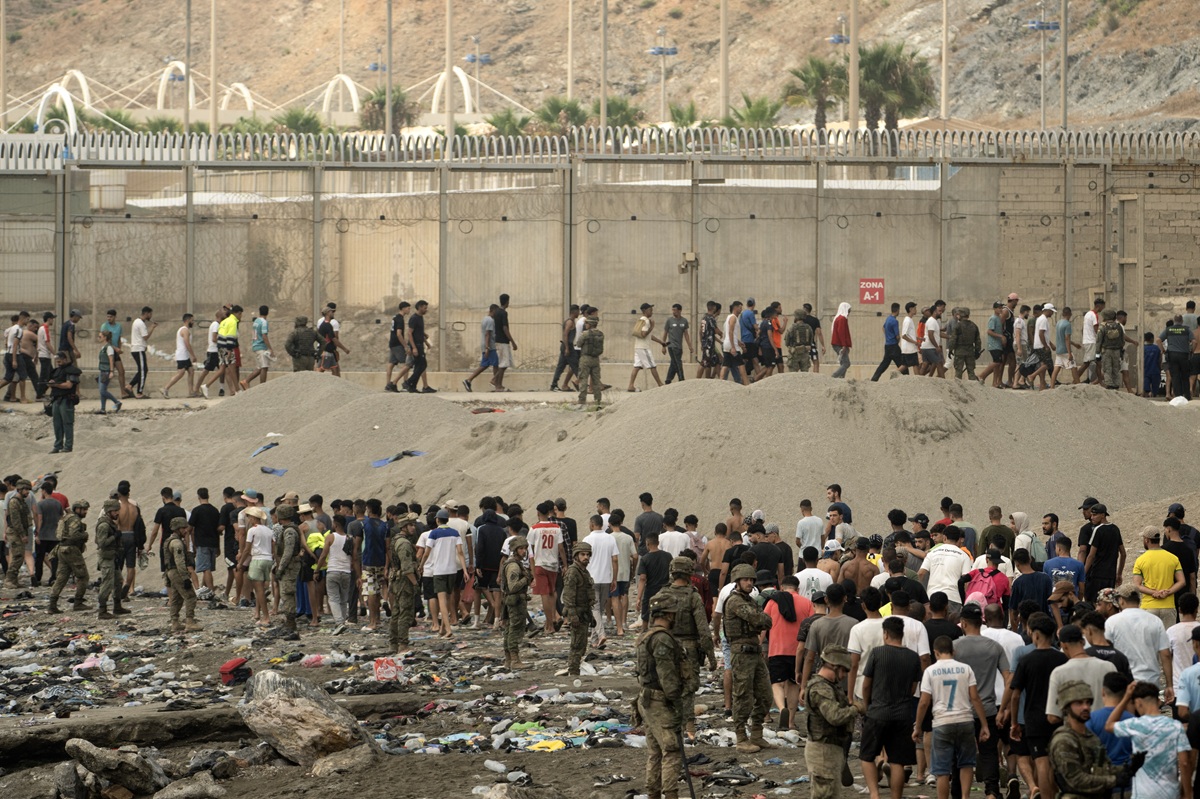
Secret documents belonging to the Spanish Government, which have recently been released to the public, reveal new facts regarding the migrant crisis in the Ceuta enclave. Spain’s National Intelligence Centre (CNI) had apparently provided early warnings regarding calls for mass breaches on social media, one day before tens of thousands of migrants actually crossed into the territory.
The notification was conveyed by the CNI to Moroccan authorities and local officials in Ceuta on 29 July. The intelligence agency detected massive movement within social media groups encouraging migrants to cross the border on the following day.
These findings have triggered a wave of fierce criticism from the opposition. Spanish Prime Minister Pedro Sánchez is accused of misleading the public, having repeatedly asserted that the wave of arrivals on 30 July was entirely unpredictable. Before Parliament, Sánchez stated that the government had not received any data depicting the scale of the crisis that was to unfold at the end of July.
However, the contents of the declassified CNI documents suggest otherwise. On 29 July, the CNI sent official notes to Moroccan intelligence regarding findings from WhatsApp and Facebook groups organising the breach attempts.
The CNI reported that these messages reached approximately 180,000 people. One screenshot of a message found stated: “Anyone who wants to cross has a last chance on Throne Day [30 July] at 8 pm; authorities will be distracted by celebrations and parades.”
In addition to contacting Morocco, the CNI also sent similar warnings via text message to central government representatives in Ceuta and the Guardia Civil.
These documents are part of 40 security files that were finally opened to the public due to high political pressure on Sánchez. The Spanish government has also been hit by speculation regarding Morocco’s involvement in facilitating the crossings. Leaked Spanish police reports from earlier this month even indicated potential involvement by the Moroccan police.
Nevertheless, Sánchez has maintained his stance that there is no evidence showing complicity from the Moroccan side. Before these documents were released, Sánchez reaffirmed on national television that the massive arrival of migrants was unexpected.
These statements were immediately seized upon by opposition politicians. Ester Muñoz of the conservative People’s Party launched harsh criticism, stating, “They had the information; they are directly responsible for the invasion of Ceuta and for the victims who died.”
Echoing Muñoz, Jorge Buxadé from the right-wing Vox party asserted that the documents prove government lies. “Sánchez and his gang of criminals must face the Supreme Court on charges of treason and security crimes,” Buxadé wrote on social media.
Responding to these allegations, Sánchez’s administration stated that they acted according to procedure based on the limited information received at the time. Spanish Foreign Minister José Manuel Albares admitted he was unaware of the intelligence reports predicting the scale of the crisis.
A government insider added that the released documents actually prove that the initial information was not detailed enough to predict the scale of the crisis or to prepare an adequate response in a timely manner.
Meanwhile, the Representative of the Central Government in Ceuta, Miguel Ángel Pérez Triano, clarified the findings regarding the text messages received by his office from the CNI. “The WhatsApp message on 29 July did not constitute a formal warning or report. It was nothing more than a routine exchange of information,” Pérez Triano insisted.
According to data from the Mayor of Ceuta, at least 72,000 migrants crossed from Morocco to Ceuta on 30 and 31 July by swimming around the border fences. At least 100 people died during the incident. Although most migrants have been returned, approximately 5,000 people remain in makeshift camps, on the streets, and in coastal areas, triggering social tension with local residents.