
CERAH Urges Acceleration of Solar Power Projects to Reduce Coal Dependency
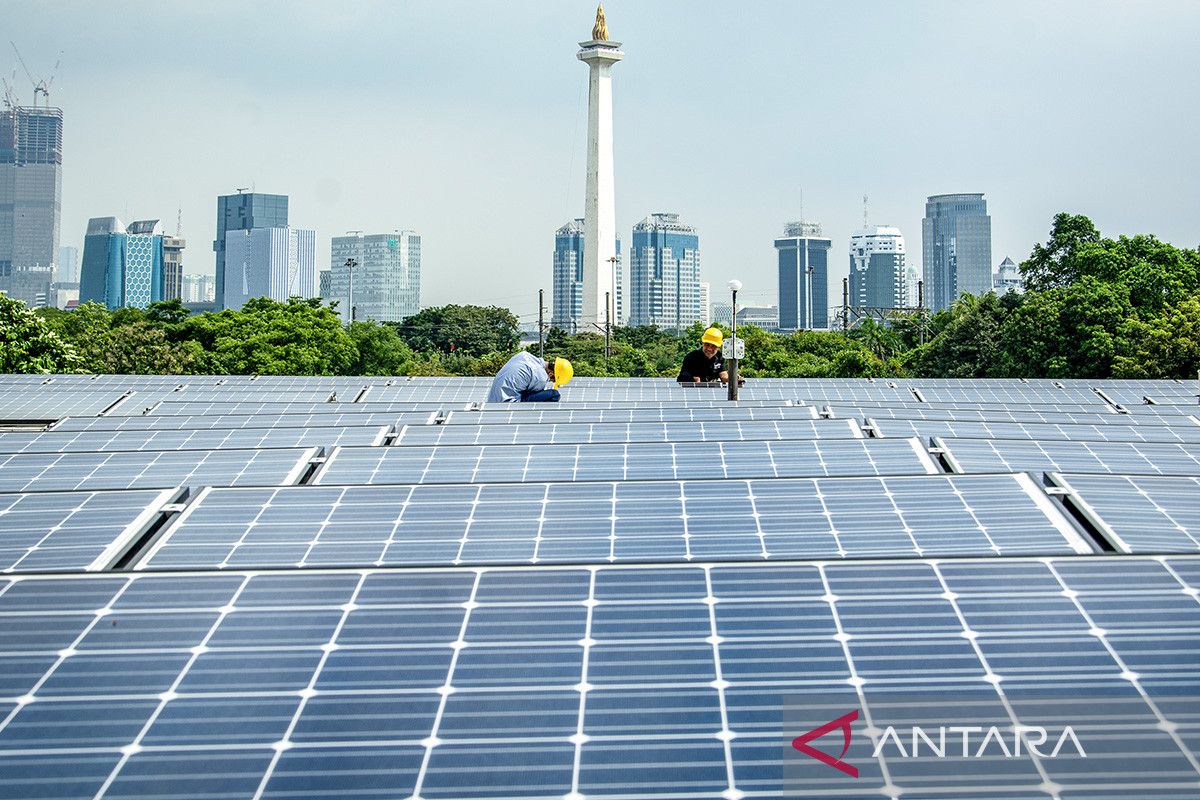
The dependence of Indonesia’s electricity supply on coal-fired power plants (PLTU) at over 60 per cent makes the nation’s energy security vulnerable, as it remains subject to the availability of coal supplies.
Dwi Wulan Ramadani, Policy Strategist Coordinator at CERAH, is urging the acceleration of the 100 gigawatt (GW) solar power plant (PLTS) construction project to reduce this dependency on coal. In an official statement received in Jakarta on Friday, Dwi noted that maintaining problematic coal plants would ultimately disadvantage Indonesia. Given President Prabowo’s ambition to develop 100 GW of solar power, problematic coal projects should be directly replaced with solar alternatives.
She further noted that rotational power outages continue to occur in several regions despite Indonesia’s reliance on domestic coal production. “The development of solar power must be balanced with the early retirement of coal-fired power plants so that Indonesia does not repeat the oversupply incidents of several years ago, while simultaneously ensuring that the 100 GW project is realised and does not potentially become a stranded asset that causes state losses,” said Dwi.
The government’s plan to build 100 GW of solar power must be accompanied by consistency in reducing reliance on coal-fired power plants within the revision of PLN’s 2025–2034 Electricity Supply Business Plan (RUPTL). This is particularly important as some of the 6.3 GW of additional coal capacity planned in the RUPTL are indicated to be stalled.
PLN has acknowledged that 34 coal-fired power plants are categorised as constrained within the 2025–2034 RUPTL; some will be halted, while others will be continued or replaced with alternative fuel power plants. However, beyond that list, several civil society organisations have identified other coal plants struggling with construction, such as Jambi 1 and 2, Sumut 1, and Kalselteng 3.
Oscar Anugrah, Executive Director of WALHI Jambi, added that several coal plants in Sumatra face utilisation challenges and uncertain long-term economic prospects due to increasing energy transition commitments. For instance, the 600 MW expansions of Jambi-1 and Jambi-2 have stalled. This serves as evidence that the government needs to review coal power projects that are not yet operational and push for the accelerated development of green power plants in the RUPPL revision.
“We welcome the government’s plan to include the 100 GW solar power development in the PLN RUPTL revision. This revision must serve as a momentum to review new coal-fired power projects that have not yet commenced operations,” said Oscar.