
Cepaka Village in Tabanan Begins Converting Plastic Waste into Fuel
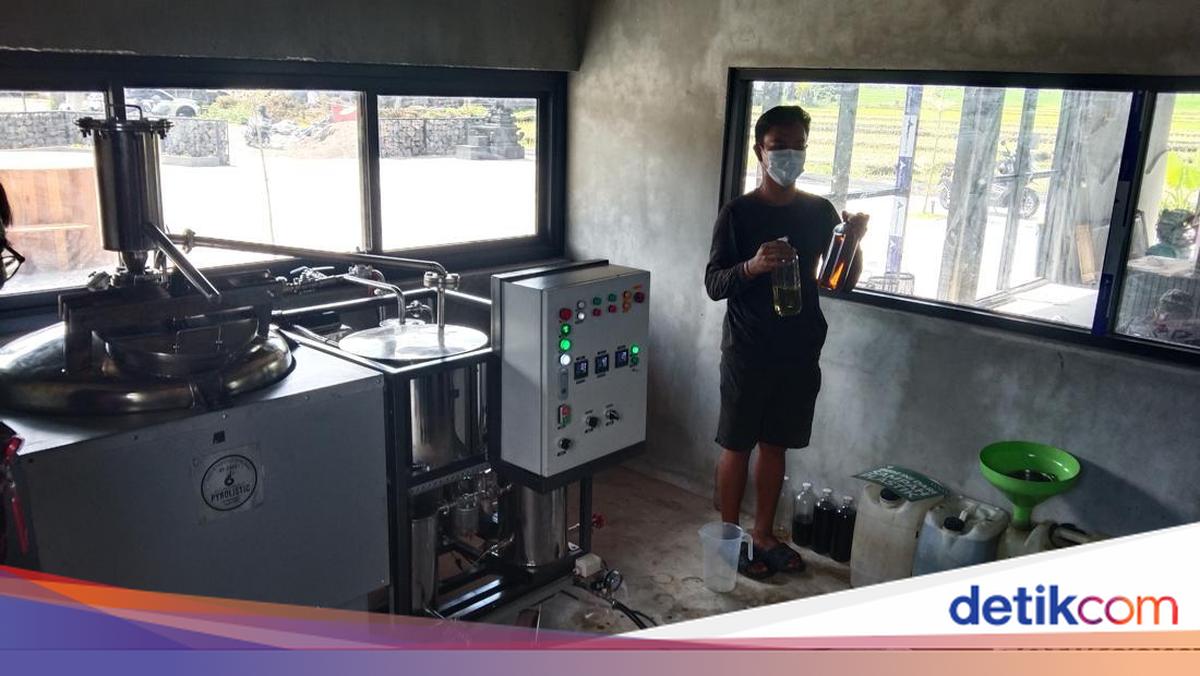
Cepaka Village in Kediri District, Tabanan, has demonstrated the capability to manage its internal waste. Inorganic and organic waste from residents is being converted into fuel oil and fertiliser.
Cepaka Village Head I Ketut Tedja said in an interview on Wednesday (23/6/2026) that the village has partnered with the Coco Social Fun Foundation to process plastic waste into diesel and petrol using pyrolysis technology from an investor operating a business in the area.
The machine was originally a corporate social responsibility (CSR) programme grant from a foreign party in Denmark through the Coco Social Fun Foundation. However, subsequent management is carried out through the Putra Jaya Cepaka Foundation, a village-owned foundation with the flexibility to receive and manage grants.
“The waste management system is centralised at the Village-Owned Enterprise (BUMDES) and in cooperation with a third party. BUMDES will sort the plastic waste that meets the criteria for processing into fuel,” explained Ketut Tedja.
Tedja emphasised that this technology is not yet the primary solution to the plastic waste problem because the machine’s capacity is still limited. Currently, the machine can only process 10 kilograms of plastic waste into approximately 8 to 10 litres of diesel, making it economically unprofitable.
“This is still limited to an innovation and a pilot model showing that plastic waste can indeed be processed into fuel,” he said.
Meanwhile, Coco Social Fun Programme Coordinator Early Indira Salsabila added that since trials began in early June 2026, at least 120 kilograms of plastic waste have been processed into diesel and petrol.
In a single four- to five-hour process, the machine can convert 10 kilograms of plastic into about 8 to 9 litres of diesel and approximately 550 millilitres of petrol.
“The diesel produced has been tested on a tractor engine,” Salsabila explained.
The types of plastic that can be processed include mineral water bottles, bottle caps, bottle labels, snack packaging, pipes, and used cables.
In addition to processing plastic waste, Cepaka Village is also beginning to develop organic waste processing. The village is currently exploring the provision of processing land and receiving assistance from the organic waste processing team at the Tampaksiring Presidential Palace.
In the first trial, 1.2 tonnes of organic waste were successfully processed into approximately 800 kilograms of fertiliser within 18 days.