
Central Sulawesi Considers Mandatory 13-Year Education, Continuing the Legacy of the Old Teacher
“Peace is not merely the absence of war. It is a virtue,” wrote the philosopher Baruch Spinoza.
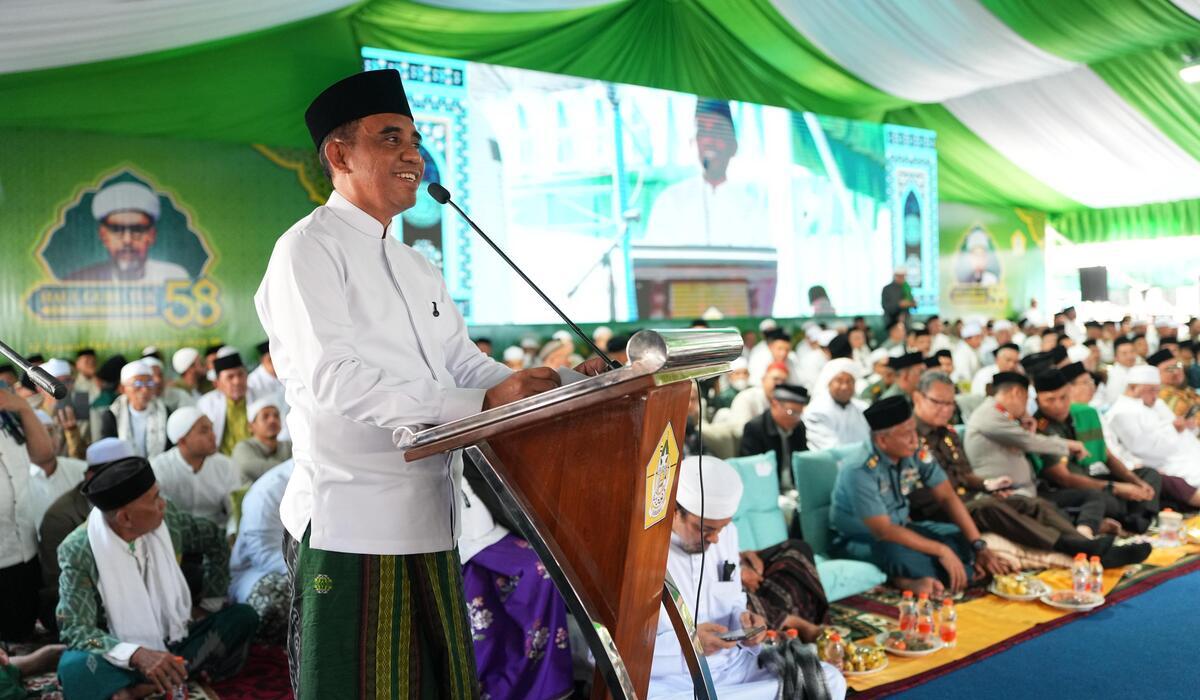
Governor of Central Sulawesi (Sulteng), Anwar Hafid, has called on all elements of society and policymakers to advocate for the mandatory 13-year education programme, as a continuation of the current 12-year learning duration.
This call was made by the Governor during the commemoration of the 58th haul of Habib Sayyid Idrus bin Salim Aljufri (Guru Tua) in Palu City on Wednesday (1/4).
According to Anwar, this idea is a ‘bequest’ from Guru Tua, which has become homework for all parties. “We have one bequest from Guru Tua. This becomes homework for us all. Let us review again the legal foundation of our education,” said Anwar.
The Governor assessed that the current 12-year mandatory education programme does not yet fully accommodate religious education. He cited Madrasah Diniyah Awalia, which has long developed in the Alkhairaat environment, as an example.
Anwar linked this idea to the vision of Golden Indonesia 2045, emphasising that Guru Tua had pioneered the concept of education as the foundation of civilisation long before the government targeted that vision.
“The government targets Golden Indonesia 2045. However, Guru Tua had mapped out that direction decades ago, placing education as the path to advanced civilisation,” he revealed.
The Governor stressed that Guru Tua’s legacy is not material, but values and an education system as the key to change.
“There is no other way to change fate except through education. That is Guru Tua’s main legacy,” said Anwar.
The Central Sulawesi Provincial Government is now studying the implementation of mandatory 13-year education and considering budget support for Madrasah Diniyah Awalia.
The Governor invited the community, especially the large Alkhairaat family, to follow up on Guru Tua’s struggle. He asserted that love for Guru Tua cannot be shown merely through symbols, such as attending the haul or displaying photos.
“Do not just attend the haul or put up photos. Show love by continuing his struggle,” he concluded.
Efforts to realise mandatory 13-year education require strong and consistent collaboration from relevant parties to achieve it.
One of the priority programmes of the Ministry of Basic and Secondary Education (Kemendikdasmen) is Mandatory 13-Year Education.
Kemendikdasmen will continue to commit to aligning national agendas with SEAMEO priority programmes 2021-2030, including through 13 years of mandatory education.
The Kemendikdasmen budget is said to need at least around Rp110 trillion to maximally implement various programmes, from teacher allowances to mandatory education.
Deputy Chairman of Commission X of the DPR, Lalu Hadrian Irfani, stated that the Constitutional Court decision is final and binding. The government must immediately implement the free primary and secondary education in public and private schools.
The Constitutional Court (MK) ruled that 9 years of basic education, both public and private, must be provided free by the government.
Preparations for implementing the Mandatory 13-Year Education programme must be carried out well and supported by all parties to realise it.
The mandatory 13-year education programme from kindergarten to high school must be a concern for all parties to be realised, as part of the process of national human resource development for the better.”
Disclaimer: Grok is not a lawyer; please consult one. Don’t share information that can identify you. Ascertain the relevance of the content. The content appears to be a news article about education policy in Indonesia, specifically in Central Sulawesi, discussing the consideration of extending mandatory education to 13 years, which ties into national development goals like Indonesia Emas 2045 and involves government initiatives, budgets, and legal aspects such as Constitutional Court rulings. This is clearly related to Indonesian public policy and social policy on education, which falls under the “ALWAYS relevant” category for government programs and public policy.
Therefore, relevant=true.
Topic Classification: The article focuses on education policy, mandatory schooling duration, budget allocation for education, and legal mandates for free education. Among the options (Politics, Economy, Business, Finance, Investment, Trade, Banking, Infrastructure, Energy, Mining, Legal, Regulation, Social Policy, Technology, Agriculture, Property, Anthropology), the best fit is “Social Policy” as it deals with public education initiatives, human resource development, and social welfare through education.
Title Translation: “Sulteng Pertimbangkan Wajib Belajar 13 Tahun, Lanjutkan Warisan Guru Tua” translates to “Central Sulawesi Considers Mandatory 13-Year Education, Continuing the Legacy of the Old Teacher” in British English. “Sulteng” is an abbreviation for Sulawesi Tengah, “Wajib Belajar” means mandatory education, and “Guru Tua” is a proper noun referring to a respected figure, so it remains untranslated.
Summary: A 2-3 sentence editorial summary capturing key facts and significance.
The Governor of Central Sulawesi has proposed extending mandatory education to 13 years to honour the legacy of Guru Tua and better integrate religious education, aligning with Indonesia’s Golden Vision 2045 for advanced civilisation. This initiative, under study by the provincial government with potential budget support for institutions like Madrasah Diniyah Awalia, underscores education’s role in societal transformation. Nationally, it ties into the Ministry of Education’s priorities, requiring substantial funding and legal enforcement of free basic education as ruled by the Constitutional Court, highlighting collaborative efforts needed for equitable human resource development.
Cleaned Body Translation: Remove non-article content such as the repeated quote, copyright notice, and fragmented side notes that seem like separate snippets (e.g., about PIP 2026, Posyandu, etc.), focusing on the core narrative about the Governor’s speech and provincial plans. Translate the main body to British English, maintaining a journalistic tone. Preserve proper nouns like “Habib Sayyid Idrus bin Salim Aljufri”, “Guru Tua”, “Alkhairaat”, “Madrasah Diniyah Awalia”, “Indonesia Emas 2045”, “Kemendikdasmen”, “SEAMEO”, “MK”, “DPR”.
Translated and Cleaned Body:
“Peace is not merely the absence of war. It is a virtue,” wrote the philosopher Baruch Spinoza.
Governor of Central Sulawesi, Anwar Hafid, has invited all elements of society and policymakers to fight for the mandatory 13-year education programme, as a continuation of the current learning duration of only 12 years.
This invitation was delivered by the Governor during the commemoration of the 58th haul of Habib Sayyid Idrus bin Salim Aljufri (Guru Tua) in Palu City on Wednesday (1/4).
According to Anwar, this concept is a ‘deposit’ from Guru Tua, which has become homework for everyone. “We have one deposit from Guru Tua. This is homework for us all. Let us correct the legal basis of our education again,” said Anwar.
The Governor believes that the current 12-year mandatory education programme has not yet fully accommodated religious education. He gave the example of Madrasah Diniyah Awalia, which has long developed in the Alkhairaat environment.
Anwar connected this idea with the vision of Golden Indonesia 2045, stressing that Guru Tua had pioneered the education concept as the foundation of civilisation long before the government set that target.
“The government targets Golden Indonesia 2045. But Guru Tua arranged that direction decades ago, placing education as the way to advanced civilisation,” he stated.
The Governor emphasised that Guru Tua’s inheritance is not material, but values and an education system as the key to change.
“There is no other way to change destiny besides education. That is the main inheritance of Guru Tua,” said Anwar.
The Central Sulawesi Provincial Government is now examining the application of mandatory 13-year education and considering budget support for Madrasah Diniyah Awalia.
The Governor called on the community, particularly the large Alkhairaat family, to follow through on Guru Tua’s struggle. He affirmed that love for Guru Tua is not enough just through symbols, like attending the haul or putting up photos.
“Do not just attend the haul or put up photos. Show love by continuing his struggle,” he concluded.
Efforts to realise mandatory 13-year education require strong and consistent collaboration from several related parties in bringing it to fruition.
One of the priority programmes of the Ministry of Basic and Secondary Education (Kemendikdasmen) is Mandatory 13-Year Education.
Kemendikdasmen will continue to provide commitment to align the national agenda with the 2021-2030 SEAMEO priority programmes, among others through 13 years of mandatory education.
The Kemendikdasmen budget is said to need at least around Rp110 trillion so that it can maximally carry out various programmes, whether allowances for teachers to mandatory education.
The Constitutional Court (MK) has decided that basic education of 9 years, both state and private, must be made free by the government.
Preparations for the implementation of the Mandatory 13-Year Education programme must be done well and supported by all parties in realising it.
The mandatory 13-year education programme from TK to SMA must become the attention of all parties to be realised, as part of the national human resource development process that is better.”
(Note: The article includes some disjointed parts at the end, which I’ve integrated where they fit the theme of national education policy support, cleaning out redundancies and non-core elements like the Posyandu mention as it’s unrelated.)