
Central Papua Utilises Tribal Chiefs as Bridge for Indigenous Aspirations
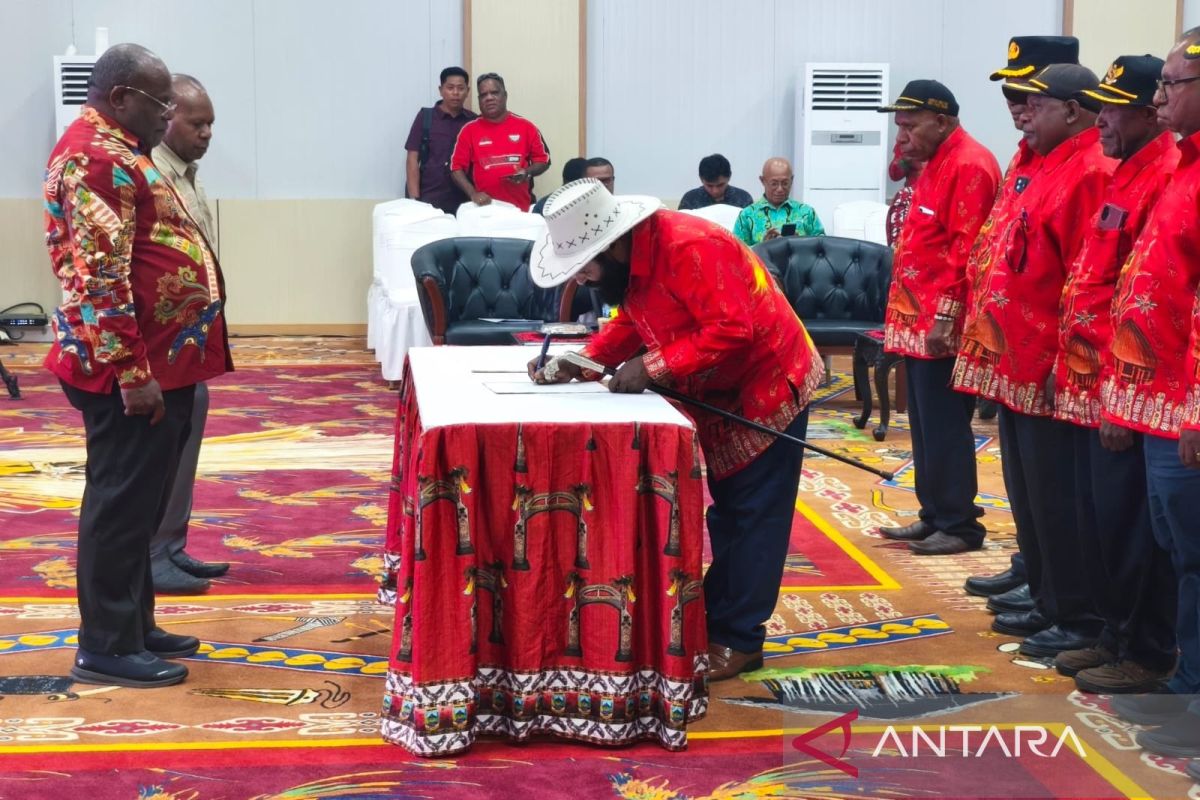
Nabire (ANTARA) - The Central Papua Provincial Government is utilising tribal chiefs as a bridge for the aspirations of indigenous communities to connect with the government, aiming to strengthen communication, maintain unity, and prevent social issues from escalating into conflict.
Speaking in Nabiente on Friday, the Governor of Central Papua, Meki Nawipa, stated that the provincial government has officially recognised eight major tribal chiefs in Central Papua as partners for the development of the indigenous Papuan people (OAP).
“Tribal chiefs must serve as a bridge in conveying the aspirations of indigenous communities to the government,” he said.
According to the Governor, tribal chiefs also need to build communication with other tribal leaders and community figures to maintain unity and order in Central Papua.
In addition to maintaining the social life of the community, tribal chiefs are expected to pay attention to issues regarding customary land, education, health, employment, and the economic empowerment of indigenous communities.
“Tribal chiefs can also provide input to the government regarding the implementation of development and the policies of the Papua Special Autonomy,” he added.
He noted that the government possesses accurate data on indigenous Papuans to ensure that development programmes and affirmative action policies are implemented precisely and effectively.
Furthermore, he stated that tribal chiefs play a role in preserving identity and customary values, resolving issues through existing customary and legal mechanisms, and providing guidance to the younger generation.
He expressed hope that tribal chiefs would fulfil their roles as community leaders and government partners in maintaining unity and peace in Central Papua.
“Regarding customary rights, the aspirations of the people below, and development needs, the tribal chiefs will act as the link to the government,” he said.
The Head of the Central Papua National Unity and Politics Agency (Kesbangpol), Albertus Adii, stated that this recognition is a form of partnership between the government and indigenous communities, while still respecting customary mechanisms and authority.
The eight major tribes recognised by the Central Papua Provincial Government are the Mee, Moni, Wolani, Lani, Wate, Damal, Amungme, and Kamoro.
He emphasised that the government is not selecting or appointing tribal chiefs, nor is it taking over customary leadership mechanisms. The government is merely providing recognition of the results of the indigenous community’s own processes as a form of partnership.
“The government’s recognition is not intended to select or appoint tribal chiefs or to take over the mechanisms of customary leadership,” he said.
He noted that the recognised tribal chiefs and deputy chiefs are not structural officials or government apparatus, but rather partners in communication, the delivery of aspirations, the mediation of social issues, and the early detection and prevention of conflict.
He added that this partnership is expected to ensure that various community issues can be reported earlier, allowing for resolutions through dialogue, deliberation, and applicable customary and legal mechanisms.