
Central Papua Trains Women from 1,600 Churches to Become Reliable MSMEs
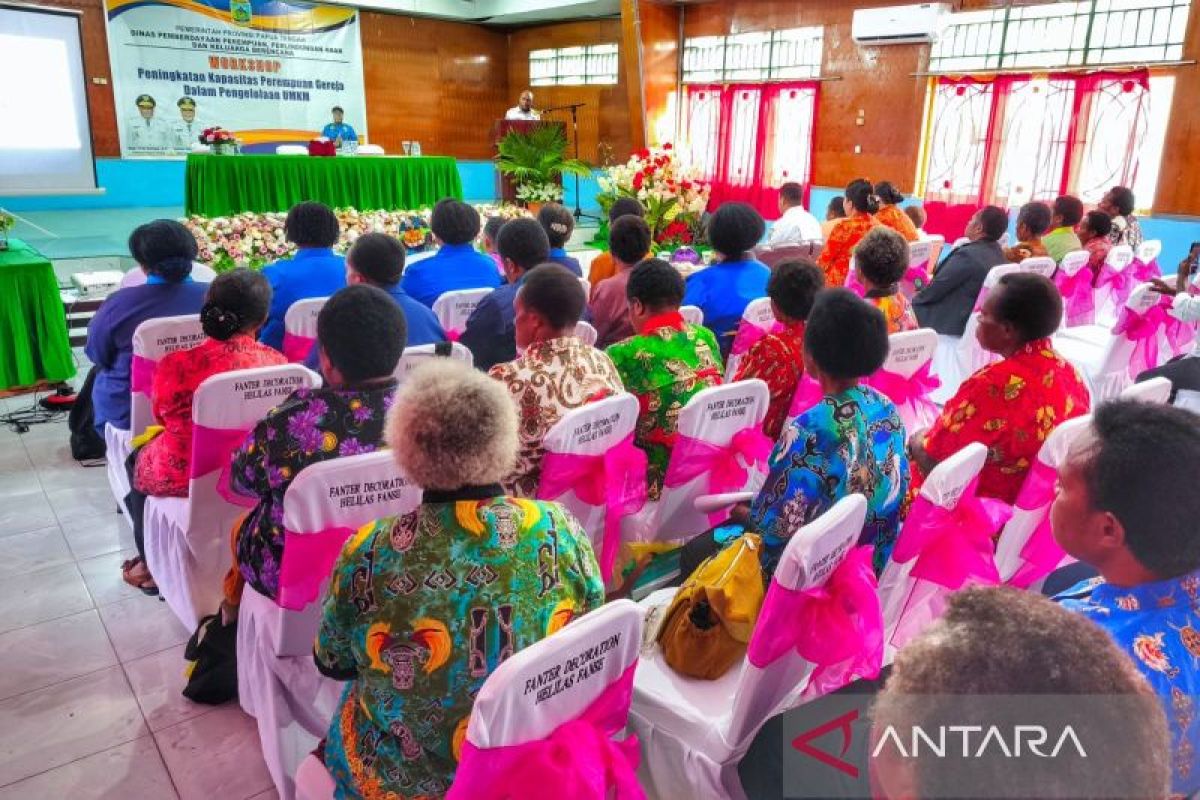
The Central Papua Provincial Government is training women from 1,600 churches across eight regencies to equip them with the skills to manage micro, small, and medium enterprises (MSMEs) through a phased coaching programme aimed at strengthening family economies and encouraging inclusive development.
Agustinus Bagau, Head of the Central Papua Office of Women’s Empowerment, Child Protection, and Family Planning (DP3AKB), stated in Nabire on Wednesday that this year marks the beginning of the church women’s coaching initiative. “This is the start of the coaching for church women. We will gradually coach women in eight regencies, targeting women from 1,600 churches to receive MSME management training,” he said during the opening of the Capacity Building Training for Church Women in Managing MSMEs.
He explained that the programme is one of the flagship initiatives of the Central Papua Governor and Deputy Governor, being implemented in stages starting this year. The training aims to enhance women’s abilities in managing MSMEs through instruction in business management, financial management, access to capital, digital marketing, and product development. This capacity building is expected to produce competent and independent MSME actors while strengthening the role of women as drivers of the family economy and regional development.
The initial training involves 209 participants from four regencies: Nabire, Paniai, Deiyai, and Dogiyai. Participants are provided with learning methods that include material delivery and hands-on practice, enabling them to apply the knowledge gained in developing their businesses.
Victor Fun, Assistant III for General Administration at the Central Papua Regional Secretariat, representing the Governor, said the provincial government is committed to strengthening the role of women as part of fair and inclusive development that benefits the community. He noted that women make significant contributions within families, communities, and church environments, yet still face various obstacles, such as business management skills, financial record-keeping, access to financing, marketing, product packaging, and the use of digital technology.
He expressed hope that through the training, participants would be able to develop business plans, manage finances, calculate production costs, determine selling prices, and devise marketing strategies tailored to their respective business needs. He added that the activity is also part of implementing gender mainstreaming, ensuring that women and men receive equal opportunities, access, benefits, and roles in development.
He assessed that church women’s communities hold a strategic position as government partners in building family economic self-reliance and strengthening social resilience, given the strong social role of churches within society. “The government hopes this training will not stop at the delivery of materials, but will be followed by business group mentoring, strengthening business legality, expanding marketing access, and partnerships with financial institutions so that the benefits are truly felt by the community,” he said.