
Central Papua Forms Forest and Land Fire Task Force in Response to Hundreds of Hotspots
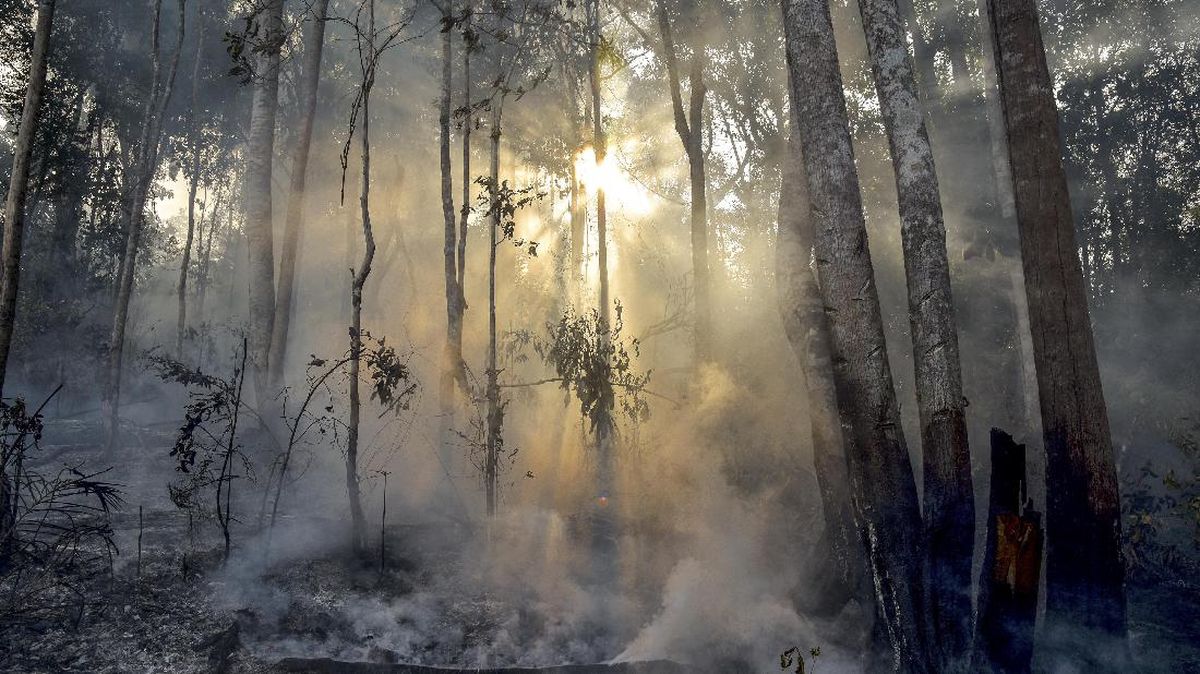
The Central Papua provincial government has formed a Forest and Land Fire Task Force (Satgas Karhutla) after various hotspots were detected in the region. The task force was established after the Central Papua provincial government held a meeting to address the increase in forest and land fires in several areas, and will coordinate fire response efforts across eight regencies in the province.
Spokesperson for the Central Papua Governor, Emanuel You, in Nabire on Saturday, said the establishment of the Karhutla Task Force was stipulated through Central Papua Governor Decree Number 100.3.1.144 of 2026, with Central Papua Governor Meki Nawipa serving as chair. “The Governor will lead a zoom meeting on Sunday (23/8) with the task force heads of the eight regencies. The task force heads of the eight regencies are the regents,” said Emanuel You.
The Meteorology, Climatology and Geophysics Agency (BMKG), in its report for 23-29 August 2026, stated that Central Papua is one of the provinces on the island where smoke has been detected, alongside Papua, West Papua, Highland Papua, and South Papua. BMKG reported that 214 hotspots were detected in Papua, consisting of 3 hotspots in Papua, 86 in West Papua, 8 in Southwest Papua, 50 in Central Papua, 21 in Highland Papua, and 46 in South Papua.
Meanwhile, as reported by Antara on Saturday (22/8), BMKG Nabire recorded a total of 653 hotspots detected in Central Papua. Nabire Regency had the highest number with 321 hotspots. Puncak Regency followed with 100 hotspots, then Dogiyai with 97 and Paniai with 59.
Emanuel said the Karhutla Task Force was formed to ensure the initial steps taken by each regency in handling forest and land fires, as well as to identify conditions and response needs in each area. He stated that each regency must provide data on fire developments and emergency response measures already taken to the provincial task force through the coordination mechanism.
Data from each regency is also needed to determine the escalation level of fires so that response needs can be adjusted to conditions on the ground. Emanuel also urged the public to help prevent fires by not engaging in burning activities that can damage forests and land as sources of livelihood for the community.
“If we consider forests and land as the noken of life, then it is our obligation to protect them, to preserve them. We must no longer carry out acts of burning,” he said.