
Central Lombok Regency Government strengthens digital security
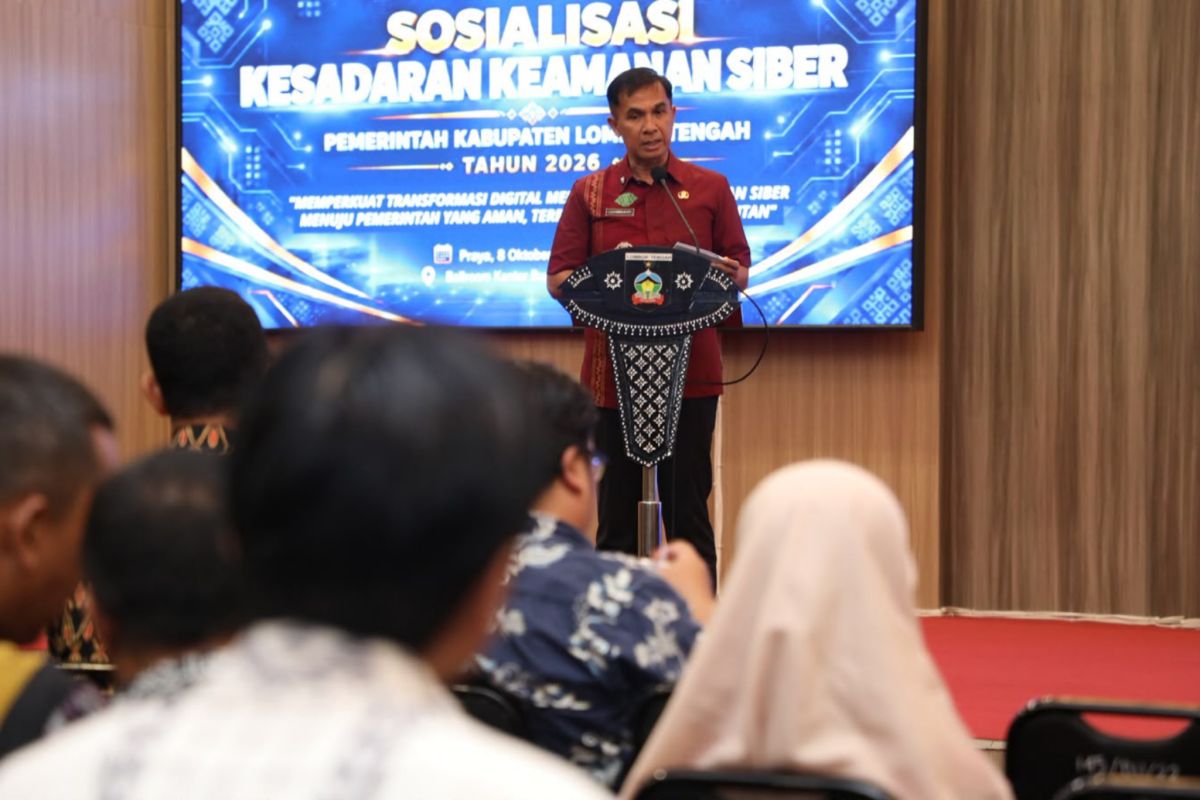
Central Lombok (ANTARA) – The Central Lombok Regency Government in West Nusa Tenggara is continuing to strengthen the security of its government information systems to guard against hacking and the leakage of public data in the digital sphere.
The awareness campaign is part of local government efforts to improve officials’ understanding of the importance of data protection and information security in delivering Electronic-Based Government Systems (SPBE), Central Lombok Regional Secretary Lalu Firman Wijaya said at a cybersecurity awareness session organised by the regency’s Communication and Informatics Office (Diskominfo) on Thursday.
He said the use of digital technology in government services must be matched by stronger security systems and greater vigilance among all officials.
Cybercrime threats, he said, are constantly evolving, with various methods capable of targeting government information systems. Each regional agency needs to understand digital security risks, including the possibility of hacking caused by user negligence, Lalu said.
The regional secretary stressed that information security is not solely the responsibility of information technology managers, but of all officials who use digital systems in their government work.
Through the event, the Central Lombok Regency Government hopes representatives from every regional agency will help raise cybersecurity awareness in their respective workplaces. Stronger cybersecurity is also expected to support a safe, trusted and sustainable digital transformation of government, while ensuring public data and services are protected from various cybercrime threats, he said.
A speaker from Indonesia’s National Cyber and Crypto Agency (BSSN), Sandiman, outlined different forms of cyber threats, including phishing scams using fake links, digital identity theft and potential data leaks caused by weak account and information-system security.
Human behaviour is crucial to digital security, the speaker said. User negligence—such as using weak passwords, opening suspicious links and sharing sensitive information—can provide cybercriminals with an entry point.
To reduce these risks, regional officials were encouraged to adopt digital security practices, or cyber hygiene, including using strong passwords, enabling multi-factor authentication (MFA) and remaining alert to suspicious online activity.
Participants also received guidance on initial responses to suspected cybersecurity incidents, including reporting procedures and coordination to ensure threats can be addressed promptly.