
Central Kalimantan Supports Pulang Pisau Development with Strategic Programmes
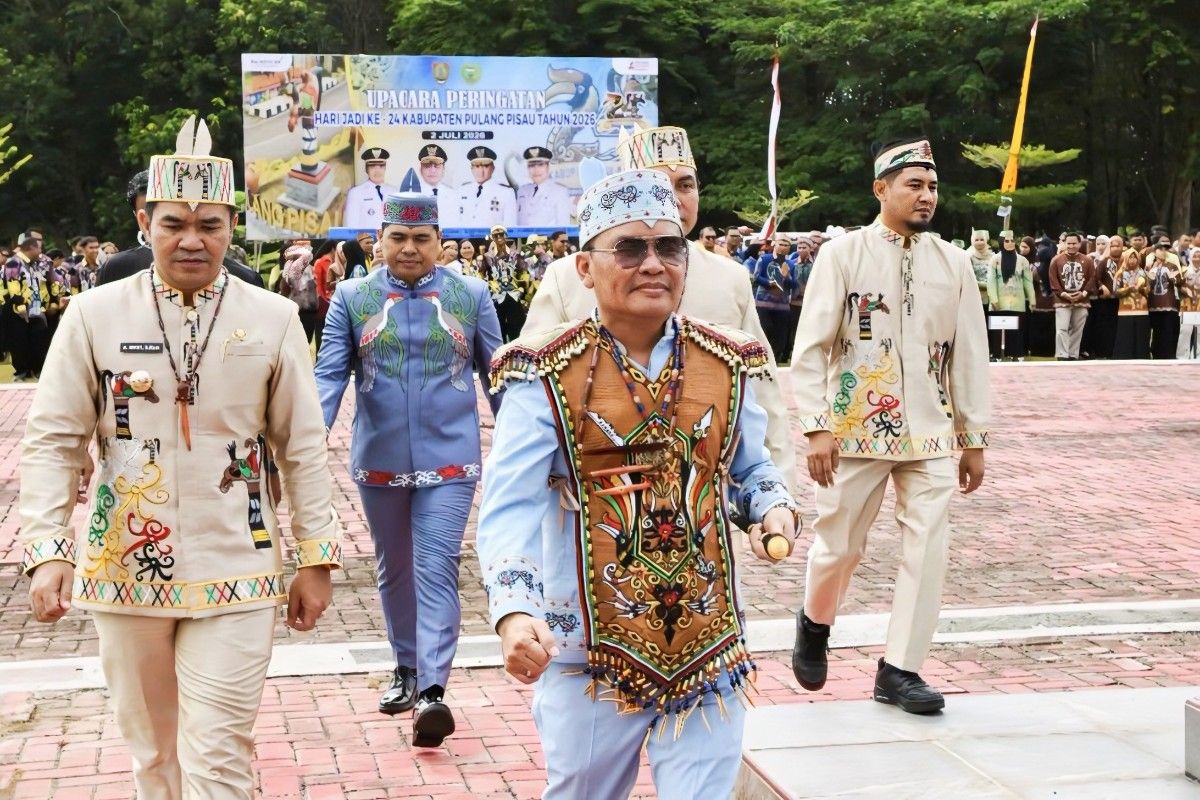
The Central Kalimantan Provincial Government continues to support the development and progress of Pulang Pisau Regency through the implementation of various activities and strategic programmes.
“As a form of tangible support, the Central Kalimantan Provincial Government has launched the Huma Betang Sejahtera Card (KHBS) Programme. In Pulang Pisau Regency, this programme has reached up to 7,864 beneficiary families,” stated the Governor of Central Kalimantan, Agustiar Sabran, in Pulang Pisau on Thursday.
KHBS is a flagship integrated programme of the Central Kalimantan Provincial Government, spanning sectors such as education, food security, social welfare, and the economy. The KHBS programme utilises a digitalisation system to ensure that the distribution of aid is targeted and compliant with regulations.
In its initial phase, the implementation of KHBS assistance consists of food aid and cash transfers. The aid includes food packages valued at IDR 150,000, comprising 5 kilograms of premium rice, 1 litre of cooking oil, and 1 kilogram of sugar, alongside a cash transfer of IDR 250,000. Distribution is carried out through Bulog and Bank Kalteng.
“The success of KHBS and other development programmes requires synergy between the central, provincial, and regency/city governments. We invite all parties to work together to ensure these programmes reach the intended targets,” he said.
Further support is provided through central government programmes, including the implementation of the Free Nutritious Meal Programme and the development of the Merah Putih Village and Sub-district Cooperatives.
The Governor expressed his appreciation for the various developmental achievements attained by Pulang Pisau over the last 24 years. He noted that the theme for the 24th Anniversary of Pulang Pisau Regency, “Synergy in Preserving Culture and Strengthening MSMEs,” is highly relevant to current developmental challenges.
He assessed that Pulang Pisau possesses significant potential in the sectors of natural resources, plantations, livestock, fisheries, and agriculture, particularly as a National Strategic Programme area for food barn development.