
Central Java's People's Schools Enrol 2,692 Students, Aim to Break Poverty Chain
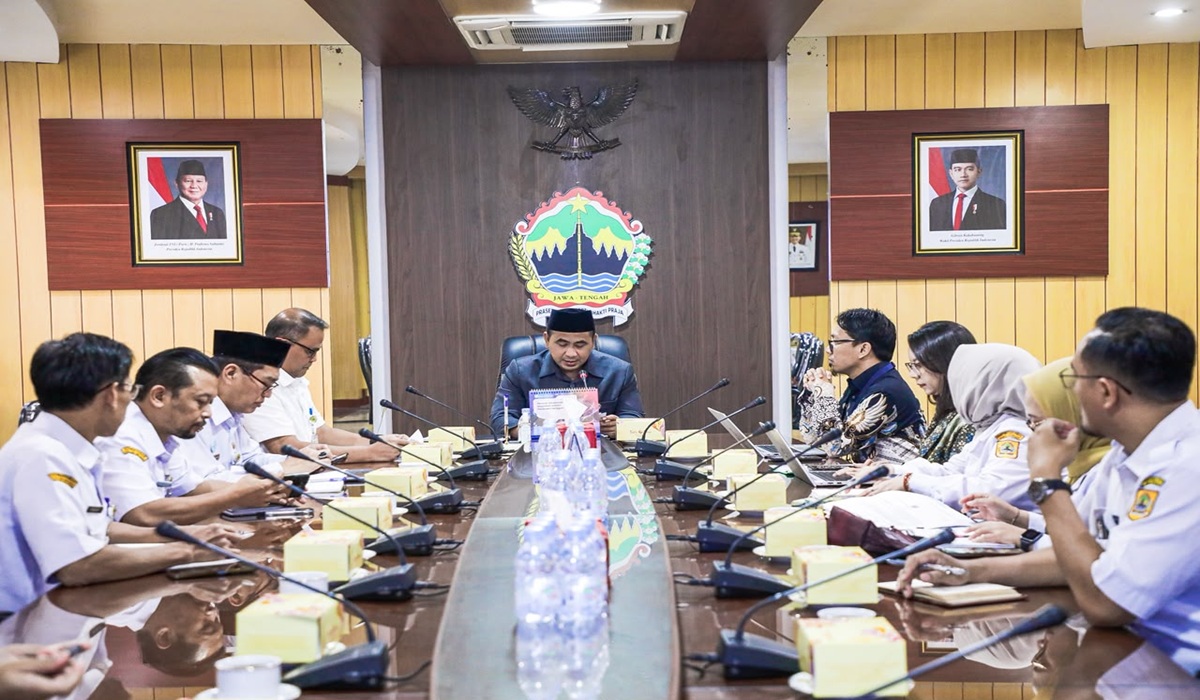
The People’s School programme in Central Java has now accommodated 2,692 students spread across 10 permanent People’s Schools and six pilot People’s Schools. Deputy Governor of Central Java, Taj Yasin Maimoen, considers the programme to be one of the strategic measures to break the chain of poverty while also reducing the school dropout rate.
“People’s Schools are a way to break the chain of poverty. Because, however you look at it, the poverty rate in Central Java is still relatively high,” said Taj Yasin while representing Central Java Governor Ahmad Luthfi in receiving the KPK RI Deputy for Prevention and Monitoring Team during a discussion on the planning and implementation of the People’s School Programme in Central Java Province, at his office in Semarang, Wednesday (5/8).
The Central Java Provincial Government is committed to continuing to oversee the People’s School programme because it is part of the government’s efforts to provide access to education for children from poor and extremely poor families.
“We must oversee it because this is our president’s idea, the aim of which is to honour poor families, so that People’s Schools truly facilitate the rise of ordinary people,” he said.
Furthermore, the figure familiarly known as Gus Yasin said that Central Java already has experience in managing boarding schools for students from underprivileged families.
Currently there are three full boarding schools in Pati Regency, Semarang Regency, and Purbalingga, as well as 15 semi-boarding schools.
“With the People’s School Programme, we are certainly pleased, because this is in line with the pilot initiatives we have carried out over the past 10 years or so,” he said.
Meanwhile, Head of the Central Java Social Service, Imam Maskur, said that the 2,692 students enrolled in People’s Schools for the 2026/2027 academic year consist of 380 primary school students, 1,038 junior high school students, and 1,274 senior high school students.
All of them have participated in the School Environment Introduction Period on 31 July 2026. They are spread across 10 permanent People’s Schools located in Pati, Banyumas, Wonosobo, Sragen, Jepara, Brebes, Cilacap, Sukoharjo, and Rembang Regencies, as well as Semarang City.
In addition, six pilot People’s Schools are also operating in Banjarnegara, Temanggung, Blora, Magelang, Magelang Regency, and Kebumen.
Imam explained that student admissions at junior and senior high school levels have almost entirely met their quotas. Meanwhile, admissions for People’s Primary Schools still face challenges because many parents are not yet ready to let children aged six to seven years old live in dormitories.
To optimise school capacity, Imam continued, the Ministry of Social Affairs has provided a policy allowing unfilled quotas at primary level to be transferred into additional classes at junior and senior high school levels.
Imam said that the development of People’s Schools in Central Java will continue in line with land readiness in a number of regions. Currently, in addition to the 10 permanent People’s Schools already in operation, the government is also processing construction in several other regencies so that the reach of educational services becomes increasingly broad.
According to him, if all 35 regencies/cities in Central Java eventually have People’s Schools, the programme is estimated to be able to accommodate around 35,000 students. However, he said, that number still does not fully cover all children from poor families or school dropouts, so development will be carried out in stages.