
Central Java's 81st Anniversary: Home Renovation Programme Reaches Underprivileged Residents
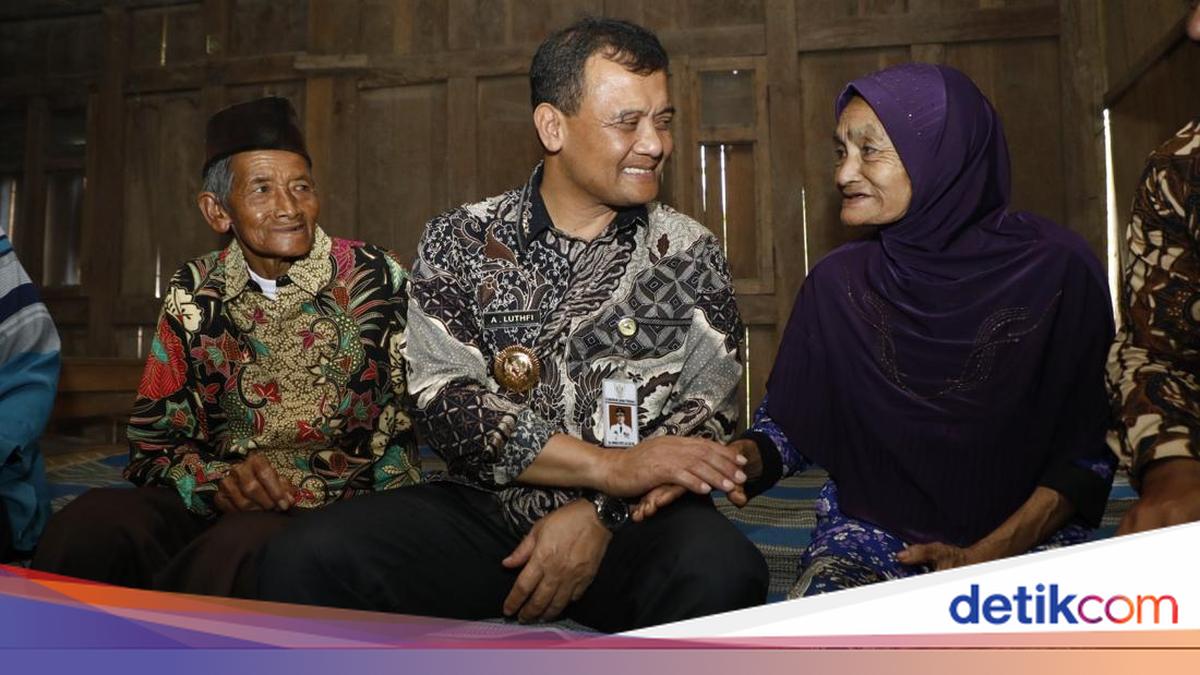
When the Central Java Provincial Government repairs thousands of homes, it is not merely the buildings that are touched.
As it enters its 81st year, Central Java continues to strengthen this approach. Intervention in housing goes hand in hand with efforts to empower the families who live in them.
Homes are made healthier and safer, while issues of education, employment, and opportunities to increase income are also examined.
“We help not only with the house. If a child has dropped out of school, we send them back to school,” said Central Java Governor Ahmad Luthfi in a written statement on Tuesday (18/8/2026).
“If they need work, we also push for social assistance,” he added.
These efforts run in parallel with the large-scale handling of the housing backlog in Central Java. Throughout 2025, a total of 274,514 units were successfully addressed.
This achievement reduced the backlog from 1,332,968 units at the beginning of 2025 to 1,058,454 units at the start of 2026.
The effort continues in 2026. Up to the second quarter, backlog handling has reached 65,449 units. The handling comes from various sources, ranging from the state budget through BSPS, Village Funds and ministries/agencies, the provincial budget, district/city budgets, to CSR and Baznas.
From the Central Java provincial budget alone, realisation up to the second quarter reached 1,625 units out of a target of 5,231 units.
The scale of this handling also shows that the government’s focus is not solely on building new homes. In 2025, of the 17,510 units handled through the Central Java provincial budget, 17,170 units were improvements to the quality of uninhabitable houses (RTLH), while new construction accounted for 340 units.
This means the largest intervention is directed at making homes already occupied by residents more liveable.
According to backlog data from early 2026, of the 1,058,454 units in backlog, 762,064 units were habitability backlogs, while ownership backlogs were recorded at 296,390 units.
Government assistance not only reduces the burden on families to repair buildings they have long struggled to afford themselves, but also creates healthier and safer living environments.
However, a repaired home does not mean all of a family’s problems are solved. This was evident when Central Java Deputy Governor Taj Yasin Maimoen inspected the home of Sailah (50), a resident of Ayamputih Village, Buluspesantren District, Kebumen Regency, who had received RTLH assistance. He not only ensured the house was now liveable but also asked about the family’s economic condition.
Sailah’s husband, Ade Suratman, still works as a cilok seller in Cirebon, while Sailah works as a domestic helper. Their combined income remains modest. Their eldest child, who has graduated from high school, has not yet found employment.
Taj Yasin then sought to connect Sailah’s child with job opportunities and skills development, ranging from job fairs, vocational training, and internships, including opportunities in Japan if available.
“The child has graduated from high school. We are trying to link them to the business world or employment,” said Taj Yasin.
For Sailah, the assistance has turned what was previously difficult to achieve into reality. The house, which once had an earthen floor and unplastered walls, is now more liveable.
“Thank you very much for the assistance. The house is now nice,” said Sailah.
“The house used to have a dirt floor and the walls were not plastered. Now it is more liveable,” she added.
A similar experience was felt by Kudus resident Hadi Mulyono, who said he had long wanted to repair his home. However, his financial situation made that wish difficult to realise.
“I am very happy to receive assistance from Governor Ahmad Luthfi. I had wanted to build or repair this house, but saving money was never enough,” said Hadi.
“I am greatly helped by the assistance from Mr Luthfi,” he added.
These two testimonies illustrate the most tangible benefits of the RTLH programme. When the cost of repairing a home is beyond a family’s means, government intervention makes that wish finally achievable.
At the same time, the scale of the problem means the work is not yet finished. Up to the second quarter of 2026, there remain 993,005 units in backlog requiring attention.
Therefore, Central Java’s homework is not only to accelerate the handling of uninhabitable housing but also to ensure that such interventions have a longer-lasting impact on recipient families.
As it enters its 81st year, this step is part of Central Java’s efforts to tackle poverty from multiple angles. A healthy and safe home is indeed a basic need, but the families who live in them also need opportunities to grow.