
Central Java Ranks in Top Three for 2026 Regional Development Awards; 'Speling' Program Proves Planning Goes Beyond Paper
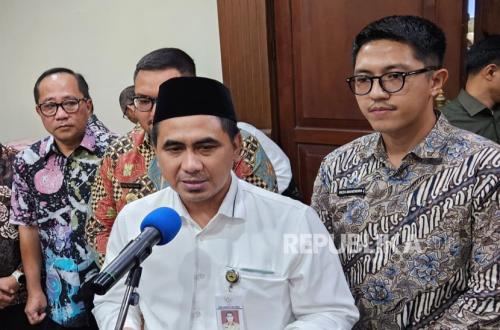
Central Java has once again established itself among the regions with the best development planning and implementation in Indonesia. The Central Java Provincial Government achieved third place in the 2026 Regional Development Awards (PPD) for the provincial government category, while two of its constituent regions, Kendal Regency and Pekalongan City, also entered the national top rankings.
The award was received by the Vice Governor of Central Java, Taj Yasin Maimoen, at the Office of the Ministry of National Development Planning (Bappenas) in Jakarta on Wednesday (30/09/202cap). In the 2026 PPD, West Java ranked first in the provincial category, followed by DKI Jakarta and Central Java. Kendal Regency was ranked first in the regency category, while Pekalongan City took third place in the city category.
This achievement is particularly noteworthy as the awards were not limited to the provincial government. The presence of Kendal and Pekalongan among the national leaders demonstrates that the quality of development planning also emerges from the regency and city levels within Central Java.
Taj Yasin stated that the award highlights the importance of synchronising planning between local and central governments. However, for him, the true measure of success is not how well a document is drafted, but the extent to which development can be felt by the community.
“This is a form of collaboration and synchronisation between regional development planning and central development planning,” said Gus Yasin, the familiar moniker for Taj Yasin.
This was the message Central Java has carried since the beginning of the 2026 PPD process. During the final assessment stage in early September, the Governor of Central Java, Ahmad Luthfi, presented the “Trisula Pembangunan” (Development Trident) concept, which focuses on improving the quality of human resources, accelerating economic growth, and reducing poverty, supported by good governance and consistent planning.
Under this concept, economic growth is not treated as an isolated goal. Investment and growth must create jobs, while increased employment opportunities are expected to help reduce poverty and narrow the gap between regions and social groups.
One of the programmes presented by Central Java during the PPD assessment is ‘Speling’ (Mobile Specialist Doctors). This programme is designed to bring specialist medical services closer to the people, reaching villages and areas that have historically faced limited access to advanced healthcare.
“This is aligned with the central government’s free health check-up (CKG) initiative. We are strengthening it with specialists,” said Taj Yasin.
Speling is not merely a programme introduced for the PPD assessment. The programme is already integrated into the 2026 Central Java development documents and is designed to involve the Health Office alongside provincial hospitals. Specialists in fields such as internal medicine, pulmonology, obstetrics, paediatrics, and mental health will visit villages and hard-to-reach areas.
This is where Central Java’s development approach is tested: citizens living far from hospitals should not always have to travel to find specialists; instead, services should strive to reach them. For villagers, a distance of dozens of kilometres to a hospital can mean transportation costs, lost working hours, and the decision to delay medical examinations.
The Head of Bappeda Central Java, Yusmanto, stated that the PPD is not simply a competition of planning document quality. The assessment covers the planning process, development achievements, programme implementation, and the innovations produced by local governments.
“This is an award that considers the entire process, from planning and document preparation to development achievements, execution, and regional innovation,” he said.
This explanation aligns with the 2026 PPD mechanism. During the national assessment stage, the aspects examined include development performance, the quality of planning documents, the document preparation process, and flagship regional programmes. In other words, regions cannot rely solely on interesting ideas if their programmes lack a clear connection to planning and developmental outcomes.