
Central Java Public Works Agency Reveals Over 1,100 Kopdes Stand on Protected Farmland
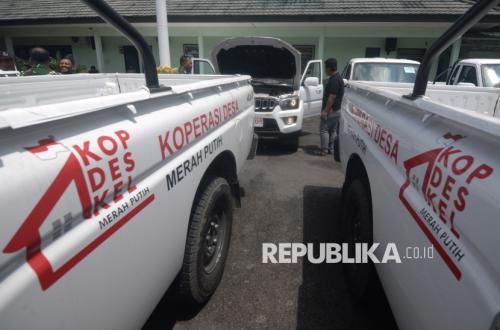
The Public Works and Spatial Planning Agency (PUPR) of Central Java has revealed that over 1,100 buildings for the Village Cooperative (Kopdes) Merah Putih programme have been constructed on protected agricultural land (LP2B), despite regulations prohibiting the conversion of such land. Fungsional Penata Ruang Madya Hariadi Agus Setiawan stated that when the programme was initially launched, there were no strict requirements mandating compliance with spatial planning or banning construction on LP2B. “The information we received is that these requirements did not exist at the beginning; the only condition was that the land belonged to the village government or a regional-owned enterprise,” he said in an interview on Thursday (13/8/2026). He noted that the Kopdes Merah Putih is classified as a national strategic project, meaning that permits should ideally be issued by the Ministry of Agrarian Affairs and Spatial Planning/National Land Agency. However, a letter from the ministry directed that the cooperatives be treated as micro, small, and medium enterprises, shifting the licensing authority to district and city governments. Hariadi explained that local governments are now unable to issue permits for these buildings because they are located on LP2B, which is legally protected. “Both the Kopdes programme and LP2B are central government priorities, with LP2B being essential for achieving national food self-sufficiency,” he said, adding that a policy alignment is needed to resolve the issue. He admitted he was unsure whether local governments were involved in the construction process, which was reportedly carried out by PT Agrinas. According to data recorded by the Central Java PUPR Agency, out of 4,808 Kopdes buildings that have been established, 4,700 coordinate points have been verified. Of these, nearly 24 percent, or approximately 1,100 buildings, are located on LP2B. The agency does not yet have data on the total area of green land that has been converted, as it only received coordinate points from district and city governments. Hariadi stressed that while LP2B conversion is prohibited, any future use of such land must comply with specific provisions.