
Central Java Provincial Government Reviews Implementation of Electric Vehicle Tax
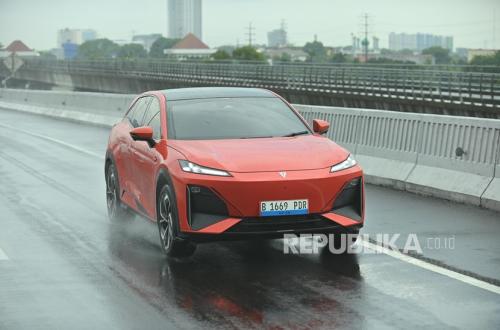
The Central Java Provincial Government is still reviewing the implementation of motor vehicle tax (PKB) for electric-based vehicles. The provincial government assures that, to date, PKB and motor vehicle transfer fee (BBNKB) for electric vehicles in its jurisdiction remain at zero per cent.
Acting Head of the Regional Revenue Management Agency (Bapenda) of Central Java Province, Muhamad Masrofi, explained that based on Minister of Home Affairs Regulation No. 7 of 2025, motor vehicles based on renewable energy, including electricity, biogas, and solar power, are exempt from taxation. However, he added, Minister of Home Affairs Regulation No. 11 of 2026 on the Basis for Imposing Motor Vehicle Tax, BBNKB, and Heavy Equipment Tax has now been issued.
He elaborated that Article 19 paragraph (1) of Minister of Home Affairs Regulation No. 11 of 2026 states that battery-based electric motor vehicles are granted incentives in the form of exemptions or reductions in PKB and BBNKB in accordance with applicable laws and regulations. “So from Minister of Home Affairs Regulation No. 11 of 2026, there are two options: exemptions or reductions for PKB and BBNKB. This is still being discussed by each regional government,” Masrofi said when interviewed on Tuesday (21/4/2026).
Masrofi revealed that the rate or percentage of PKB and BBNKB for electric vehicles falls under the authority of the provincial government. “For the Central Java Provincial Government, this is still under review, whether it will be an exemption or a reduction in the tax,” he stated.
He added that if the chosen option is exemption, then PKB and BBNKB for electric vehicles will remain at zero per cent. “If it’s a reduction, for example, the tax imposed would not be 100 per cent, but only 25 or 20 per cent, or even 10 per cent of the determined tax value,” Masrofi said.
According to Masrofi, as of April 2026, the number of electric vehicles in Central Java is recorded at 20,016 units. When asked about the potential increase in regional original revenue (PAD) from imposing PKB and BBNKB on electric vehicles, Masrofi could not yet estimate it. “Because we haven’t determined the percentage and so on. This is still under study,” he said.
“We are also still reviewing whether this will apply only to four-wheeled vehicles or exempt all, or whether two-wheeled vehicles will not be taxed or four-wheeled vehicles will have reduced taxes; all of that is still in the form of a study,” Masrofi added.
Therefore, Masrofi assured that currently, PKB and BBNKB for electric vehicles in Central Java remain at zero per cent. “Up to now, it is still zero per cent. So the rumour that it stops until April is not true. The zero per cent implementation continues,” he said.