
Central Java Provincial Government Oversees Hybrid Seawall Construction in Demak
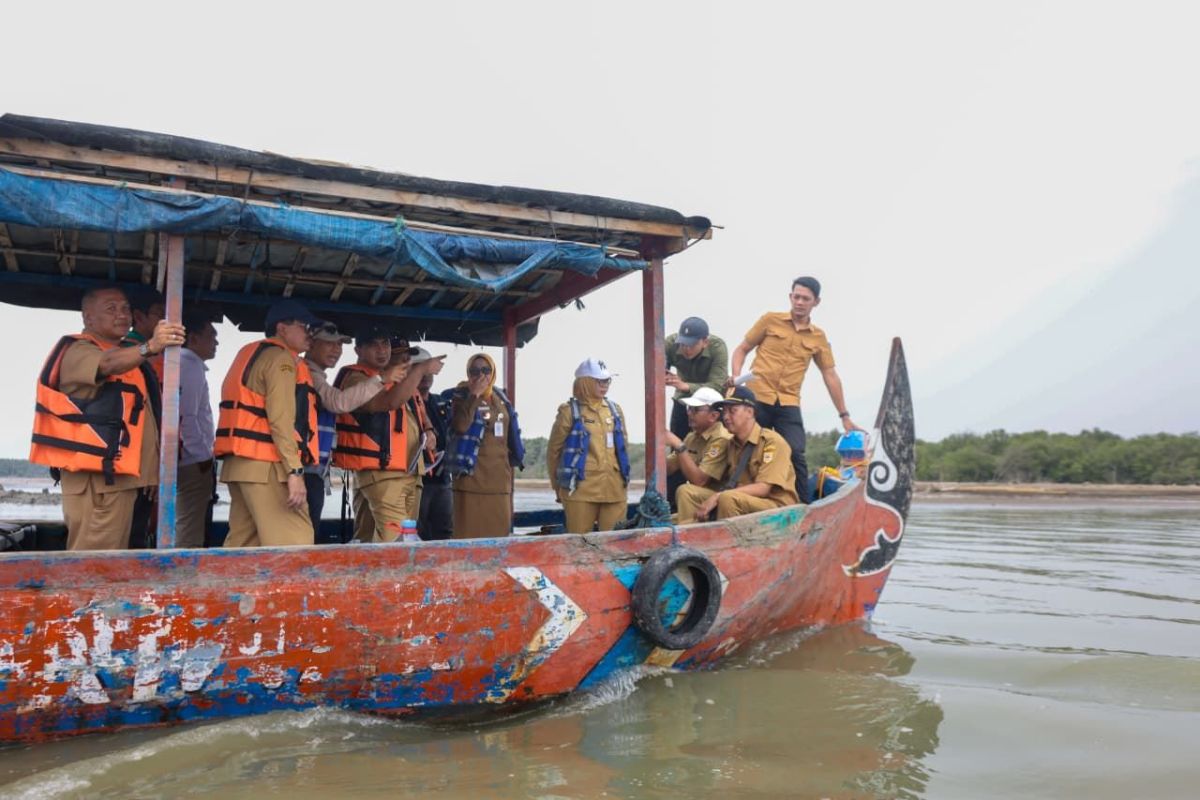
The construction of the coastal embankment is expected to bring tangible benefits to the community, particularly residents who have long faced the effects of tidal flooding and coastal erosion.
Demak (ANTARA) - The Central Java Provincial Government is continuing to oversee construction of a hybrid seawall in Surodadi village, Sayung sub-district, Demak regency, as part of efforts to reduce tidal flooding and coastal erosion that have threatened the area for years.
“The coastal embankment is expected to bring tangible benefits to the community, particularly residents who have long faced tidal flooding and erosion that disrupt economic activities, including fish farming in the ponds,” Central Java Deputy Governor Taj Yasin Maimoen said during a site visit to Surodadi, Demak, on Tuesday.
He said he hoped the infrastructure, funded with Rp10 billion from the 2026 Central Java provincial budget, would help reduce the impact of tidal flooding and erosion. This, in turn, is expected to enable residents to manage their ponds effectively again and stimulate the coastal economy.
He said the site visit was intended to ensure that construction was proceeding according to plan and would benefit the local community.
Taj Yasin also welcomed the positive response from residents to the hybrid seawall project. The infrastructure is designed not to rely solely on concrete construction, but also to support mangrove growth as a natural shield for the coast.
Central Java Public Works and Spatial Planning Agency head Henggar Budi Anggoro explained that the hybrid seawall in Surodadi covers a 930-metre stretch, comprising a 720-metre main structure and a 210-metre groyne, or wave-control structure.
The work is divided into two packages. Each includes a 362-metre main structure and a 105-metre groyne. In total, construction uses 8,500 concrete culvert pipes.
As of 25 October 2026, Package I was 56.212 per cent complete, while Package II had reached 65.822 per cent.
The project has a 175-day construction period, running from 5 June to 26 November 2026.
In addition to building coastal embankments, the Central Java Provincial Government is protecting coastal areas through the Mageri Segoro programme. In 2025, the programme recorded the planting of around 2.34 million mangrove trees across 257 hectares of coastal land in Central Java.
Surodadi Village Head Supriyanto welcomed the hybrid seawall, saying it would help residents address erosion, a problem they had faced for many years.
He said residents were beginning to feel the benefits of the coastal protection infrastructure. Previously, seawater often inundated areas where people lived and worked.
The coastal protection structure now offers residents hope of better protection.
Supriyanto said the benefits would extend further if the project could be continued to other coastal areas still in need of protection.
He said erosion affected not only pond owners but the wider community. Coastal protection was therefore important to help restore the environment and support the social and economic livelihoods of coastal residents.
He added that the village government had explained the programme to the community, including both people who owned land near the construction site and those without fish ponds.
The programme, he said, was one of the government’s efforts to ease the burden on communities that have faced the effects of coastal disasters for years.