
Central Java Provincial Government Affirms Commitment to Public Information Openness for Transparent Governance
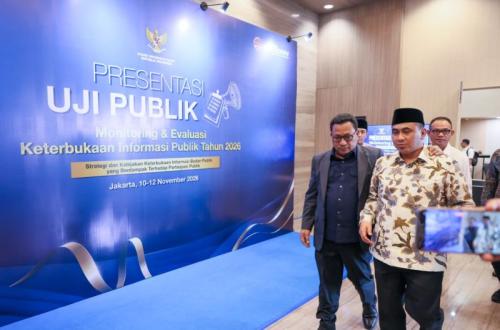
The Central Java Provincial Government has reaffirmed its commitment to making public information openness a key foundation of governance across all sectors. Deputy Governor Taj Yasin Maimoen made the statement at the 2026 Public Information Openness Public Test for Public Bodies in Jakarta on Wednesday.
Gus Yasin, as he is commonly known, said the provincial government had developed various information channels and digital services to make access easier for the public. The aim is not only to help residents learn about government programmes and services, but also to enable them to participate actively in oversight.
“Oversight is not carried out only by oversight officials; the public also needs to play a part,” he said.
Digital service innovations
One initiative is the PPID Mobile application, which enables the public to obtain information, submit objections and participate directly in monitoring the work of government. In the health sector, information is provided through RSMS Online, an application operated by Prof. Dr Margono Soekarjo Regional Hospital. It gives users access to online registration, clinic and doctor schedules, bed availability and information about hospital facilities.
Alongside providing digital access, the provincial government is stepping up efforts to improve public understanding of information openness. These activities involve regency and municipal governments, regional government agencies and oversight bodies, as part of efforts to strengthen governance that is responsive, collaborative and based on integrity.
Monitoring and evaluation results
The deputy governor presented the results of the 2025 public information openness monitoring and evaluation. Of the 35 provincial government agencies, 26, or 74.28 per cent, achieved the ‘Informative’ category. All seven regional hospitals owned by the provincial government also attained that category.
Information openness has also been applied to bureaucratic governance, particularly the process of filling official positions. The provincial government uses a talent-management system that takes competence and professionalism into account. The process is conducted transparently through assessment, verification and competency testing to ensure appointments comply with regulations and to prevent positions being filled through patronage.