
Central Java Poultry Farmers Claim Nutrition Programme Fails to Absorb Eggs at Reference Price
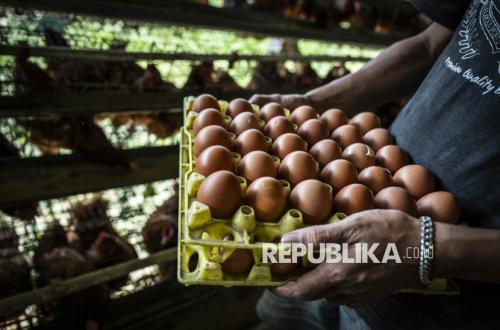
The Chairman of the Central Java Poultry Farmers Cooperative (KPUS), Suwardi, has stated that the existence of the Nutritional Fulfilment Service Units (SPPG) has not sufficiently helped absorb chicken egg commodities. He revealed that many SPPGs are still not purchasing eggs in accordance with the Reference Selling Price (HAP).
Suwardi disclosed that in June 2026, the farmers’ association and representatives from the National Nutrition Agency (BGN) had agreed on the absorption of chicken meat and eggs by SPPGs in Central Java. Under the agreement, SPPGs were to purchase chicken meat and eggs directly from farmers at the HAP. He noted that the agreement was witnessed by Central Java Deputy Governor Taj Yasin, but it has not been fully implemented. “On 30 June (2026), the head of SPPG in the Central Java region, located in Semarang, issued an official memo to follow up on the agreement. But the fact on the ground is that the SPPG managers, who have full authority because they invest there, do not want to comply,” he said in an interview on Tuesday (11/8/2026).
He added that the Head of BGN, Sudaryono, had previously instructed that SPPGs should buy eggs at a price of IDR 25,000 per kilogram at the farm gate. “The reality is far from it. They buy at IDR 21,000 to IDR 22,000 (per kg) delivered. For example, in Kendal, as of today, only a few kitchens are committed to buying at IDR 26,000,” he stated. Consequently, Suwardi believes the presence of SPPGs has not had a significant impact on egg commodity absorption in Central Java. He urged honesty from SPPG heads, calling them state servants tasked with overseeing the programme to have the authority to carry out their duties properly.
Suwardi reminded that besides improving children’s nutrition, the MBG programme also aims to improve the welfare of local farmers and breeders. However, he said he has yet to see the realisation of this goal. Deputy Governor of Central Java, Taj Yasin, has urged an investigation into the practice of SPPGs purchasing raw materials below the HAP. He made this statement after attending a coordination meeting on the absorption of local raw materials for the MBG programme at the Central Java Governor’s Office in Semarang on 19 June 2026. During the meeting, farmer representatives complained about SPPGs buying chicken eggs below the HAP, a practice deemed detrimental to farmers, especially as feed prices have soared significantly.
Responding to this, Taj Yasin called for an investigation. “We heard from farmers, egg producers, associations, and cooperatives that there were purchases below the government reference price. This needs to be investigated,” he said. He refrained from blaming any party, stating, “The important thing is that we have a commitment from farmers and egg associations. Going forward, this should not happen again. That is what matters.”
Yasin revealed that to increase the absorption of chicken meat and eggs, cooperatives, associations, and the BGN have agreed on the MBG menu presentation in Central Java. In a week, chicken meat and eggs will each be served twice. “Therefore, all SPPGs in Central Java must comply with this,” Yasin said. He stressed that all SPPGs in Central Java must source MBG raw materials from local farmers and breeders, whether they are members of cooperatives or associations, including egg and chicken meat associations. Yasin added that the purchase price of raw materials must comply with the HAP. “The government reference price must be adhered to,” he said.
During the meeting at the Central Java Governor’s Office on 19 June 2026, KPUS Jateng Chairman Suwardi criticised the purchase or absorption of eggs by SPPGs below the HAP. He asserted that this practice harms farmer groups. “I just want to ask the MBG managers, especially the coordinators, regarding purchases, why are there SPPGs committed to buying eggs at IDR 26,000 (per kilogram) while others are at IDR 21,000? What is going on here?” Suwardi said. He admitted to having received reports of products being bought below the HAP. KPUS Central Java has 1,767 farmer members spread across 10 regencies/cities. During the meeting, Suwardi claimed he could reveal which SPPGs were purchasing eggs below the HAP.
“The six SPPGs I supply buy at IDR 26,000, it never changes. But others, even in the same sub-district, buy at IDR 21,000 to IDR 22,000. If we audit this together, what is the basis for buying at such a low price?” Suwardi questioned. He suspects there are individuals manipulating the egg purchases by SPPGs. “The Ministry of Agriculture and the National Food Agency have set the farm gate HAP at IDR 26,500. SPPGs, which manage state money, are buying at IDR 21,000 to IDR 22,000. What is going on?” he asked. “Please cross-check each SPPG that buys at IDR 22,000, how much are they paid by BGN? If this is what’s happening, it’s not mutual support, it’s trampling on each other,” Suwardi added. He questioned who should comply if the HAP is ignored to such an extent. Suwardi hopes the issue can be resolved, especially as operational costs borne by farmers have surged due to rising feed prices. “We hope, we don’t want to make excessive demands, but our economic conditions are not good. Today the dollar is up, feed prices are up. How much has the price of feed risen? It has gone up four times in two months. The HAP hasn’t changed, in fact, the price has fallen,” Suwardi said. He expressed hope that the egg price for the MBG programme could be set at IDR 26,000 per kilogram. “This is not even the HAP, because the HAP is IDR 26,500. So, let’s protect each other so that farmers can survive. The government’s MBG distribution needs, with a ceiling price at BGN of IDR 30,000 for eggs. If I sell at IDR 26,000, there is still IDR 4,000 left. As long as it is not taken by the MBG management cooperative. Because today, those playing games in MBG, the coordinators might know, but they pretend not to know,” Suwardi said.