
Central Java Maps Drought-Prone Areas to Safeguard Food Security
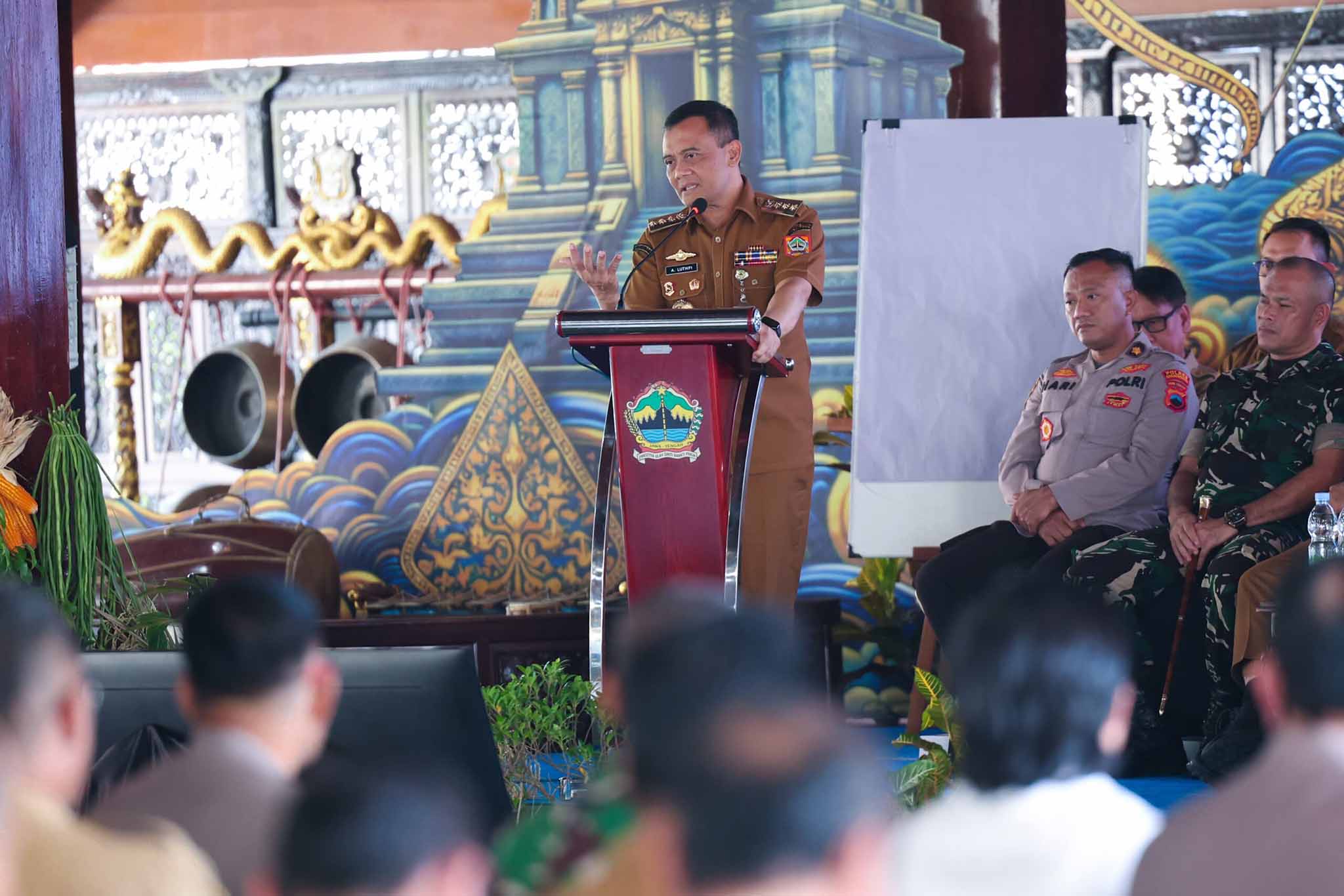
The Central Java Provincial Government has begun mapping drought-prone areas as an anticipatory measure to face the dry season and to maintain Central Java’s position as one of the nation’s primary food granaries. The Governor of Central Java, Ahmad Luthfi, emphasised the importance of synergy between local governments, the Indonesian National Armed Forces (TNI), the National Police (Polri), and all stakeholders to sustain agricultural productivity amidst potential drought threats.
“Central Java remains a national food granary. In 2025, we produced 9.1 million tons of dry grain, with approximately 15.6 per cent contributing to national requirements,” Luthfi stated during the 2026 Central Java Development Meeting for the Solo Raya region in Boyolali Regency on Tuesday. He noted that these achievements must be maintained through measured mitigation steps, requesting regencies and cities to immediately identify drought-prone areas, water source availability, irrigation network needs, and other supporting agricultural infrastructure.
The Central Java Provincial Government has also coordinated with the TNI to support piping and well-drilling programmes in areas prone to water shortages. Luthly requested the TNI to assist in mapping areas requiring intervention, specifically focusing on water sources, well construction, and pipeline networks, while the Polri will support the distribution of clean water using their available fleet.
During the event, Luthfi also warned farmers against using dangerous methods, such as electric currents, to control rat pests, stating that farmer safety must be a priority. Regarding the issue of wild monkeys damaging farmland, particularly in the Merapi-Merbabu area, he emphasised that management must be handled wisely without killing the animals. The provincial government will coordinate with the Ministry of Forestry to request additional quotas for the capture and protection of such wildlife.
Several regional heads in the Solo Raya area expressed their support for food security strengthening efforts. The Regent of Sragen, Sigit Pamungkas, noted that food conditions in his region remain in surplus and relatively safe, but he requested special incentives for regions that contribute significantly to national food production. Similarly, the Regent of Wonogiri, Setyo Sukarno, emphasised the importance of building small reservoirs (embung) and improving irrigation networks, noting that Wonogiri is implementing a programme to build 1,000 shallow wells over five years.
The Regent of Boyolali, Agus Irawan, added that irrigation repair is an urgent need as many farmlands in Boyolali can only be harvested once or twice a year. Meanwhile, the Vice Regent of Sukoharjo, Eko Sapto, reported that food stocks in his region are secure, with a recorded rice surplus of approximately 114,000 tons in 2025. He added that the local government has prepared mitigation steps for potential El Niño impacts through coordination with the Central Java Provincial Agriculture Office and the Ministry of Agriculture.