
Central Java Local Government Purchases Electric Buses, Prabowo Praises Governor Ahmad Luthfi
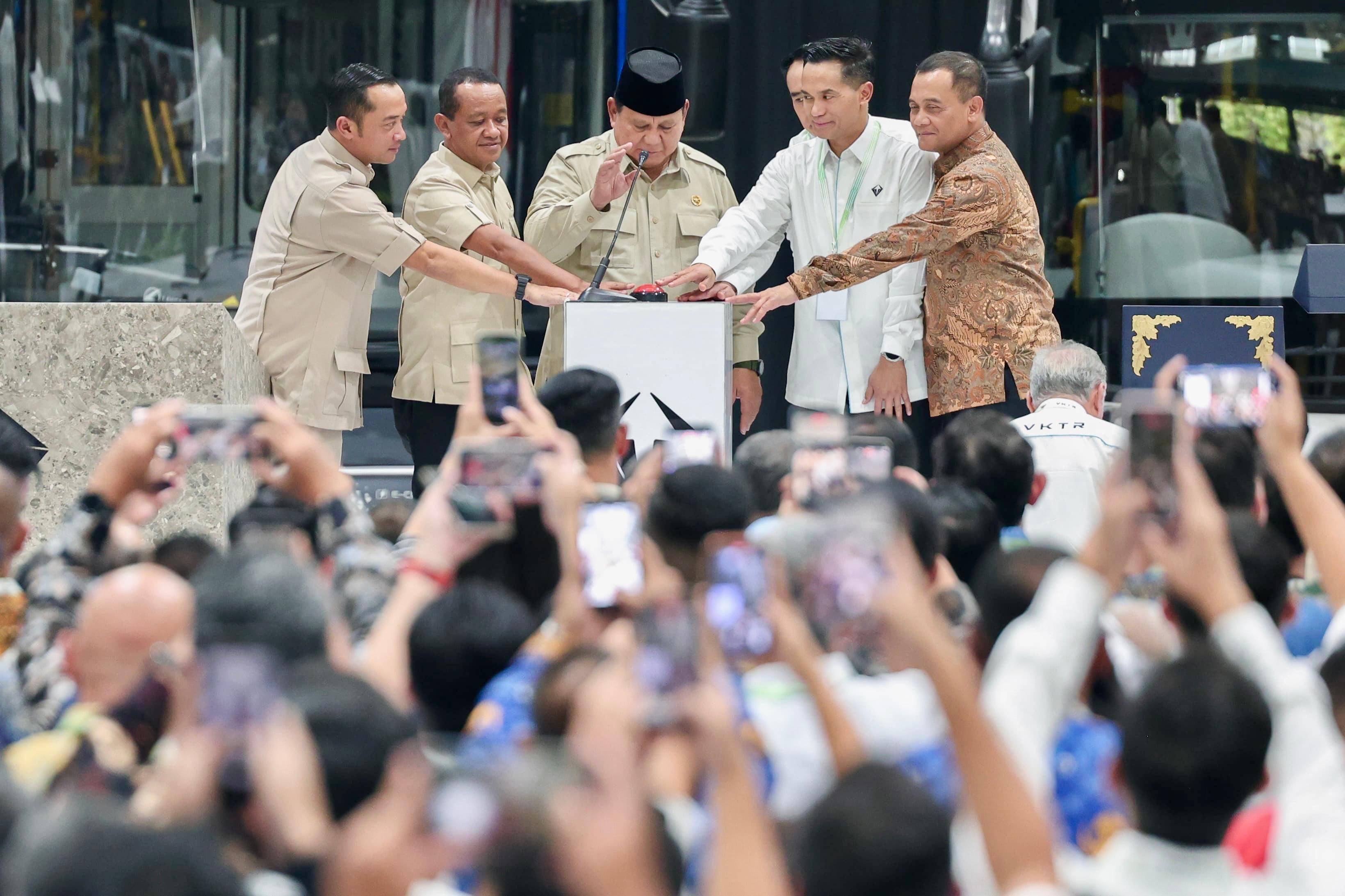
Governor of Central Java Ahmad Luthfi accompanied President Prabowo Subianto in inaugurating the commercial electric vehicle assembly facility of PT VKTR Sakti Industries (VKTS) in Magelang Regency on Thursday (9/4). This inauguration marks the strengthening of the national electric vehicle industry as well as a push towards clean energy transition and energy independence. The event was also attended by the State Secretary Prasetyo Hadi, the Minister of Energy and Mineral Resources Bahlil Lahadalia, along with Central Java’s regional leadership coordination forum officials. Prabowo assessed that VKTR’s initiative is an important part of national industrialisation, particularly in strategic sectors such as energy and transportation. The President also specifically praised the Central Java local government, which he said has ordered dozens of electric buses. He hopes similar steps will be followed by other local governments by purchasing domestic products. “I thank the Governor of Central Java. Apparently, the Central Java local government has already ordered several dozen buses. We hope that other local governments will also take action and buy our nation’s products, products of the Motherland,” the President stated. The Chairman Commissioner of PT VKTR Teknologi Mobilitas Tbk, Anindya Bakrie, said that the company in Magelang has a production capacity of 3,000 electric buses and trucks per year, with potential expansion to 10,000 units per year. According to him, this capacity is an initial step to enter the large national commercial vehicle market, with a bus population of around 280,000 units and trucks reaching 6.5 million units. Anindya assessed that the electrification of commercial vehicles will have significant economic impacts. “If all buses and trucks are electrified into electric vehicles, this could save Indonesia around $5 billion per year in fuel subsidies,” he said. He added that the development of electric buses and trucks is not just about the company’s business, but part of the revival of the local electric-based automotive industry. The VKTR company, he said, is also continuously increasing the use of domestic components, with a Domestic Component Level (TKDN) achievement of 40 percent in 2025 and a target approaching 60% this year. The presence of the assembly facility in Magelang is also expected to strengthen the electric vehicle ecosystem in Central Java. In addition to opening opportunities for local component industries, this facility is seen as having the potential to become an anchor industry that drives the growth of supporting industries and new investments in the electric vehicle manufacturing sector. The Central Java provincial government itself has prepared various supports for the Battery-Based Electric Motorised Vehicle programme, including the provision of 283 Public Charging Stations for Electric Vehicles (SPKLU) at 179 locations in Central Java and Yogyakarta, PKB and BBNKB incentives, regulations on the use of electric vehicles, as well as the preparation of skilled personnel through polytechnics, vocational schools, and vocational high schools.