
Central Java Governor Seeks Workers’ and Employers’ Views on 2027 Minimum Wages
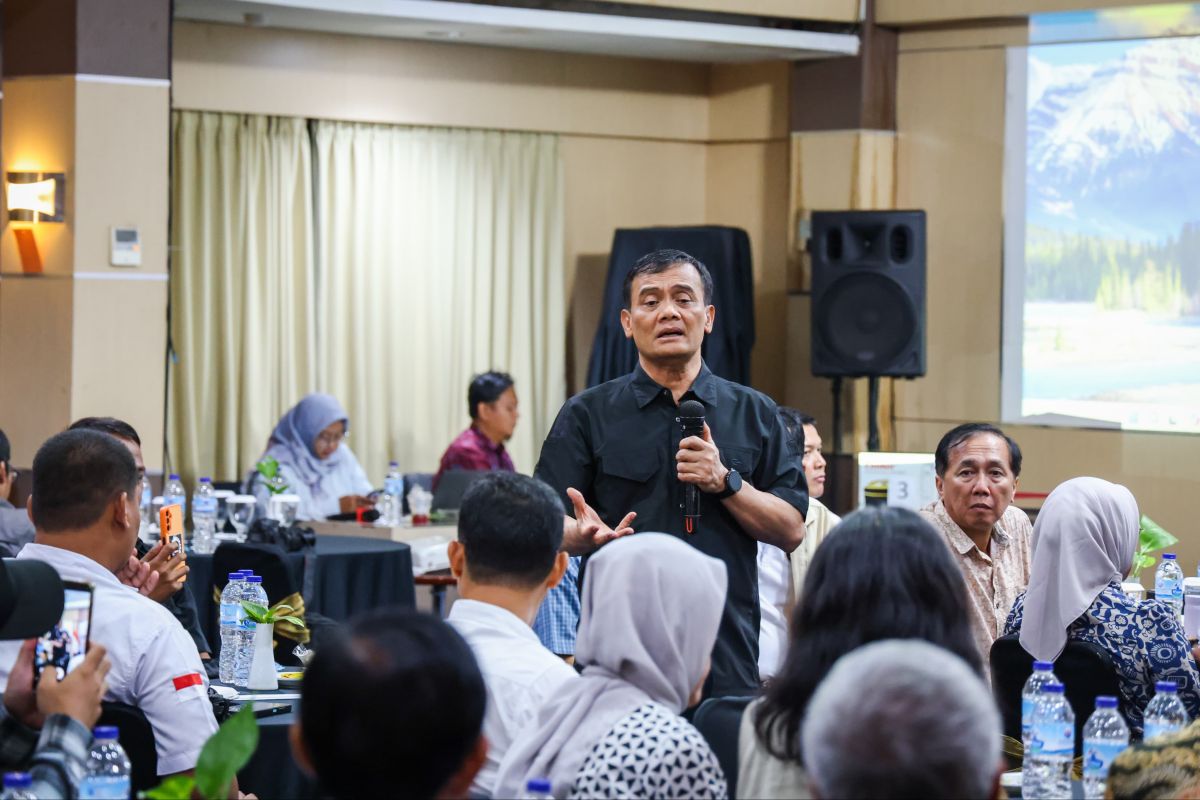
Semarang (ANTARA) – Central Java Governor Ahmad Luthfi is gathering views from trade unions, workers and employers to inform the setting of the provincial minimum wage (UMP) and regency/municipal minimum wages (UMK) for 2027.
“Welfare and economic growth in our region are closely linked to harmonious industrial relations. I am ready to open a dialogue at any time,” he said in Semarang, Central Java, on Wednesday.
The consultations are taking place while the provincial government awaits regulations from the central government on setting the 2027 UMP, UMK and sectoral minimum wages.
The dialogue is an important step in gathering views and examining the range of issues facing labourers and workers. Luthfi said input from workers and employers would assist provincial and regency/municipal wage councils.
“Give us your input before regencies and municipalities make decisions or recommendations on minimum wages; send it to me so I can coordinate,” he said.
“Prepare a study so I can discuss it with the regencies and municipalities. You are the ones who know the characteristics of workers in each area,” Luthfi added.
During the dialogue, representatives of several trade unions and workers’ groups offered suggestions, both verbally and in writing.
Pratomo Hadinata, representing the Central Java Workers’ Alliance (ABJaT), presented a study on proposed minimum wages. The seven-month study was handed directly to the governor during the dialogue.
“The decent living needs data we presented was not independently compiled by us; it came from the National Economic Council, the Ministry of Manpower and Statistics Indonesia (BPS). It is official data issued in 2025,” he said.
He therefore proposed that the governor set the 2027 UMP and UMK in line with decent living needs (KHL), and urged regency and municipal governments to broaden the application of sectoral minimum wages.
Waluyo, representing the Nusantara Confederation of Trade Unions and the Independent Workers’ Federation, likewise expressed hope that the Central Java UMP would rise, resulting in better UMK rates.
Beyond minimum wages, unions and workers also raised other workplace concerns, including the prevalence of short-term contracts at garment companies and age limits in recruitment requirements that make it difficult for people of certain ages to find work.
Meanwhile, Central Java Manpower and Transmigration Agency head Ahmad Aziz said that, as of 3 November 2026, the province had 623,180 companies: 3,040 large, 5,670 medium-sized, 6,040 small and 610,405 micro-enterprises. The companies employed 2,071,753 people, including 945,275 men and 1,126,478 women.