
Central Java Governor Optimistic Rice Production Target Will Be Met as Rains Arrive
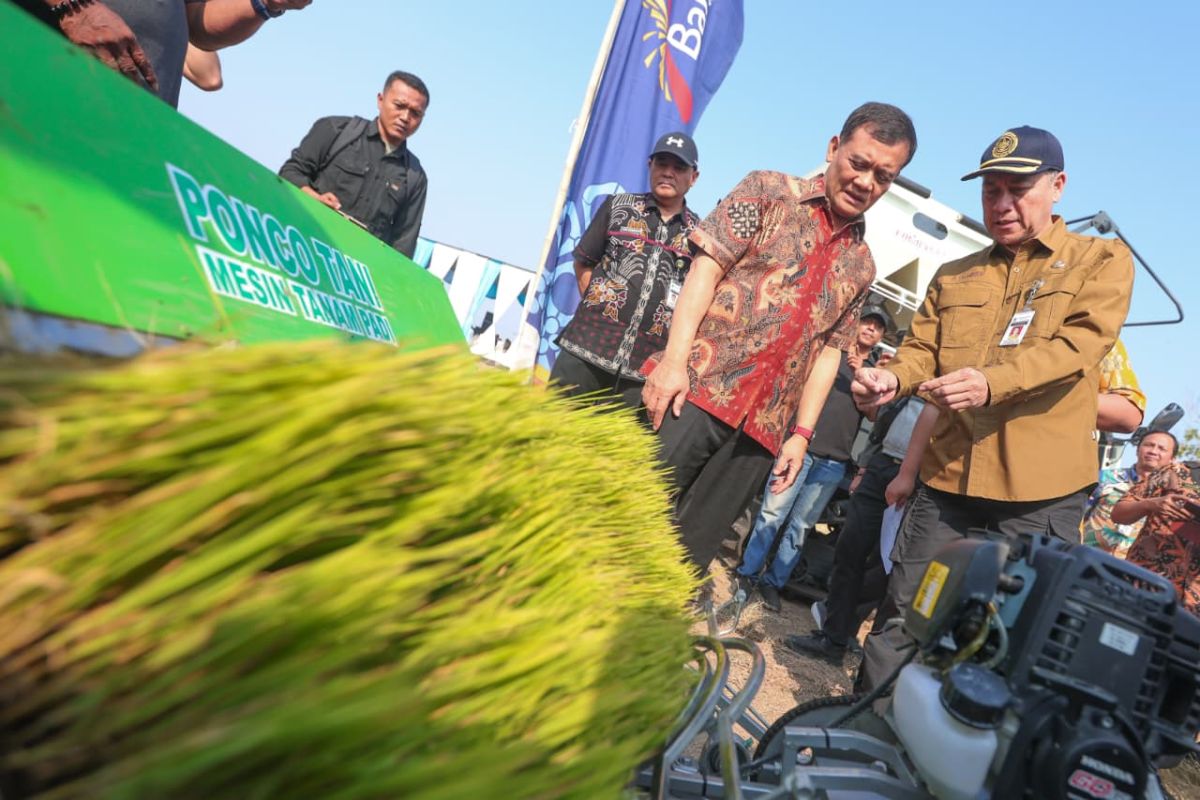
Semarang (ANTARA) – Central Java Governor Ahmad Luthfi is optimistic that rice production in the province will meet its 2026 target, as rain has begun to fall in several areas.
“Thankfully, it has started raining. Hopefully, we will be able to reach the target by December,” he said in Semarang on Saturday.
He said Central Java was one of the pillars of national food production. Rice output in the province, which has a population of almost 38 million, reached around 11.5 million tonnes in 2025.
From January to September 2026, rice production had reached 8.5 million tonnes, and the target for the end of the year is 10.5 million tonnes.
The Central Java provincial government had previously taken steps to anticipate and address the impact of drought on farmland.
Preparations began well in advance and included mapping areas at risk, ensuring the readiness of infrastructure such as reservoirs and small dams, maintaining tertiary and secondary irrigation canals, and fostering collaboration.
Central Java has 242,826 hectares of rain-fed rice fields receiving support through pump irrigation, and 530,748 hectares of irrigated rice fields covered by tertiary irrigation networks.
Crop-failure insurance has also been prepared to protect 10,000 hectares of farmland at risk of crop failure, including land affected by severe crop damage.
“Crop-failure insurance is there as a back-up, so that if crops are severely damaged, flooded or fail, it can help our people, particularly farmers, retain their basic capital,” he said.
Meanwhile, Central Java Agriculture and Livestock Agency head Defransisco Dasilva Tavares said some areas had local traditions relating to farming.
Some areas, such as the Pantura coastal region, have only two planting seasons, with other agricultural commodities grown in between, while others have three planting and harvesting seasons.
“But all farmers ultimately depend on water. If there is water, they will certainly plant rice,” he said.
To boost rice productivity, the provincial government also runs the Pilar Jateng programme, which provides a mapping system covering land infrastructure, irrigation and agricultural machinery, as well as their condition.
He said the information was kept up to date, enabling agricultural development to be planned precisely and targeted effectively.
“From there, we can determine the interventions or assistance to be provided to farmer groups,” he said.