
Central Java Governor Intensifies 'Speling' Programme for Early Leprosy Detection
The Central Java Provincial Government will utilise the Travelling Specialist Doctor (Speling) programme and the Free Health Check (CKG) scheme to strengthen leprosy screening. The move is intended to accelerate early detection while supporting efforts to eliminate leprosy in the region.
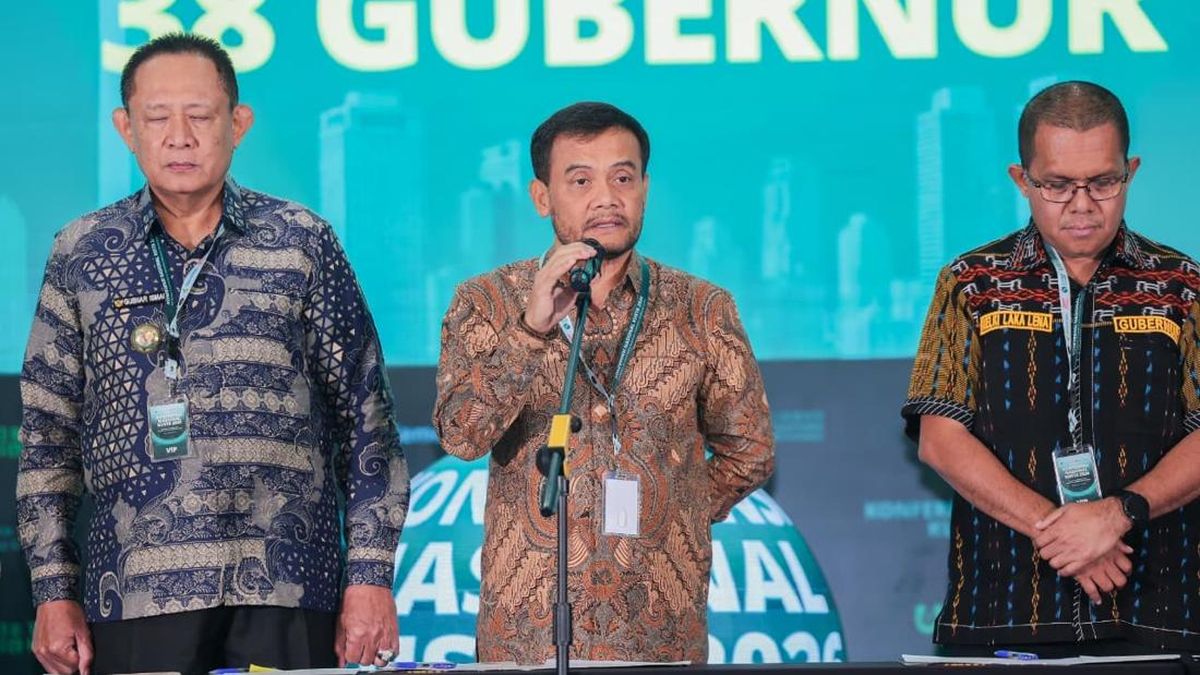
The commitment was conveyed by Central Java Governor Ahmad Luthfi while attending the 2026 National Leprosy Conference at the Grand Sahid Jaya Hotel in Jakarta on Friday (10/7). At the forum, he joined a number of governors in reading out a commitment to accelerate leprosy elimination in their respective regions.
Luthfi emphasised that leprosy is not a curse but a disease for which a cure already exists. He said handling it requires various programmes undertaken together with the district and city governments across Central Java.
“Regents and Mayors must be given targets; district and city governments must make a breakthrough in early detection related to this leprosy,” he said in a written statement on Friday (10/7).
He added that health offices at both the provincial and district/city levels are obliged to provide treatment to patients. According to him, eradicating leprosy cannot be done piecemeal but must proceed through cooperation among all parties.
Data show that leprosy cases in Central Java remain relatively high. In 2025, 1,541 cases were recorded, while by the second quarter of 2026 there were already around 837 cases.
According to Luthfi, the high number of detected cases actually indicates that early detection in the field is running quite well. This allows treatment of survivors to be carried out regularly and continuously.
On that basis, the existing Speling programme will be expanded by adding a leprosy screening component. Quantitative data from each district and city will subsequently be collected at the provincial level and followed up with interventions.
Leprosy survivors will also be assured of uninterrupted treatment. Treatment duration varies, ranging from 6 to 12 months, with some cases reaching 24 months.
Interrupted treatment risks forcing survivors to restart the process from the beginning. For this reason, continuous monitoring forms an essential part of the Speling strategy in Central Java.
Meanwhile, Health Minister Budi Gunadi Sadikin explained that leprosy is a bacterial disease for which medication is now available. He noted that leprosy transmission is not as rapid as diseases caused by viruses.
He also stressed that once a leprosy case is found, the patient must immediately receive continuous treatment. According to him, the main problem in handling leprosy is not the availability of medication but delayed detection.
“The problem with leprosy is that it is detected late, so to eliminate leprosy, detection must be stepped up further. There is only one strategy: find as many cases as possible and then treat them,” Budi concluded.