
Central Java Government Unaware of 1.2 Million NIK Data Breach for Months
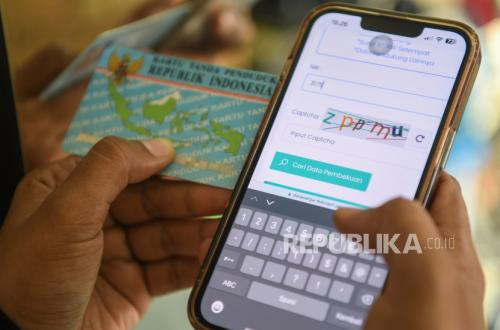
The hacking and theft of 1.2 million population identification numbers (NIK) belonging to poor residents in Central Java went undetected by the provincial government for several months. They only became aware of the breach after being informed by the police.
The Head of the Central Java Communication, Informatics and Digital Office (Diskomdigi), Lilik Henry Ristanto, revealed that the hacking and theft of NIKs belonging to poor residents occurred around May 2025. However, the Central Java Social Affairs Office (Dinsos) only received information about the matter in February 2026.
“On 12 February 2026, personnel from the Banten Regional Police visited the Social Affairs Office to coordinate and clarify matters as part of an investigation into an alleged data access violation case. Then on 20 February 2026, the National Cyber and Crypto Agency (BSSN) issued a notification addressed to the head of the Komdigi Office. The content indicated a suspected data leak,” Lilik said during an interview in Semarang City on Thursday (16/7/2026).
According to Lilik, the notification delivered by the BSSN did not specify how much data had been hacked and stolen. “Yesterday’s notification only mentioned an indication, so the total amount of data was not stated. But it included the URL, the website, and a screen capture of the raw data. So it did not go as far as the quantity,” he said.
He explained that the target of the hacking was the Central Java Integrated Data (DT) application. The application can also be accessed via a website. According to Lilik, the application is managed by the Central Java Social Affairs Office.
When asked to confirm whether the hacked and stolen data consisted of 1.2 million NIKs belonging to poor residents in Central Java, Lilik admitted he had not yet been informed. “Regarding the exact data, we have not yet received confirmation. But the indications of a leak from the BSSN notification have reached us and we have followed up within the limits of our authority,” he said.
When asked why the data breach and theft could occur, Lilik said that digitalisation is part of efforts to improve public services. “Once you enter the digital space, the internet space, the risks of leaks certainly exist at any level,” Lilik stated.
“The important thing is that from the data controller’s side, as soon as an incident occurs, they report it. We have also requested an assessment from the BSSN and the BSSN is already handling it,” Lilik added.
Previously, the Head of the Poor and Destitute Handling Division at the Central Java Social Affairs Office, Elliya Ch, confirmed the hacking and theft of 1.2 million NIKs belonging to poor residents in Central Java. She revealed that the case is being handled by the Banten Regional Police.
“We received information from the Banten Regional Police on 12 February 2026. The Banten Regional Police informed us that data had been stolen,” Elliya said during an interview on Wednesday (15/7/2026).
She confirmed that the number of stolen NIKs reached 1.2 million. “The amount is around 1.2 million data entries. That is what we have been informed of,” she said.
According to Elliya, the data stolen by the perpetrators were the NIKs of social assistance recipients. “What was taken at that time was the data of social assistance recipients. That is the information we have,” she said.