
Central Java Government Tightens Control Over Paddy Field Conversion
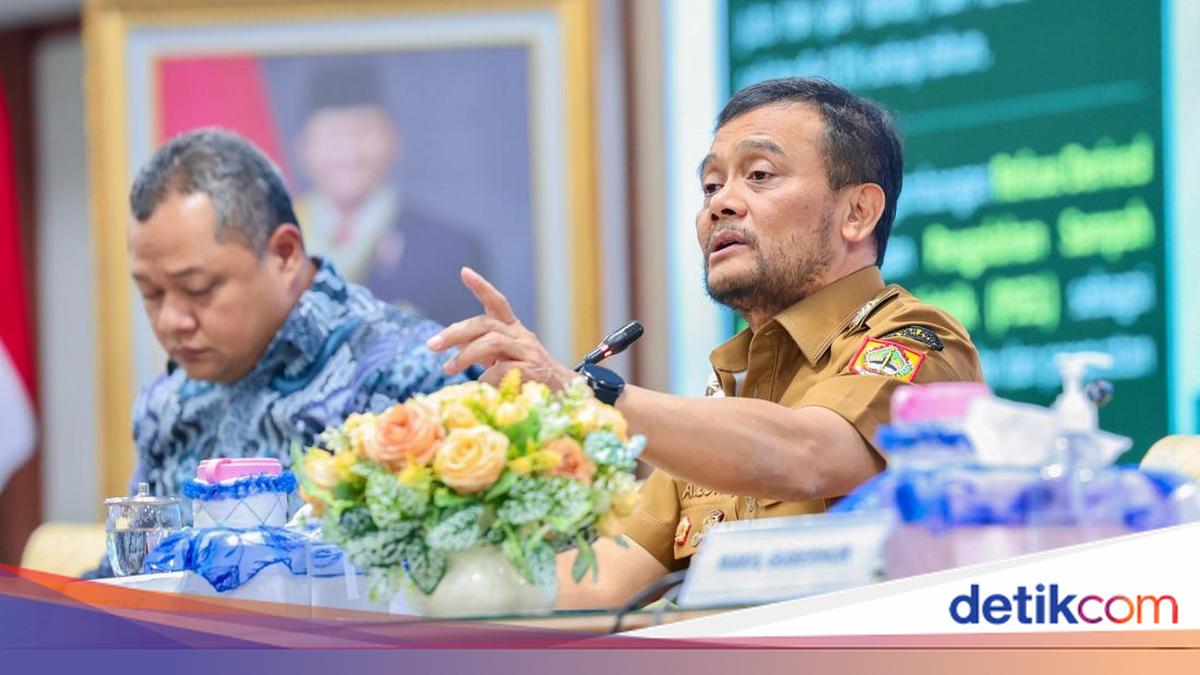
The remaining nine regencies and cities are still in the process. ‘God willing, we will be able to complete it within this month,’ said Central Java Governor Ahmad Luthfi in a statement on Tuesday (14/7/2026). The statement was made during a Coordination Meeting and Field Monitoring session on the Control of Paddy Field Conversion and Waste Management at the Gradhika Bhakti Praja Building in Semarang City on Monday (13/7). Luthfi assessed that meeting this target is crucial for maintaining Central Java as one of the nation’s food barns. He acknowledged that land fulfilment continues to face obstacles in several urban areas. Therefore, Luthfi encouraged regions struggling to meet the target to consult with those that have already achieved it.
In addition to land conversion, the meeting also discussed the acceleration of waste management, as it needs to be carried out according to the conditions of each region. Luthfi stated that areas with waste generation exceeding 1,000 tonnes per day are directed to use a regionalisation scheme for processing waste into energy. This scheme is being prepared for the Semarang-Kendal, Greater Pekalongan, Greater Magelang, and Greater Tegal areas. Meanwhile, regions with smaller waste generation are encouraged to use Refuse Derived Fuel (RDF) technology with support from the cement industry as the offtaker. The Central Java Provincial Government is also strengthening upstream waste handling through the Waste Independent Village Programme. Currently, nearly 210 villages have implemented independent waste management from the neighbourhood, community, and village levels.
The Daily Coordinator of the National Strategy for Corruption Prevention (Stranas PK), Didik Mulyanto, acknowledged that several cities are experiencing difficulties in meeting the target. These issues will be coordinated further with the central government. ‘Several cities are indeed having difficulty meeting the 87 percent target. We will try to push for the policy to be prepared immediately,’ Didik explained. He added that issues regarding the Sustainable Food Agricultural Land (LP2B), legal certainty over land, and proposed incentives for regions and farmers will be brought to the relevant ministries. Expert Staff to the Minister of Environment, Hanifah Dwi Nirwana, conveyed that local governments do not need to fixate on a single technology for processing waste. According to her, the choice of technology must be adjusted to the characteristics of the waste, the region’s fiscal capacity, facility readiness, and the availability of offtakers. She also requested that every district and city immediately prepare a waste management roadmap so that facility construction meets regional needs. ‘Do not let the facilities built be unsuitable for field conditions and end up abandoned,’ she concluded.