
Central Java Government Prepares Tax Incentives for Environmentally Friendly Companies
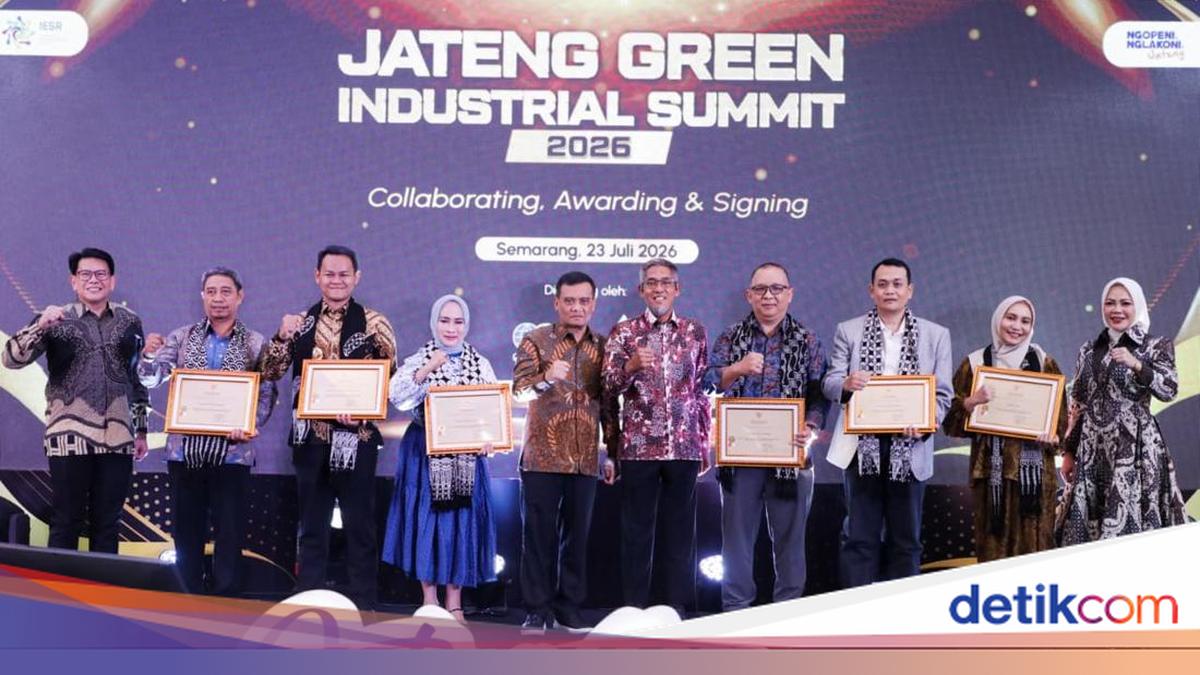
Central Java Governor Ahmad Luthfi has confirmed that his administration is providing tax incentives for industrial estates and companies that prioritise new renewable energy and green economy concepts. “We provide tax incentives for industrial estates and companies that implement green industry and new renewable energy,” Luthfi said in a written statement on Friday (24/7/2026). He made the remarks during the Central Java Green Industrial Summit 2026 at the Grand Candi Hotel in Semarang on Thursday (23/7). The Central Java Provincial Government has also designated green industry as a priority in the 2025-2029 Regional Medium-Term Development Plan (RPJMD). Implementation is reinforced by Central Java Governor Regulation Number 26 of 2025 concerning the Facilitation of Green Industry. According to Luthfi, implementing green industry is no longer a future aspiration but a choice and necessity that must be acted upon now. To that end, the provincial government continues to accelerate the adoption of environmentally friendly, sustainable industries that prioritise energy efficiency through new renewable energy. “This way, the international community will see that Central Java has implemented a green economy and green industry,” Luthfi said. He explained that the implementation of green industry must start from upstream to downstream, encompassing small, medium, and large industries. He added that the transformation towards green industry is a strategic step to ensure Central Java’s industries remain competitive in the global supply chain while opening up higher quality investment opportunities, as export destination countries for the province’s processed industrial products are beginning to impose low carbon emission requirements. “I met with representatives from 41 European Union countries in Solo; they said that environmental sustainability, green industry, and new renewable energy are necessities,” Luthfi stated. He expressed hope that the Central Java Green Industrial Summit 2026 would drive this green industrial transformation, as the forum brings together government, businesses, industrial estates, universities, financial institutions, and various stakeholders to build a stronger green industry ecosystem. The event, organised by the Central Java Industry and Trade Office and the Institute for Essential Services Reform, also presented green industry awards in five categories: Most Active High School/Vocational School in Supporting the Rengganis Mengajar Programme, Best Small Industry Transformation Towards Green Industry, Best Large & Medium Industry Transformation Towards Green Industry, Best Green Industrial Estate, and Local Government with the Best Commitment to Green Industry Development. IESR CEO Fabby Tumiwa said his organisation has been collaborating with the Central Java Industry and Trade Office for three years to develop green industry, including compiling a green readiness index, assisting district and city governments, and establishing an industrial assessment centre. He noted that Central Java’s exports reached US$4.57 billion in the January-April 2026 period, growing 19.5 percent compared to the same period in 2025, driven primarily by the processing industry. He said this data shows that Central Java’s exports are supported by manufacturing rather than raw commodities, with the processing industry contributing one-third of the province’s Gross Regional Domestic Product and absorbing the most workers. Fabby added that this rapid growth is occurring in sectors and markets where regulations are currently changing, particularly regarding emission reduction targets in supply chains, making it essential for companies producing in Central Java to begin transforming towards low-carbon green industry.