
Central Java Government Drives Transport Sector Transformation
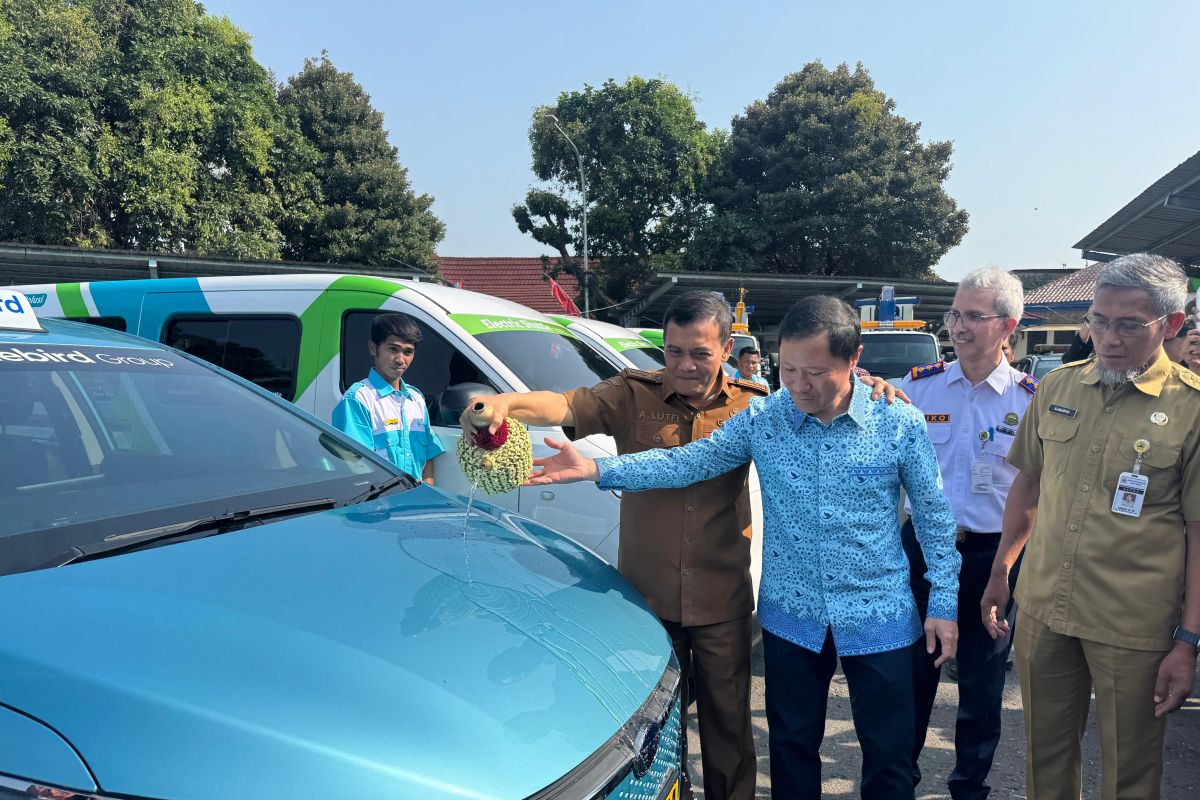
The Central Java Provincial Government continues to drive transformation in the transport sector through a series of clean energy-based innovations and service digitalisation, ranging from the operation of electric taxis and travel vehicles to the implementation of cashless payment systems at terminals.
These various services were officially launched by Central Java Governor Ahmad Luthfi at the “Grand Launching Transformasi Perhubungan Jawa Tengah 2026” event at the Central Java Transportation Agency Office in Semarang on Monday.
Luthfi, who personally tried the electric taxi by driving around the Transportation Agency office complex, assessed that electric vehicles offer comfort while also supporting the reduction of pollution and fossil fuel use.
“It is very comfortable. I tried driving around the office, the meter just needs to be pressed, there is no sound, no air pollution, and it saves fossil energy,” he said.
He welcomed the presence of electric taxis as part of clean energy-based public transport innovation.
According to him, the transformation towards renewable energy is part of Central Java’s development direction that supports the green economy concept.
It is hoped that the use of electric vehicles will not stop at private vehicles and taxis but will also extend to various other public transport modes.
“We are currently reviewing, including for Trans transport, taxis and travel services. Everything is being reviewed by the Transportation Agency so that in the future the use of cleaner energy can truly be prioritised,” he said.
Head of the Central Java Transportation Agency Arif Djatmiko said the launch of electric taxis and electric travel cars is one of eight innovations in the Central Java Transport Transformation 2026.
In addition to vehicle electrification, the Central Java Provincial Government is also promoting transformation through digitalisation and integration of transport services, one of which is through the implementation of cashless payments at Type B Terminals.
Meanwhile, Vice President Director of PT Blue Bird Tbk Sigit Djokosoetono said Semarang has become the first city in Central Java to host Bluebird’s electric taxi operations with the BYD E6 fleet.
In the initial phase, 10 electric vehicle units are being operated to serve the public’s travel needs, both within Semarang City and for journeys to various transport points such as the airport.
In addition to offering comfort with a more spacious cabin and larger passenger capacity, the use of electric vehicles is also part of efforts to reduce dependence on fossil fuels and curb emissions from the transport sector.
“For Semarang, we are starting with 10 units. Going forward, we will review and look at the possibility of expanding with other vehicle types,” he said.
Nationally, Bluebird has operated nearly 1,000 electric vehicles spread across several cities, including Jakarta, Surabaya, Medan, Bandung, and now Semarang.
Although the number is still relatively small compared to the company’s total fleet, he confirmed that the number of electric vehicles has continued to grow in recent years.
Going forward, he said, Bluebird is open to the possibility of adding electric vehicles with different capacities and types, with the hope that procurement costs can become more competitive and result in more affordable services.