
Central Java Government Distributes 181 Adaptive Wheelchairs for People with Disabilities
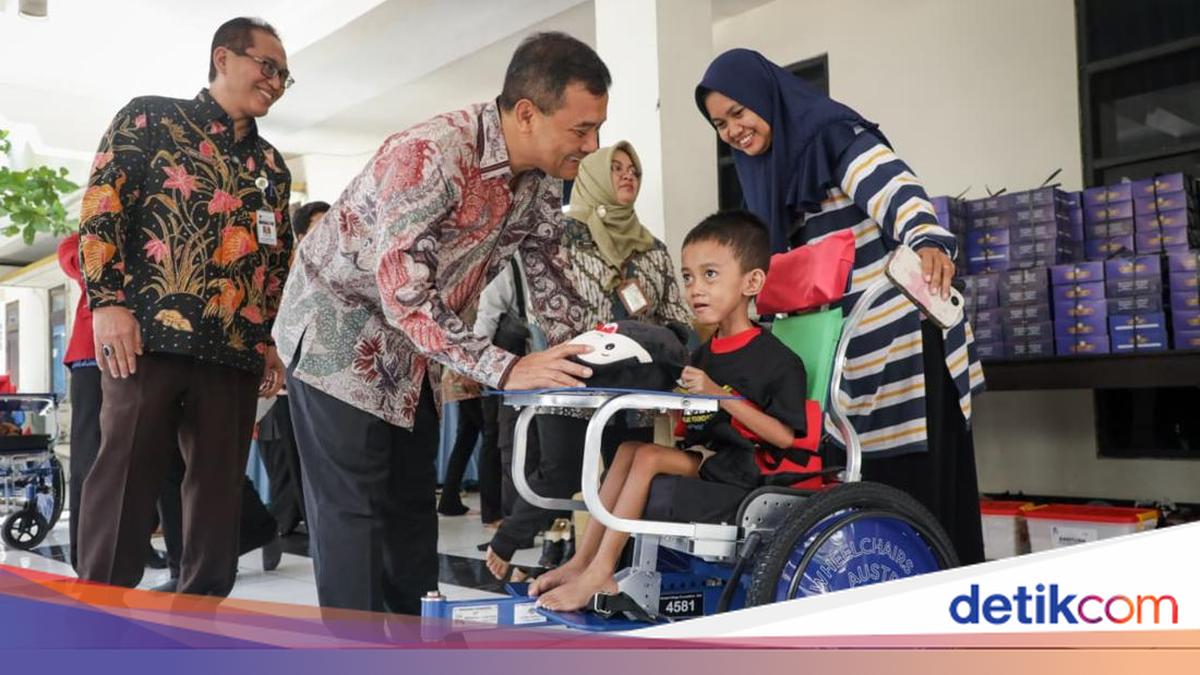
The assistance has been a breath of fresh air for beneficiary families, enabling them to care for their children more optimally. One recipient, Sulistyowati, said the adaptive wheelchair was not just a mobility aid but was also expected to better support her child’s body. “My hope is that my child’s bones, which were originally bent, can become straighter. He really needs a chair like this,” Sulistyowati said on Thursday (13/8/2026). She expressed her happiness that her child received the aid. The wheelchair, made based on specific measurements, is believed to make it easier for her to care for and accompany her child in daily activities. “Hopefully more assistance like this will be given in the future, so that those of us in need can be helped,” she said.
Meanwhile, Central Java Governor Ahmad Luthfi, who attended the event, greeted the recipients one by one. He advised the parents to remain patient and strong in caring for their children. “Be patient and strong, yes. This is a trust from God to us. I know it is not easy because I have also experienced it. I have been caring for my child until now, and he is already 20 years old. I hope this assistance is beneficial,” said Luthfi. According to him, people with disabilities must receive equal treatment, access, and opportunities. With the right support, they are expected to become more confident and able to develop their potential. “No human is born the same. Therefore, they must be treated equally with us, so they become more empowered, competitive, and confident,” he said.
He explained that the provision of adaptive wheelchairs is part of a social service activity held to commemorate the 81st Anniversary of the Republic of Indonesia and the 81st Anniversary of Central Java Province. The distributed aid includes 181 adaptive wheelchairs, prosthetic leg and hand aids for 50 people with disabilities, and other social assistance. “Of the 181 adaptive wheelchairs, 61 units are designated for recipients from Kudus, Jepara, Pati, Rembang, Blora, and Demak Regencies, with the handover centred at the Kudus District Office. Meanwhile, the other 120 units were given to recipients at the Central Java Provincial Social Office Hall,” he stated.
Head of the Central Java Provincial Social Office, Imam Maskur, said the adaptive wheelchairs could not be handed over directly. Each child first underwent measurement, assembly, and fitting so that the chair matched their body shape and condition. “Today’s activity is the measurement, fitting, and assembly of wheelchairs for our brothers and sisters with disabilities,” he explained. Some recipients are children with cerebral palsy who experience muscle stiffness and require special body support. The adaptive wheelchairs will help them sit, eat, learn, play, go outside, and interact with their environment more freely. The procurement of the wheelchairs is the result of a collaboration between the Central Java Provincial Government, the Global Village Foundation Bali, and Wheelchairs For Kids Australia. Both institutions assisted in the process of measuring, assembling, and adjusting the wheelchairs based on each recipient’s condition.
Meanwhile, the assistance programme for prosthetic leg and hand aids for 50 people with disabilities is still in the measurement stage. A total of 22 recipients underwent measurement at the Kudus District Office, while 28 other recipients participated in a similar activity at the Central Java Provincial Social Office Hall. Data collection on recipients was carried out together with social cadres from Posyandu 6 Minimum Service Standards, District Social Welfare Workers, and district and city social offices. Through this data collection, children who need adaptive wheelchairs and have never received similar assistance were identified. “Assistance will also continue after the aids are provided. The Health Office, health workers, and therapists are involved to educate parents about therapies that can be carried out routinely at home. All recipients also receive a basic food package as a social safety net,” he concluded.