
Central Java Government Brings Together 111 Producers and 99 Buyers to Control Inflation
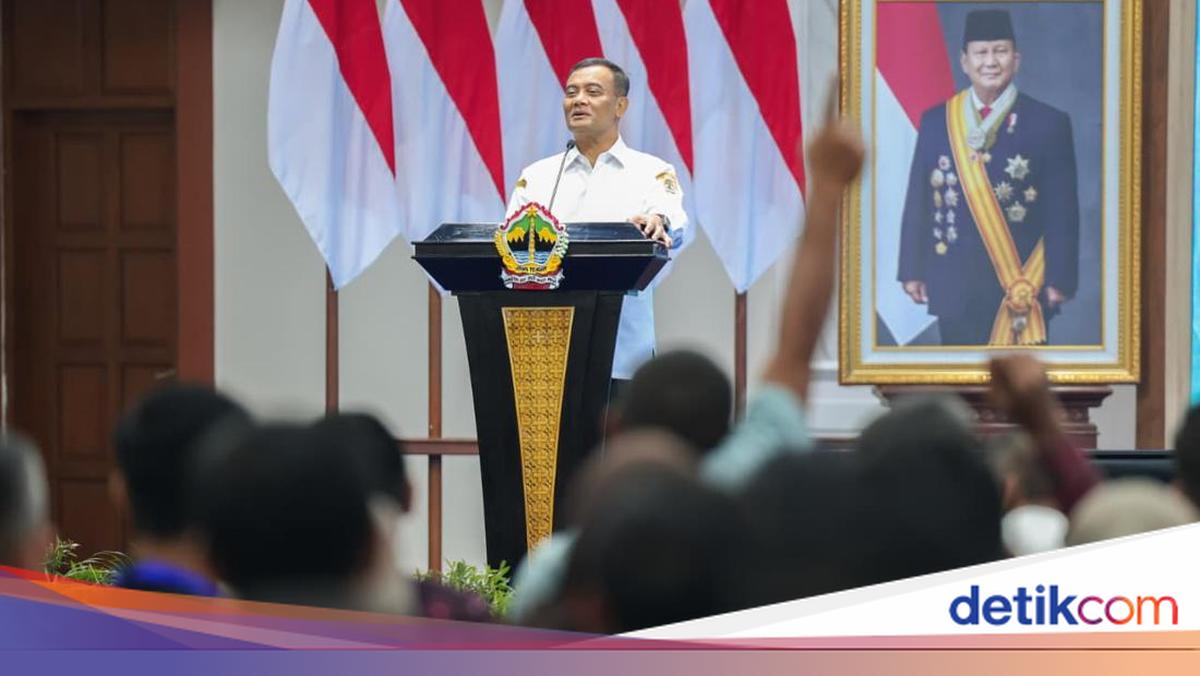
They were brought together at the Regional Inflation Control Team (TPID) Coordination Meeting and Intra-Provincial Inter-Regional Business Cooperation (KAD) event at the Gradhika Bhakti Praja building, Semarang, today. The event was also attended by Central Java Governor Ahmad Luthfi, Head of the Bank Indonesia Representative Office for Central Java M Nur Nugroho, and regents/mayors from across Central Java.
Ahmad Luthfi stated that the event was an important step for controlling inflation in his region. He assessed that the inflation condition in his region was relatively good and therefore needed to be maintained.
“The hope is for cooperation among regents/mayors, producers, and existing offtakers, so that the availability and affordability of essential staples for the public are controlled; the output is that inflation in Central Java can be maintained,” said Ahmad Luthfi in a written statement on Wednesday (10/6/2026).
Luthfi conveyed that Central Java is one of the national food barns. Therefore, every food production must first meet the needs of the people of Central Java before fulfilling the needs of other provinces. “One of the ways is to streamline inter-regional food distribution through agglomeration and inter-regional cooperation,” he said.
Meanwhile, the Head of the Bank Indonesia Representative Office for Central Java, M Nur Nugroho, stated that this event was a joint effort to strengthen food price stability and resilience as proclaimed in the Movement for Inflation Control and Prosperous Food (GPIPS). “What we are doing today is part of that distribution efficiency. We are trying to bring together staple food producers with offtakers,” he said.
Through this business meeting, the hope is that offtakers can collect food items produced by the producers to be marketed within the Central Java region. The aim, of course, is to make food prices more controllable. From the business meeting, the most sought-after commodities included rice with 30 interested parties, cooking oil 24, chilli 25, shallots 13, maize 4, and eggs 3.
From the producer side, the largest supply came from chilli commodities, attended by 33 producers, rice 28 producers, maize 25 producers, shallots 20 producers, chicken eggs 4 producers, and cooking oil 2 producers. “Hopefully, from this meeting between producers and offtakers, transactions or commitments for trade cooperation will be achieved. To support that, we have also created a database so that coordination with the TPID can be more optimal,” he explained.
Regionally, several areas also showed quite high transaction potential from the offtaker side. Klaten Regency and Semarang City were recorded as having the greatest potential need for cooperation, with a total of 11 potential cooperations. “Banjarnegara, Banyumas, Kendal, and Wonosobo each have 7 potential cooperations. From the producer side, Demak and Grobogan Regencies each have 9 potential cooperations, while Batang and Brebes Regencies each have 7 potential cooperations,” he concluded.
As additional information, during the activity, a cooperation agreement was also signed between the Farmers’ Enterprise (BUMP) PT Kalingga Makmur Sejahtera of Jepara Regency and the Karya Manunggal Farmers Group Association (Gapoktan) of Rembang Regency for the rice commodity. Then, inter-regional cooperation in the Greater Banyumas area was also signed for chilli, rice, maize, shallots, and cooking oil commodities.