
Central Java Farmers Use Solar-Powered Pumps to Cut Production Costs
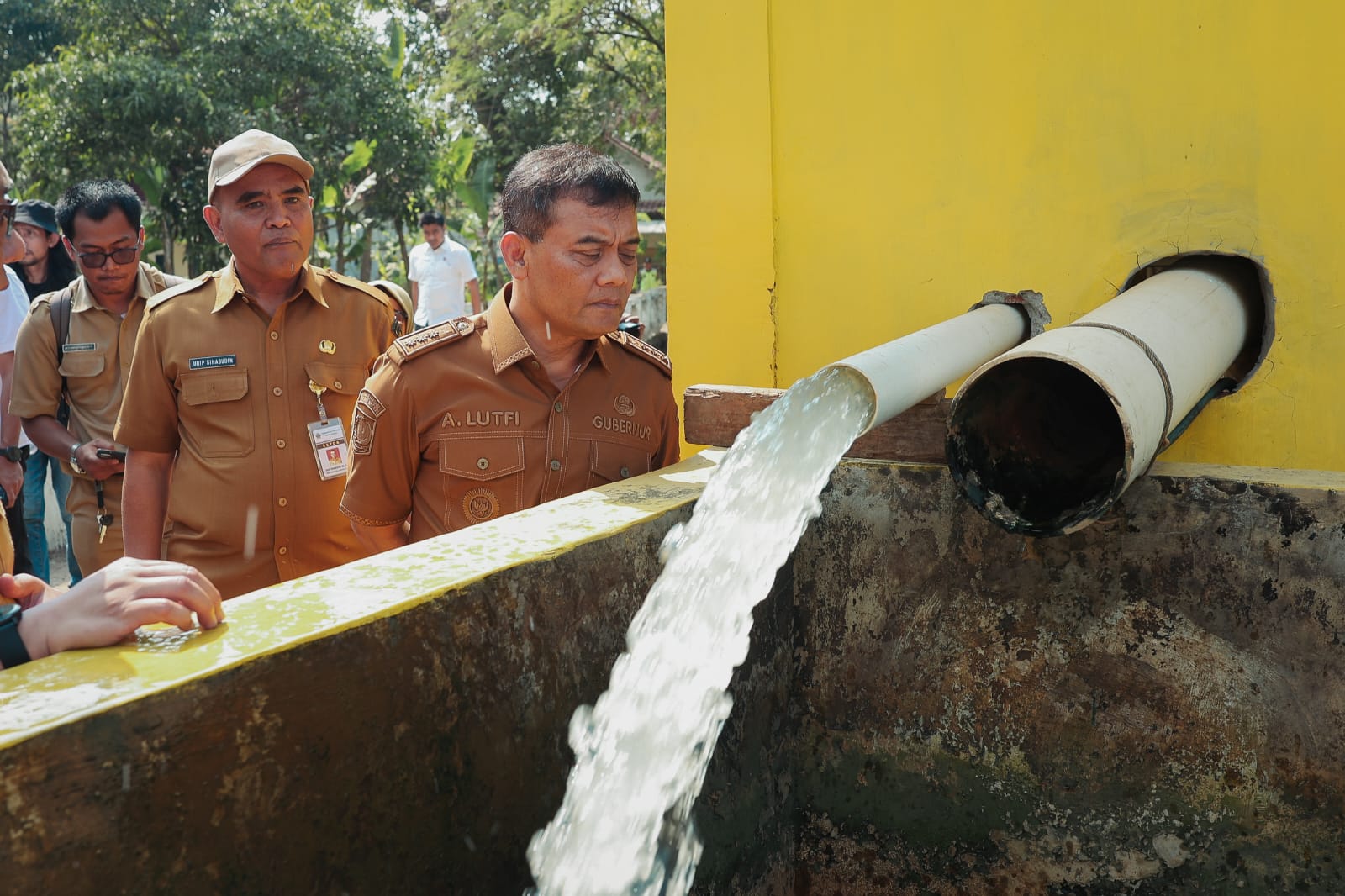
Farmers in Central Java have begun switching to solar-powered water pumps (PATS) as a strategic move to cut production costs while increasing land productivity. The innovation, which integrates renewable energy and Internet of Things (IoT) technology, is being implemented through the provincial Benteng Pangan (Food Fortress) programme.
To date, PATS units have been installed at three key locations: Tengengwetan Village in Pekalongan Regency, Brebes Regency, and Cilacap Regency. Central Java Governor Ahmad Luthfi inspected the implementation in Tengengwetan Village on Monday, 10 August 2026.
Governor Luthfi emphasised that the solar-powered pumping system is highly effective for agricultural sustainability. He highlighted three main advantages: energy savings by replacing fossil fuels (diesel), pollution-free operation, and the pump’s ability to run for 24 hours. “These three pump points irrigate a total of around 50 hectares of farmland. Specifically here in Pekalongan, it can irrigate nearly 20 hectares,” Luthfi said after symbolically handing over the assistance.
The Central Java Provincial Government plans to use these three initial sites as role models for development across all regencies and cities in the province, and even projects them as national models. “We will develop this, socialise it, and prepare the infrastructure. This solar pump was also previously used successfully in Sayung, Demak, to tackle flooding,” he added. Luthfi believes this transformation will strengthen the implementation of a green economy across various sectors in Central Java.
Farmers are already feeling the economic benefits. Kirom, a representative of the Tengengwetan Farmers Group Association, said the PATS system has significantly reduced diesel consumption. Previously, diesel engine operations consumed about 30 litres per day and night; now, diesel usage has dropped to just 15 litres. “The diesel pump is only used at night, while during the day it runs entirely on solar power. This is much more economical and reduces our production costs,” Kirom explained. In his village, around 30 rice farmers rely on PATS to irrigate 20 hectares of paddy fields using water from a nearby river.
Similarly, Gilang from the Tani Makmur Farmers Group in Brebes Regency described PATS as a solution to irrigation problems. During the dry season, farmers in his area often struggle with seawater intrusion into irrigation channels. “With the solar-powered pump, we use a borehole, so the water is not saline. Farmers can now engineer their own planting seasons and start planting earlier,” Gilang concluded.