
Central Java Farmer Finds 16kg of Gold in a Rice Field: What Happened Next
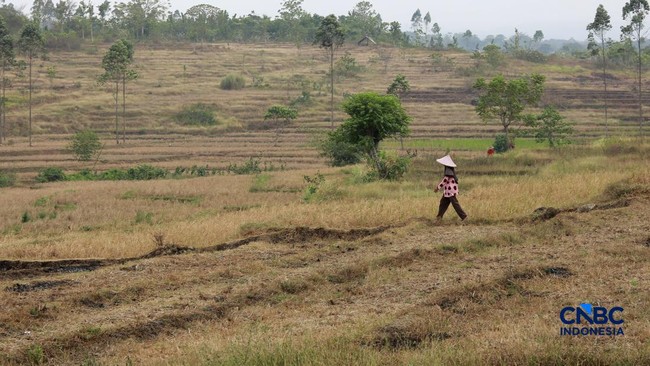
A bid to improve irrigation to his rice field led Cipto Suwarno, a farmer from Wonoboyo village in Klaten, Central Java, to make an extraordinary discovery. On 17 October 1990, he found a collection of valuable gold objects weighing 16kg in total.
The discovery began when construction work near Cipto’s farmland disrupted the flow of water to his field. He decided to dig into the ground to restore the flow, unaware that it concealed valuable historical artefacts.
After digging for several days, Cipto’s hoe struck a hard object about 2.5 metres underground. At first, he thought it was an ordinary rock. But when he lifted and cleaned it, it proved to be a ceramic jar containing gold jewellery and equipment.
Cipto was astonished by what he had found. Realising the objects were made of pure gold, he shouted in excitement.
“Gold, gold, gold!” Suwarno cried at the time.
The discovery immediately drew the attention of local residents. Further excavation was carried out in the presence of village officials, recovering a range of valuable gold objects weighing 16kg altogether.
“More specifically, the finds consisted of a rounded bowl, six bowl lids, three ladles, one tray, 97 bracelets, 22 bowls, a smoking pipe, one large jar, two small jars, 11 rings, seven plates, eight earrings, a handbag, a kris, beads and coins,” Tempo magazine wrote in a report on 3 November 1990.
The monumental find became known as the Wonoboyo Treasure and is recorded as one of the largest gold archaeological discoveries in Indonesian history.
Archaeologists estimate that the treasure dates from between the late ninth and mid-tenth centuries, during the era of the Ancient Mataram Kingdom. Their assessment is based on the designs and forms of the objects. One gold bowl, for example, features carved reliefs depicting the epic Ramayana, while a gold coin bears an inscription reading “Saragi Diah Bunga”.
Ancient Javanese people’s fondness for collecting gold
The Wonoboyo find provides tangible evidence of how gold was used in ninth- and tenth-century Javanese society, both among the palace elite and the wider population.
At the time, gold was closely woven into everyday life in Java. Historical records show that during the Majapahit Kingdom (1293–1527), nobles often collected gold on a large scale. Luxury items, from royal carriages to fans, were covered in gold.
As Stuart Robson explains in Desawarna by Mpu Prapanca (1995), the contemporary Kingdom of Daha had a similar tradition. He highlights the habit of the Daha king’s daughter of travelling in a gold-plated carriage.
Archaeologist Slamet Muljana, in Menuju Puncak Kemegahan (2012), describes gold as the most coveted commodity in the Majapahit era, as recorded by Mpu Prapanca in the Kakawin Nagarakretagama.
“He wanted to be like Mpu Winada, whose ambition was to amass a great deal of money and gold,” Prapanca wrote, as quoted by Slamet Muljana.
Collecting gold was not merely a matter of aesthetics or social status; it also served as a means of economic exchange. Erwin Kusuma notes in Uang Indonesia: Sejarah dan Perkembangannya (2021) that ancient Javanese people commonly used gold in high-value commercial transactions, such as land sales.
The Javanese people’s attachment to gold also attracted the attention of foreign visitors. Chinese envoys visiting Java were astonished by the splendour of royal palaces. According to Nusantara dalam Catatan Tionghoa (2009), Chinese travellers saw gold-plated furnishings all around the king, and even the royal dining utensils were made entirely of gold.
The Portuguese explorer Tomé Pires also admired the wealth of Java’s kings in his account Suma Oriental (1513). He recorded that Javanese kings appeared lavishly adorned with gold jewellery from head to toe. Even palace guards and pet dogs wore gold necklaces and bracelets.
Although gold was widely used on Java, the island has no major gold deposits geologically. To meet demand, ancient Javanese people imported gold from Sumatra—then known as Swarnadwipa, or “Island of Gold”—as well as from India.
Over time, the fall of the ancient kingdoms and the arrival of the colonial era transformed society and the economy. Gold jewellery and objects belonging to nobles, abandoned amid conflict or natural disasters, were eventually buried, remaining hidden for centuries until Cipto Suwarno accidentally uncovered them in Wonoboyo.
Source: jawawa.id (https://jawawa.id/newsitem/central-java-farmer-finds-16kg-of-gold-in-a-rice-field-what-happened-next-1792230625)
Originally published by CNBC Indonesia (https://www.cnbcindonesia.com/market/20261017124536-17-777091/petani-di-jawa-tengah-temukan-emas-16-kg-di-sawah-begini-nasibnya), translated from Indonesian