
Central Java Expands Water Aid to 129 Million Litres as 14 Regions Declare Drought Emergency
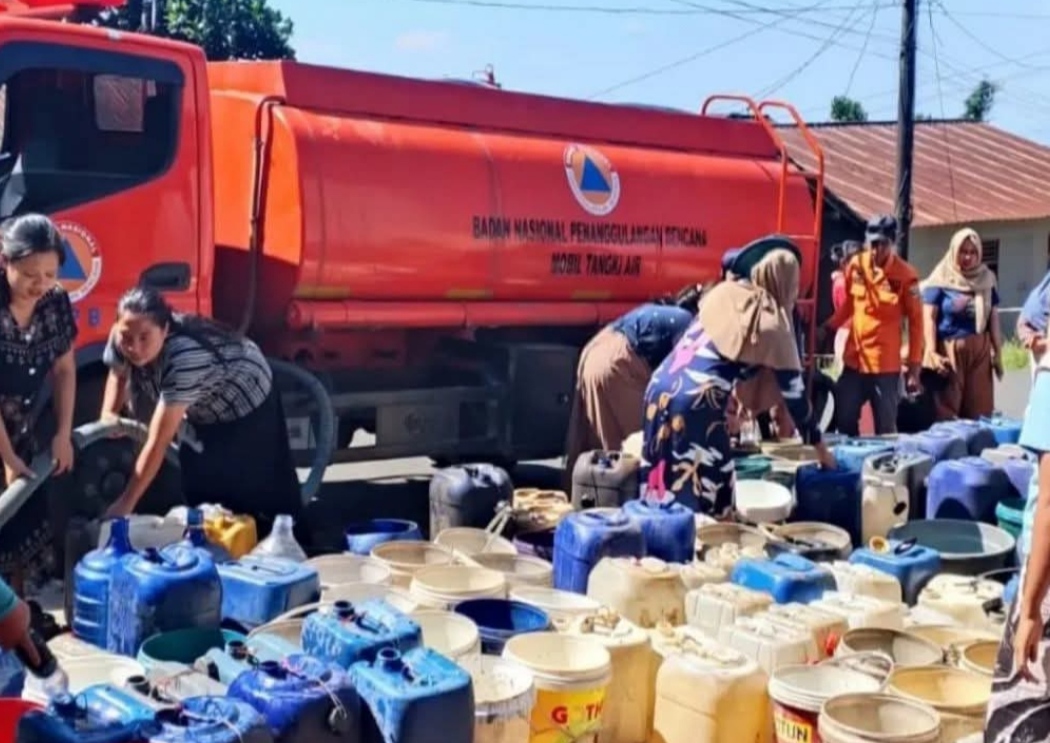
The prolonged dry season is increasingly being felt by residents across several areas in Central Java. In addition to shortages of clean water for household needs due to drying wells, the drought is also impacting agricultural water requirements as river levels recede. With no rain for several months and dry conditions expected to persist until September, the Central Java Provincial Government and local administrations have undertaken drought mitigation measures, with 14 regions already declaring a state of emergency.
Riyadi, a 50-year-old resident of Pulosari, Pemalang, said, “We are forced to search for water sources quite far away, up to several kilometres from the village, because the wells and springs in the village have dried up.” To meet residents’ needs, Pemalang BPBD Head Agus Ikmaludin confirmed that clean water aid has begun flowing to 11 affected villages in the area, including Clekatakan, Penakir, Gambuhan, Nyalembeng, Batursari, Pulosari, Pagenteran, Siremeng, and Cikendung in Pulosari District, as well as Belik and Gombong villages in Belik District.
A similar situation was expressed by Ruminah, a resident of Kedungmalang Village, Kedung District, Jepara, who stated that for several weeks, residents have relied on clean water aid to meet family needs because wells and rivers have dried up and the area is not yet connected to the PDAM piped water network. Meanwhile, Semarang City BPBD Head Endro Pudjo Martantono noted that several areas in the city have entered a yellow drought zone. As a measure to meet clean water needs, 900,000 litres of clean water aid have been prepared for distribution. The affected areas include Rowosari, Meteseh, Bulusan, and Mangunharjo in Tembalang District; Wonosari in Ngaliyan District; Mangkang, Mangkang Kulon, and Mangkang Wetan in Tugu District; and Sadeng, Cepoko, and Sukorejo in Gunungpati District.
Central Java BPBD Head Bergas Catursasi Penanggungan confirmed that drought has begun in several areas, and mitigation efforts have been carried out by sending clean water aid to affected villages. “We have increased the availability of clean water for aid from the previous 123 million litres to 129 million litres because the number of drought-affected areas has risen,” he said. He added that 14 regions in Central Java have established a drought emergency status, with five areas most significantly impacted: Klaten, Banjarnegara, Pemalang, Cilacap, and Purbalingga. Despite the prolonged dry season, Bergas Catursasi Penanggungan stated that data from the Central Java Public Works and Spatial Planning Agency indicates water availability in dams and reservoirs remains sufficient for agricultural needs during the first to third planting seasons. “Farmers in Central Java should not worry, water availability is still sufficient,” he added.