
Central Java Deputy Governor Praises Pesantren-Led Initiative to Revive 57 Hectares of Idle Land
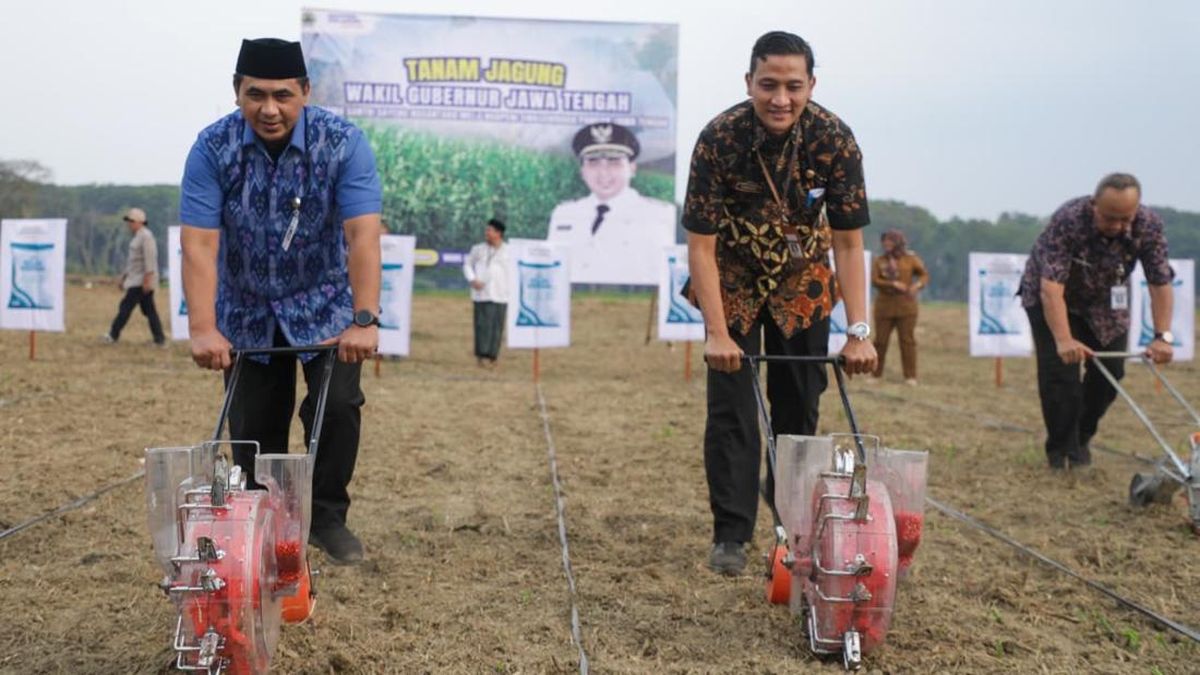
Central Java Deputy Governor Taj Yasin Maimoen has stated that the involvement of Santri Gayeng Nusantara (SGN) is proof that Islamic boarding schools (pesantren) can play a broader role in community development. Beyond their function of providing religious education, pesantren can also act as facilitators of economic empowerment through the agricultural sector. In practice, SGN is collaborating with farmers to manage 57 hectares of idle land in Bandingan Village, Bawang District, Banjarnegara Regency, owned by Indonesia Power, marked by a maize planting event on Tuesday (14/7). This cooperation between SGN, farmer groups, and Indonesia Power not only produces agricultural commodities such as maize but also develops horticulture, fisheries, and livestock farming. The model is expected to create new jobs and improve the welfare of the surrounding community. “This is a form of pesantren empowerment. Not only providing religious education, but also driving agricultural and economic movements,” said Taj Yasin. The utilisation of idle land is said to be in line with President Prabowo Subianto’s directive to strengthen food security through the optimisation of productive land and community empowerment. Central Java itself is one of the national maize barns, contributing approximately 17.02 percent or 3,721 tonnes of maize in 2025. This achievement will continue to be increased through the expansion of planting areas and collaboration with farmer groups, santri communities, and various stakeholders. According to Taj Yasin, strengthening maize production is a crucial part of maintaining national food security and the economy amidst global uncertainty. “If our food security is ready, the economy cannot be shaken, cannot be intervened by any country,” he said. In addition to boosting food production, the area’s development also prioritises environmental conservation aspects, such as preserving large trees to avoid damaging the ecosystem. In the future, the area will be developed as a Religious Agro-Educational Tourism site combining agriculture, animal husbandry, plantations, education, and religious activities, including Hajj pilgrimage rehearsal facilities. The Central Chairman of SGN, Muhammad Chamzah Hasan, explained that the idea of empowering santri through the agricultural sector originated from Deputy Governor Taj Yasin’s directive for SGN to provide tangible benefits to the community. Together with Indonesia Power, the land will be utilised in stages with farmer groups. “Santri Gayeng is at the forefront as a facilitator, but the ones who feel the benefits are the community, especially the farmer groups. From the community and back to the community,” he said. Meanwhile, the Secretary of the Central Java Agriculture and Livestock Service, Himawan Wahyu, explained that the area is being developed using an integrated farming concept that combines food crops, horticulture, livestock, forestry, and educational tourism. In addition to maize, the area is also planted with rice, chillies, cauliflower, and aubergines. In the forestry sector, multipurpose trees such as durian and avocado are planted, while the livestock sector is developed through goat farming using a silvopasture system, so that livestock waste can be utilised as organic fertiliser. Currently, the Central Java Provincial Government is also preparing support for maize development covering 3,200 hectares in 2026 as part of the maize self-sufficiency programme, including in Banjarnegara Regency.