
Central Java Deputy Governor Launches TMMD Phase III, Ensures Remote Villages Are Reached
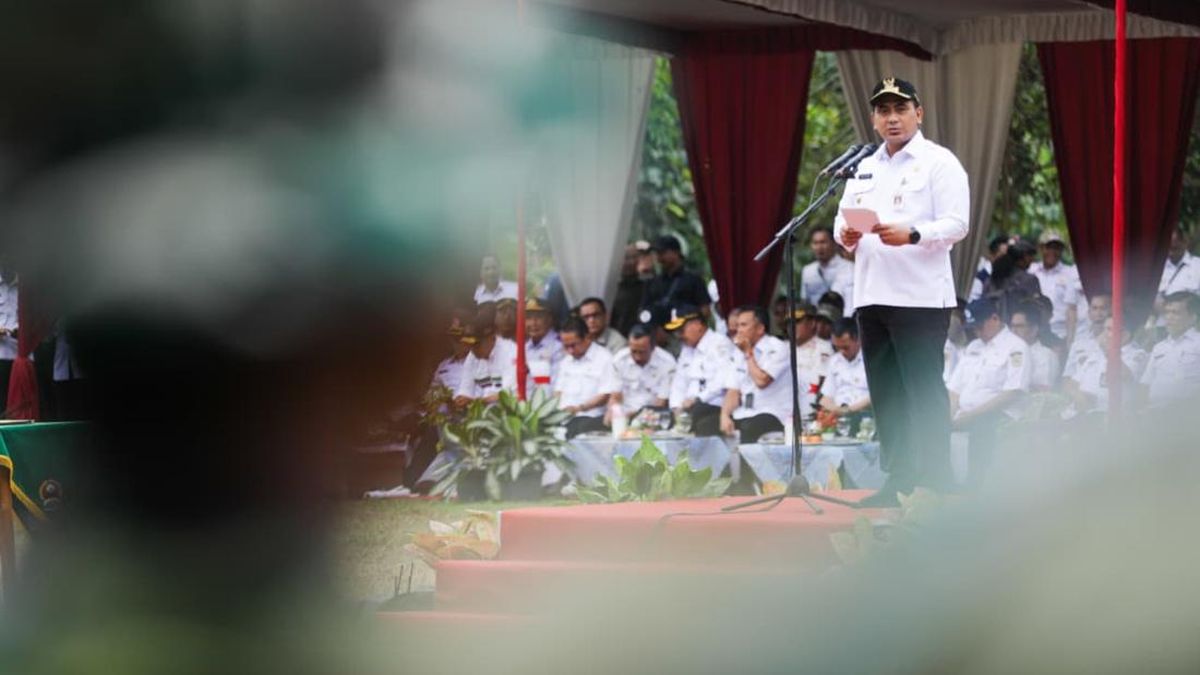
Central Java Deputy Governor Taj Yasin Maimoen (Gus Yasin) has stated that the TNI Manunggal Membangun Desa (TMMD) Programme will be directed to reach remote villages. Through the construction of roads, bridges, irrigation, and various community empowerment programmes, TMMD is expected to create new economic opportunities for residents.
This was conveyed by Gus Yasin whilst serving as the Inspector of the Opening Ceremony for the 129th Regular TMMD and the TMMD Sengkuyung Phase III for the 2026 Fiscal Year at Bingkeng Village Field, Dayeuhluhur District, Cilacap Regency, on Wednesday (15/7). The programme is being implemented simultaneously in 35 regencies/cities across Central Java until 13 August 2026.
This year, TMMD is being held simultaneously in all regencies/cities in Central Java as part of efforts to accelerate equitable village development, which also serves as preparation for welcoming the Republic of Indonesia’s Independence Day.
Gus Yasin revealed that the locations for TMMD implementation were chosen based on community needs, especially in areas that still have limited access. "We are implementing TMMD in areas that still need it, remote areas where access is still lacking. What is being built are rural economic roads for farmers," he said.
Gus Yasin assessed that TMMD has become tangible proof of the unity between the TNI and the people for more than four decades. The collaboration between the TNI, local government, and the community is believed to be capable of accelerating development in rural areas, particularly isolated, underdeveloped regions, and slum urban areas. "Villages are the foundation of national development. When villages advance, the community becomes more prosperous," he stated.
The implementation of the 2026 TMMD is supported by synergy between the Indonesian Army and regency/city governments, with budget support from the Central Java Provincial Government amounting to Rp33.2 billion.
Gus Yasin then requested that local governments and the TMMD Task Force integrate various priority programmes during the activity, ranging from food security, integrated agriculture, rehabilitation of uninhabitable houses, provision of clean water and sanitation, acceleration of stunting reduction, strengthening of integrated health posts, tree planting, to the rehabilitation of places of worship. He is optimistic that TMMD can serve as a means to build human resource quality through various non-physical activities. "We are not only building the physical aspects, but also building the community’s mentality. Family resilience must be strengthened," he stressed.
Commander of Military District Command 0703/Cilacap, Lieutenant Colonel Inf. Aryudha Sakti, said that Bingkeng Village was chosen as a TMMD location because the community needs better road access to support mobility and economic activity. "The Bingkeng area is a priority because the community needs road access. With TMMD, the community does not feel distant from the local government or the TNI," he said.
In Bingkeng Village, TMMD will build an 800-metre-long road with a width of four metres, a 120-metre-long retaining wall, and one bridge unit connecting the residents’ economic route. Additionally, two uninhabitable houses will be rehabilitated through CSR support from Baznas, and 1,000 trees will be planted.
The 2026 TMMD programme is also complemented by various non-physical activities, such as health services, free family planning, free medical treatment, civil document processing, state defence counselling, stunting and early marriage prevention, anti-drug family resilience, entrepreneurship training, culinary arts, and fish farming.
On the same occasion, Deputy Governor Taj Yasin handed over financial assistance to support rural facilities and infrastructure to the Cilacap Regency Government amounting to Rp22.731 billion for 215 activity points, TMMD assistance of Rp984 million for four implementation stages in Cilacap Regency, and assistance for the rehabilitation of uninhabitable houses worth Rp5.14 billion.