
Central Java Deputy Governor Calls for Equitable Distribution of Renewable Energy
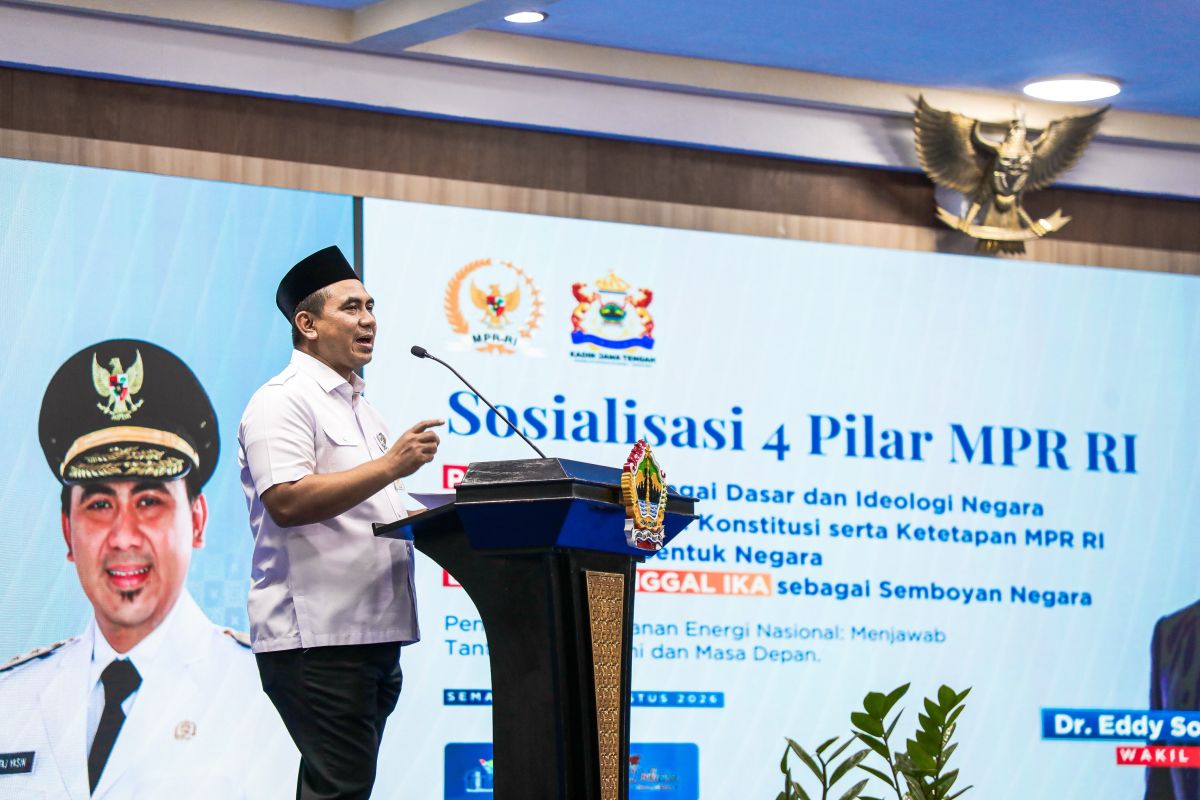
Central Java Deputy Governor Taj Yasin Maimoen has called for the equitable development of new and renewable energy (EBT) across the province to strengthen energy security while supporting economic growth and public welfare. “We need renewable energy to be truly evenly distributed throughout Central Java. We want the ecosystem to grow, but without damaging the environment,” he said in Semarang on Wednesday. He made the remarks during a socialisation event for the MPR’s Four Pillars themed ‘Strengthening National Energy Security: Answering Current and Future Challenges’. According to him, the development of renewable energy must go hand in hand with investment and industrial growth in Central Java, while paying close attention to environmental sustainability and community livelihoods. The figure, familiarly known as Gus Yasin, stressed that discussions on renewable energy should not be limited to the availability of energy sources. He said its development must also consider the sustainability of life for communities around industrial areas or energy sources. He acknowledged that Central Java is currently an attractive region for investors, evidenced by a number of companies coming to develop businesses and industries. Therefore, he said, investment and industrial growth must be directed to create economic activity without sacrificing the environment. In line with this, Central Java’s renewable energy mix in 2025 was recorded at 22.33 per cent, exceeding the target set in the Regional Energy General Plan (RUED) of 21.32 per cent. This achievement serves as capital for the provincial government to expand the utilisation of new and renewable energy, especially since Central Java has various potentials, including solar, geothermal, hydro, biomass, and biogas energy. The Deputy Governor explained that the development of EBT is also aimed at supporting productive community activities, including facilitating the development of solar power plants, floating solar power plants, geothermal, micro and mini hydro power plants, as well as waste-based and biomass energy in industrial and rural sectors. The utilisation of local energy is also being developed through Energy Independent Villages, solar-powered water pumps for irrigation, biogas from livestock and small industrial waste, and Eco-Islamic Boarding Schools based on solar power and biogas. Meanwhile, Deputy Speaker of the People’s Consultative Assembly Eddy Soeparno highlighted the challenges facing Indonesia’s energy security, noting that despite having abundant fossil fuel and renewable energy sources, the country still faces dependence on energy imports. He said this situation underscores the need to accelerate the use of domestically available renewable energy sources, from solar, wind, and water to geothermal. He assessed that developing EBT could be a way to reduce Indonesia’s dependence on fossil fuels while strengthening national energy security. “If we develop the renewable energy sources available throughout Indonesia, I feel we would no longer need to import. I believe we could strengthen our energy security,” he said.