
Central Java Consumer Protection Agency: SLHS Certification Does Not Guarantee Free From Food Poisoning in Free Nutritious Meal Programme
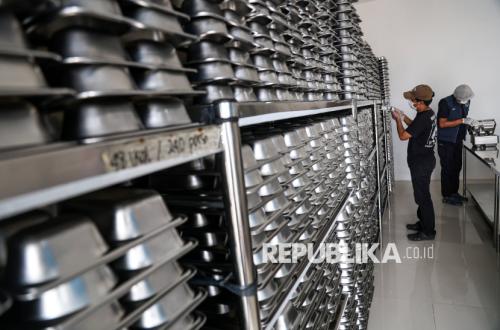
The Chairman of the Consumer Protection and Development Agency (LP2K) of Central Java, Abdun Mufid, revealed that the possession of Hygiene and Sanitation Feasibility Certificates (SLHS) by nutrition fulfilment service units does not guarantee that food poisoning cases will not occur within the Free Nutritious Meal (MBG) programme. His comments follow a series of suspected food poisoning incidents related to the MBG programme in several areas of Central Java recently.
Abdun explained that processing and serving food in large quantities, as conducted by every nutrition service unit, carries numerous risks. These risks involve not only the quality of raw materials but also the timing of cooking, storage, and serving. Abdun stated that all standards within this sequence of processes are regulated under the SLHS.
Nevertheless, in cases of suspected poisoning, it was found that the service units distributing the MBG had already obtained SLHS certification. “Why does this (suspected poisoning) still occur? The answer is simple: it means the service units have not implemented food safety standards properly and consistently across all lines,” he said during an interview on Saturday (19/09/2026).
He added that when service units fail to consistently apply the procedures regulated in the SLHS, food poisoning cases can occur at any time. “Even if the head of the National Nutrition Agency (BGN) changes, it will not solve the problem if those standards are not properly enforced at the service unit level, even if certificates are already in place,” he remarked.
“For instance, even if an SLHS has been issued to a service unit, it is not a guarantee of quality if, in practice, they ultimately fail to adhere to the indicators stipulated within the SLHS,” Abdun added.