
Central Java 'Boiling' Due to El Niño, Temperatures Potential to Hit 39.6 Degrees Celsius
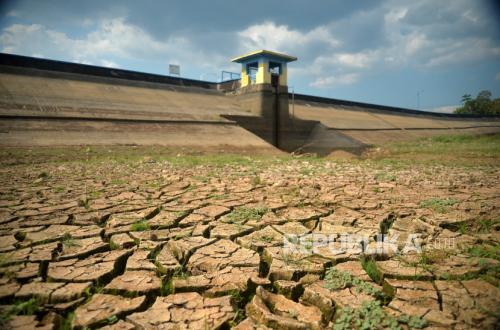
Giarto, Chairman of the Management and Operational Team of BMKG Class II Jenderal Ahmad Yani Semarang, stated that hot weather in Semarang and the wider Central Java region is generally expected to increase until October 2026. There is a possibility that temperatures could reach or even exceed 39.6 degrees Celsius.
“At this time, in the second semester of 2026, we are being impacted by a very strong El Niño index. What are the impacts of this El Niño? Firstly, drought; secondly, a reduction in rainfall in our region,” Giarto explained when asked about the scorching heat currently hitting Central Java on Tuesday (22/09/2026).
He added that the apparent movement of the sun from the equator towards the Southern Hemisphere is also currently traversing the Java region. “This causes the radiation we receive to increase. Consequently, temperatures in September and October will rise,” he said.
Giarto explained that based on historical records by the Jenderal Ahmad Yani Meteorological Station in Semarang between 2000 and 2020, the highest temperatures frequently occur in October. “The highest recorded temperature was 39.6 degrees Celsius, which occurred in 2015,” he noted.
He further explained that the strong El Niño index makes the air drier and hotter. According to Giarto, it is not impossible that this year’s heat could surpass the 39.6-degree mark.
“Certainly, with changes in vegetation, population changes, and the climate change affecting us, there will be an increase in the maximum measurable temperatures. The recorded temperature could be higher than that, and the perceived temperature will certainly feel even hotter depending on our specific location,” said Giarto.
Giarto added that based on BMKG analysis, rainfall in Central Java this coming October remains low. “Therefore, the increase in temperature can still be felt,” he said.
As a result, drought will continue to persist in the Central Java region. “The natural impact is drought and water shortages; naturally, groundwater levels will also decrease slightly. In daily life, the water supply from PDAM (regional water utility) that was previously smooth might experience some disruptions,” Giarto concluded.