
Central Java Becomes Pioneer in School Cooperative Education, Targeting 6.38 Million Students
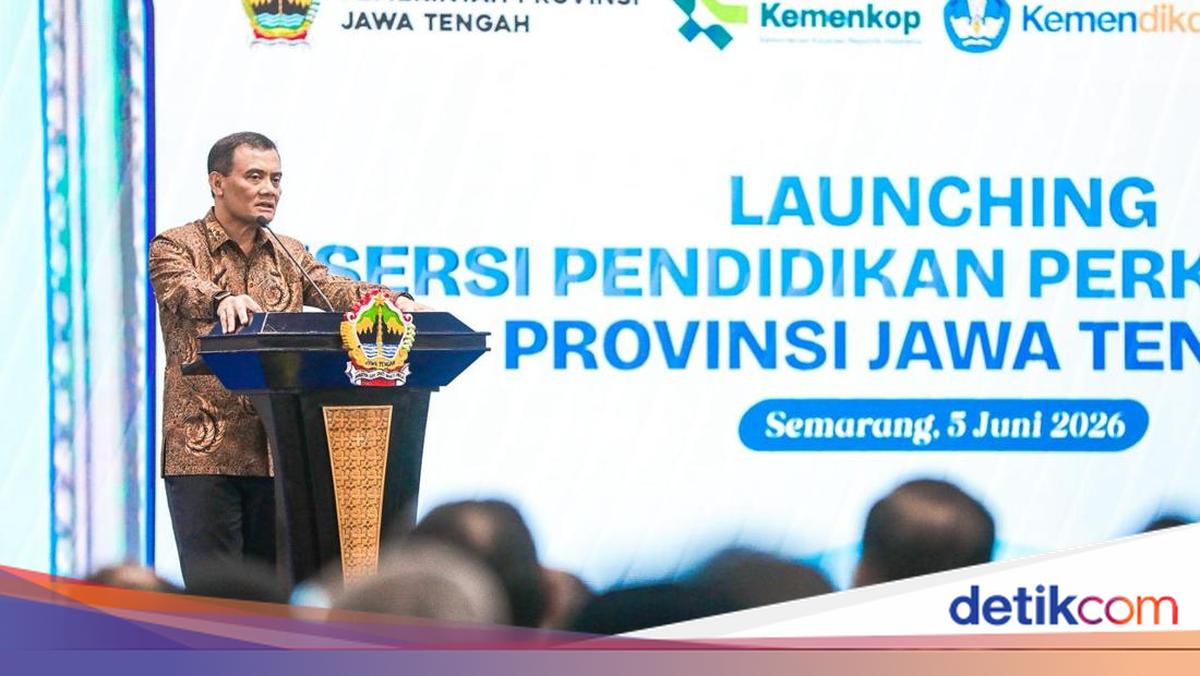
The Governor of Central Java, Ahmad Luthfi, stated that the programme is a vital step in ensuring the younger generation reacquaint themselves with cooperatives from their school years. He emphasised that cooperatives are a constitutional mandate and a fundamental pillar of the economy that must be understood by the public.
“Cooperatives are a mandate of the 1945 Constitution, specifically Article 33. This programme is also aligned with the government’s policy regarding the ‘Merah Putih’ Cooperative,” Luthfi said in a written statement on Friday.
He made these remarks during the launch of the Cooperative Education Insertion Programme at the Gradhika Bhakti Praja Building in Semarang. Luthfi clarified that the cooperative education will not increase the students’ academic workload, as the material will be integrated into existing subjects. He added that educational modules have been prepared, and school principals, supervisors, and teachers have received training for the programme’s implementation. Notably, Central Java is the first province to initiate cooperative materials and modules for school-aged children.
Luthfi explained that the programme integrates cooperative values into all educational levels. At the primary school level, students will be introduced to basic cooperative values and ‘gotong royong’ (mutual cooperation). At the junior high school level, students will learn about organisation, management, and the benefits of cooperatives. For senior high schools and vocational schools, the focus will shift towards cooperative practice and entrepreneurship. For special needs schools, implementation will be adjusted to the students’ specific characteristics and needs.
The Indonesian Minister of Cooperatives, Ferry Juliantono, expressed his appreciation for the Central Java Provincial Government’s move, noting that the province has made history as the first region to implement a cooperative curriculum insertion. “I express my deepest appreciation to the Central Java Provincial Government, particularly the Governor, for making history today,” said Ferry.
Ferry noted that inserting cooperative education is essential to restoring the younger generation’s understanding of the Pancasila economy. He hopes other regions will follow Central Java’s lead, adding that cooperatives should not merely be understood as savings and loan institutions, but as business entities that reflect the national character of togetherness and kinship. He highlighted that cooperatives could serve as an alternative source of employment for Millennials, Gen Z, and Gen Alpha.
Furthermore, the Head of the Agency for Basic and Secondary Education Policy at the Ministry of Basic and Secondary Education, Toni Toharuddin, praised the initiative, stating that cooperative education is about character building. He noted that the insertion approach makes learning more relevant to real life without adding new subjects or increasing the curriculum burden.
The Minister of Religious Affairs, Nasaruddin Umar, also expressed support, stating that cooperative education aligns with religious values, particularly the spirit of mutual assistance and social care. He suggested that cooperatives could be developed through religious institutions, such as mosques and Islamic boarding schools, to foster community independence.